
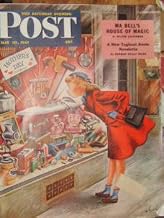
Photo: журнал LIFE — Public domainSource
Constantin Alajalov
- November 18, 1900
- October 23, 1987 · New York City
- 86 years


About Constantin Alajalov
Constantin Alajalov, 86, Armenian-born American painter and illustrator.
Explore other notable deaths in 1987 or deaths in October 1987.
The Deaths Archive presents
How well do you know Constantin Alajalov?
Explore their life. Test your knowledge. Beat the challenge.
10 questions · One legacy · How much do you really know?
Challenge your friends
Play together in real-time.
Advertisement

Full Biography
|Constantin Alajálov (born Konstandin Alaǰalyan, Armenian: Կոնստանդին Ալաջալյան; 18 November 1900 — 23 October 1987) was an Armenian-American painter and illustrator. He was born in Rostov-on-Don, Russia, and immigrated to New York City in 1923, becoming a US citizen in 1928. Many of his illustrations were covers for such magazines as The New Yorker, The Saturday Evening Post, and Fortune. He also illustrated many books, including the first edition of George Gershwin's Song Book. His works are in New York's Museum of Modern Art and the Brooklyn Museum. He died in Amenia, New York.
Life
Constantin Alajálov was born in Rostov-on-Don, Russia, in 1900 to an Armenian family. In 1917, the Red Revolution broke out, interrupting Alajálov's time at the University of Petrograd. Unable to stay, Alajálov joined a government organized group of artists. Traveling the countryside, they painted large propaganda murals and posters for the revolution. After this, Alajálov emigrated to Persia and again started painting for a revolution until no longer safe.
After his stay in Persia, Alajálov headed to Constantinople, his last stop before he emigrated to America at age 23. Getting a job was hard, but he finally landed one, painting wall murals at a restaurant about to be opened by Russian Countess Anna Zarnekau. Within three years, Alajálov was selling his paintings to The New Yorker magazine, where his first cover appeared on September 25, 1926. He went on to create more than 70 covers for the magazine. He also designed rugs for New York artist and entrepreneur Ralph Pearson.
Alajálov's first cover for the Saturday Evening Post appeared on October 6, 1945; this was unusual in that he was also doing covers for The New Yorker at the time, and both publications ordinarily required exclusivity of their artists. His final cover was for the December 1, 1962, issue. That final cover portrayed an accomplished bridge player awakened from a dream, still analyzing her bridge hand. Many of his Saturday Evening Post cover paintings can be viewed at the American Illustrators Hall of Fame in Indianapolis.
Alajalov died in New York in 1987. His papers are at Syracuse University, and the Archives of American Art. He bequeathed funding for a scholarship in his name to Boston University, which also maintains a collection of his photographs and scrapbooks. The Boston University holdings include a painting of Alajálov by George Gershwin.
Illustrations
- Flamingo, by Mary Borden (1927; Alajalov signed the dustjacket)
- Tantivy Towers, by A. P. Herbert (1931)
- George Gershwin, a New York contemporary of Russian-Jewish heritage, chose him to do a set of edgy drawings illustrating each of the 18 songs in the first editions of George Gershwin's Song Book (1932)
- Dithers and Jitters, by Cornelia Otis Skinner (1938)
- Soap Behind the Ears, by Cornelia Otis Skinner (1941)
- Conversation Pieces (1942) was an autobiographical book of Alajálov's illustrations. Janet Flanner wrote the text and commentary of the book.
- Our Hearts Were Young and Gay, by Cornelia Otis Skinner & Emily Kimbrough (1942)
- Sophie Halenczik, American, by Rose C. Feld (1943)
- Cinderella, Retold in Verse, by Alice Duer Miller (1943)
- Married at Leisure, by Virginia Lederer (pseudonym of Virginia Pringle) (1944)
- Esme of Paris, by Esme Davis (1944)
- Outside Eden, by Isabel Scott Rorick (1945)
- Hold Your Man, by Veronica Dengel (1945)
- Timothy's Angels, by William Rose Benét (1947)
- Family Album, by Paul Chavchavadze (1949)
- Nuts in May, by Cornelia Otis Skinner (1950)
- Bottoms Up!, by Cornelia Otis Skinner (1955)
- Aurora Dawn, by Herman Wouk (1956)
- The Island Players, by Ilka Chase (1956)
- Orpheus in America, Offenbach's Diary of his Journey in the New World, translated by Lander MacClintock (1957)
- The Ape in Me, by Cornelia Otis Skinner (1959)
Content from Wikipedia — licensed under CC BY-SA 3.0
Interactive
Test Your Knowledge – Trivia Challenge
How well do you know this person's life and legacy?
No account needed to play. Sign in to keep your score on the leaderboard.
Articles & News
Reported coverage of Constantin Alajalov; each link opens the original article on the publisher's own site.
Books & Media
Find books, audiobooks and films about Constantin Alajalov on Amazon.






As an Amazon Associate I earn from qualifying purchases.
Amazon and the Amazon logo are trademarks of Amazon.com, Inc. or its affiliates.
Sources
- Wikipedia
- https://en.wikipedia.org/wiki/Constantin_Alajalov
- CC BY-SA 4.0
- Sep 26, 2026
- View article
- View record
- October 23, 2026
- Sep 26, 2026
Trivia & Knowledge· 16 questions
Questions drawn from Constantin Alajalov's archived record and the sources above.
1.In what city did Constantin Alajálov pass away?
- A.New York
- B.Rostov-on-Don
- C.Ameniacorrect
- D.Indianapolis
Constantin Alajálov died in Amenia, New York.
Source: Introductory paragraph
2.Which institution maintains a collection of Constantin Alajálov's photographs and scrapbooks?
- A.Boston Universitycorrect
- B.Archives of American Art
- C.Syracuse University
- D.Museum of Modern Art
Boston University maintains a collection of his photographs and scrapbooks.
Source: Life section
3.How many songs were illustrated by Constantin Alajálov in George Gershwin's Song Book?
- A.1932
- B.70
- C.1942
- D.18correct
George Gershwin chose him to do a set of drawings illustrating each of the 18 songs in the first editions of George Gershwin's Song Book.
Source: Illustrations section
4.Who wrote the text and commentary for Constantin Alajálov's autobiographical book, Conversation Pieces?
- A.Mary Borden
- B.Alice Duer Miller
- C.Cornelia Otis Skinner
- D.Janet Flannercorrect
Janet Flanner wrote the text and commentary of the book, Conversation Pieces.
Source: Illustrations section
5.In which city is the American Illustrators Hall of Fame, where many of Constantin Alajálov's covers are kept?
- A.Boston
- B.New York
- C.Syracuse
- D.Indianapoliscorrect
Many of his Saturday Evening Post cover paintings can be viewed at the American Illustrators Hall of Fame in Indianapolis.
Source: Life section
6.What was the theme of Constantin Alajálov's final Saturday Evening Post cover?
- A.A portrait of George Gershwin
- B.A scene of Parisian life
- C.A bridge player dreamingcorrect
- D.A landscape in Russia
The final cover portrayed an accomplished bridge player awakened from a dream, still analyzing her bridge hand.
Source: Life section
7.What specific items did Constantin Alajálov design for entrepreneur Ralph Pearson?
- A.Dustjackets
- B.Rugscorrect
- C.Scrapbooks
- D.Posters
Constantin Alajálov also designed rugs for New York artist and entrepreneur Ralph Pearson.
Source: Life section
8.For which publication did Constantin Alajálov create more than 70 covers?
- A.The New Yorkercorrect
- B.The Brooklyn Museum Journal
- C.Fortune
- D.The Saturday Evening Post
Constantin Alajálov went on to create more than 70 covers for The New Yorker magazine.
Source: Life section
9.On what date did Constantin Alajálov's first cover for The New Yorker appear?
- A.September 25, 1926correct
- B.December 1, 1962
- C.November 18, 1900
- D.October 6, 1945
Constantin Alajálov's first cover for The New Yorker appeared on September 25, 1926.
Source: Life section
10.What was the subject of the murals Constantin Alajálov painted for Countess Anna Zarnekau?
- A.A museum
- B.A palace
- C.A restaurantcorrect
- D.A theater
Constantin Alajálov landed a job painting wall murals at a restaurant about to be opened by Russian Countess Anna Zarnekau.
Source: Life section
11.Where did Constantin Alajálov work immediately before emigrating to America?
- A.Indianapolis
- B.Persia
- C.Russia
- D.Constantinoplecorrect
Constantinople was Constantin Alajálov's last stop before he emigrated to America at age 23.
Source: Life section
12.What type of work did Constantin Alajálov perform for a government group of artists during the revolution?
- A.Fashion sketches
- B.Political pamphlets
- C.Oil portraits
- D.Propaganda murals and posterscorrect
Constantin Alajálov traveled the countryside painting large propaganda murals and posters for the revolution.
Source: Life section
13.Which university was Constantin Alajálov attending when the Red Revolution interrupted his studies?
- A.American University
- B.University of Petrogradcorrect
- C.Syracuse University
- D.Boston University
The Red Revolution interrupted Constantin Alajálov's time at the University of Petrograd in 1917.
Source: Life section
14.What year did Constantin Alajálov become a United States citizen?
- A.1932
- B.1925
- C.1923
- D.1928correct
Constantin Alajálov became a US citizen in 1928.
Source: Introductory paragraph
15.In what year did Constantin Alajálov immigrate to New York City?
- A.1928
- B.1923correct
- C.1926
- D.1917
Constantin Alajálov immigrated to New York City in 1923.
Source: Introductory paragraph
16.In which city was Constantin Alajálov born?
- A.Rostov-on-Doncorrect
- B.New York City
- C.Boston
- D.Constantinople
Constantin Alajálov was born in Rostov-on-Don, Russia, in 1900.
Source: Life section
Explore the archive
People who died on October 23


Spotted an error?
Help us keep the archive accurate. Report a correction with a source.
Report an error for Constantin Alajalov →Advertisement
