David Hawkes
- July 31, 2009
- 86 years

About David Hawkes
David Hawkes, 86, British sinologist.
Explore other notable deaths in 2009 or deaths in July 2009.
The Deaths Archive presents
How well do you know David Hawkes?
Explore their life. Test your knowledge. Beat the challenge.
10 questions · One legacy · How much do you really know?
Challenge your friends
Play together in real-time.
Advertisement

Full Biography
|David Hawkes (6 July 1923 – 31 July 2009) was a British sinologist and translator. After he was introduced to Japanese through codebreaking during the Second World War, Hawkes studied Chinese and Japanese at Oxford University between 1945 and 1947, before studying at Peking University from 1948 to 1951. He then returned to Oxford, where he completed his D.Phil. and later became Shaw Professor of Chinese. In 1971, Hawkes resigned his position to focus entirely on his translation of the famous Chinese novel The Story of the Stone (also known as Dream of the Red Chamber), which was published in three volumes between 1973 and 1980. He retired in 1984 to rural Wales before returning to live in Oxford in his final years.
Hawkes was known for his translations that preserved the "realism and poetry" of the original Chinese, and was the foremost non-Chinese Redology expert.
Life and career
Early life
David Hawkes was born on 6 July 1923 in London, England, and grew up in East London. He entered Oxford University in 1942 as a student in Christ Church, where he studied the Latin and Greek Classics. After his first year, during the height of the Second World War, Hawkes was recruited to study Japanese in London. His talent for East Asian languages was soon recognized by his military superiors, and he was made an instructor to the Japanese codebreakers. After the war's end in 1945, Hawkes returned to Oxford, where he transferred from Classics into the newly established Honours School of Chinese, whose only teacher was the former missionary E. R. Hughes (1883–1956).
Hawkes studied at Oxford until 1947, when he decided to move to China to continue his studies at Peking University. Hawkes was so determined that he booked passage on a ship to Hong Kong without having received notice of his acceptance. The Chinese scholar Hu Shih, who then served as university president, was notorious for ignoring correspondence, and Hawkes' plans were saved only when the British poet William Empson, who was the only foreigner at the university, noticed Hawkes' letters and arranged for him to be accepted as a graduate student. The university was located in downtown Beijing (it later moved to the former site of Yenching University in Haidian District), and Hawkes lived in a rented room in a medieval hutong lane dwelling. He took courses in Chinese literature from noted scholars such as Luo Changpei and Yu Pingbo. Hawkes and his Chinese classmates were present in Tiananmen Square on 1 October 1949 to hear Mao Zedong's proclamation of the People's Republic of China following the Chinese Communist Party's defeat of Chiang Kai-shek and the Nationalist Party (Kuomintang) in the Chinese Civil War.
Marriage and career
In 1950, Hawkes was joined in Beijing by his fiancée, Jean, and the two were married in April 1950 after a long negotiation with the local police station. Within several months Hawkes' wife became pregnant and China entered the Korean War, and the couple was strongly advised to leave China. They departed China in 1951 and returned to Oxford, where Hawkes continued his graduate study in Chinese under the American sinologist Homer H. Dubs, Oxford's new chair of Chinese. He received a D.Phil. in 1955 with a dissertation entitled "The Problem of Date and Authorship of Ch'u Tz'u", a study of the 3rd century BC anthology Verses of Chu (楚辭; Chǔ Cí). Hawkes' work attracted the attention of the prominent translator Arthur Waley, whom Hawkes came to consider his mentor.
Hawkes succeeded Dubs as Oxford's chair of Chinese in 1959, and much of his tenure focused on altering the Chinese curriculum to include modern Chinese literature, which it had not previously covered. By the end of the 1950s, the curriculum covered not only the Chinese Classics, but also the premodern Four Great Novels and the short stories of Lu Xun. Hawkes' lectures were noted as being "scholarly but entertaining" to the point of being suggestive of his "early love of the theatre".
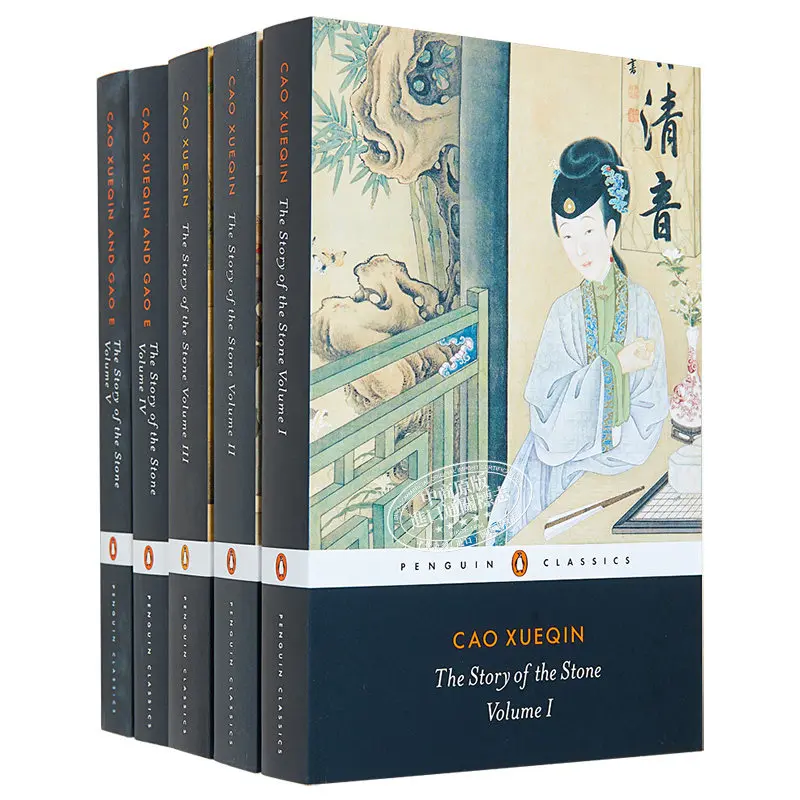
In the 1960s, Hawkes became increasingly interested in Cao Xueqin's 18th-century epic novel Dream of the Red Chamber (紅樓夢), and in 1970 he was approached by Penguin Books to do a non-scholarly translation for publication in the Penguin Classics series. Translating all 120 chapters of Dream of Red Chamber proved a huge task, and in 1971 Hawkes shocked much of the Sinological world by resigning the chair of Chinese to focus exclusively on his translation. He obtained a Research Fellowship at All Souls College in 1973, which provided him with financial support during his translation work, which took nearly 10 years. He translated the first 80 chapters of the novel, which were published in three volumes (1973, 1977, 1980) under the novel's original title Story of the Stone (石頭記; Shítou Jì). The remaining 40 chapters, which appeared after Cao's death and whose authenticity has long been debated, were later translated by Hawkes' son-in-law, the British sinologist John Minford.
Retirement
Hawkes formally retired from Chinese scholarship in 1984 and relocated with his wife to Wales, donating his 4,500-volume Chinese book collection to the National Library of Wales. He and his wife cultivated a large garden and raised goats, while Hawkes focused his personal studies on the history of religion and learning the Welsh language. His only subsequent Chinese publication was a small translation of a Yuan dynasty drama entitled Liu Yi and the Dragon Princess, published in 2003. Hawkes was a severe critic of organized religion in his later life, and in 2004 edited a series of his essays into a small volume entitled Letters from a Godless Grandfather, which was published privately in Hong Kong. He was a vocal critic of Israel's treatment of Palestinians and of British and American military involvement in the Middle East, and participated in several protest marches.
Hawkes died in Oxford on 31 July 2009, aged 86.[citation needed]
Selected works
- Hawkes, David (1955). "The Problem of Date and Authorship of Ch'u Tz'u". D.Phil. dissertation (Oxford University).
- ——— (1959). Ch'u Tz'ǔ: the Songs of the South, an Ancient Chinese Anthology. Oxford: Clarendon Press. 2nd edition (1985).
- ——— (2016). A Little Primer of Tu Fu (revised ed.). New York: New York Review Books. ISBN 978-9629966591.
- ——— and John Minford, trans. (1973–86). The Story of the Stone: A Chinese Novel in Five Volumes. London, New York: Penguin Books.
- ——— The Story of the Stone: a Translator's Notebooks. Hong Kong: Lingnan University, 2000.
- ——— (1989). Classical, Modern and Humane: Essays in Chinese Literature. Hong Kong: Chinese University Press.
- ———, trans. (2003). Liu Yi and the Dragon Princess: A Thirteenth-Century Zaju Play by Shang Zhongxian. Hong Kong: Chinese University Press.
Content from Wikipedia — licensed under CC BY-SA 3.0
Interactive
Test Your Knowledge – Trivia Challenge
How well do you know this person's life and legacy?
No account needed to play. Sign in to keep your score on the leaderboard.
Articles & News
Reported coverage of David Hawkes; each link opens the original article on the publisher's own site.
Books & Media
Find books, audiobooks and films about David Hawkes on Amazon.



As an Amazon Associate I earn from qualifying purchases.
Amazon and the Amazon logo are trademarks of Amazon.com, Inc. or its affiliates.
Selected Finds Inspired by David Hawkes
Browse related finds from AliExpress, shown beside this record for interest only.
Affiliate links: we may earn a commission from qualifying purchases.
Shown for interest only; not linked to the person beside them.
Sources
- Wikipedia
- https://en.wikipedia.org/wiki/David_Hawkes_(sinologist)
- CC BY-SA 4.0
- Sep 26, 2026
- View article
- Sep 26, 2026
Trivia & Knowledge· 16 questions
Questions drawn from David Hawkes's archived record and the sources above.
1.In what city was David Hawkes born in 1923?
- A.Oxford
- B.Londoncorrect
- C.Beijing
- D.Cardiff
David Hawkes was born on 6 July 1923 in London, England.
Source: Early life section
2.What subject did David Hawkes initially study when he first entered Oxford University in 1942?
- A.History of religion
- B.Latin and Greek Classicscorrect
- C.Chinese literature
- D.Japanese codebreaking
David Hawkes entered Oxford University in 1942 as a student in Christ Church, where he studied the Latin and Greek Classics.
Source: Early life section
3.Who was the only teacher of the Honours School of Chinese when David Hawkes transferred into the program?
- A.Homer H. Dubs
- B.E. R. Hughescorrect
- C.William Empson
- D.Luo Changpei
The Honours School of Chinese's only teacher was the former missionary E. R. Hughes.
Source: Early life section
4.Who helped David Hawkes gain acceptance to Peking University in 1947?
- A.Chiang Kai-shek
- B.William Empsoncorrect
- C.Arthur Waley
- D.Mao Zedong
David Hawkes' plans were saved when the British poet William Empson arranged for him to be accepted as a graduate student.
Source: Early life section
5.In what year did David Hawkes marry his wife, Jean?
- A.1950correct
- B.1948
- C.1947
- D.1951
David Hawkes and his fiancée, Jean, were married in April 1950.
Source: Marriage and career section
6.What was the title of the D.Phil. dissertation that David Hawkes completed in 1955?
- A.Letters from a Godless Grandfather
- B.Classical, Modern and Humane
- C.A Little Primer of Tu Fu
- D.The Problem of Date and Authorship of Ch'u Tz'ucorrect
David Hawkes received a D.Phil. in 1955 with a dissertation entitled The Problem of Date and Authorship of Ch'u Tz'u.
Source: Marriage and career section
7.Who did David Hawkes succeed as Oxford's chair of Chinese in 1959?
- A.Arthur Waley
- B.Homer H. Dubscorrect
- C.E. R. Hughes
- D.John Minford
David Hawkes succeeded Homer H. Dubs as Oxford's chair of Chinese in 1959.
Source: Marriage and career section
8.Why did David Hawkes resign from his position as the Shaw Professor of Chinese in 1971?
- A.To become a full-time critic of organized religion
- B.To focus entirely on his translation of The Story of the Stonecorrect
- C.To pursue a career in the theatre
- D.To move to rural Wales with his wife
In 1971, David Hawkes resigned his position to focus entirely on his translation of the famous Chinese novel The Story of the Stone.
Source: Marriage and career section
9.Who translated the final 40 chapters of the version of The Story of the Stone that David Hawkes worked on?
- A.John Minfordcorrect
- B.Arthur Waley
- C.Luo Changpei
- D.William Empson
The remaining 40 chapters were later translated by David Hawkes' son-in-law, the British sinologist John Minford.
Source: Marriage and career section
10.Where did David Hawkes relocate after retiring from Chinese scholarship in 1984?
- A.Beijing
- B.Walescorrect
- C.London
- D.Hong Kong
David Hawkes retired in 1984 to rural Wales.
Source: Retirement section
11.What kind of animals did David Hawkes and his wife raise after their move to rural Wales?
- A.Horses
- B.Goatscorrect
- C.Sheep
- D.Cows
He and his wife cultivated a large garden and raised goats.
Source: Retirement section
12.To which institution did David Hawkes donate his 4,500-volume Chinese book collection?
- A.Peking University
- B.National Library of Walescorrect
- C.Oxford University
- D.The Chinese University of Hong Kong
David Hawkes donated his 4,500-volume Chinese book collection to the National Library of Wales.
Source: Retirement section
13.What was the subject of the only Chinese publication David Hawkes produced after 1984?
- A.A history of Chinese poetry
- B.A translation of a Yuan dynasty dramacorrect
- C.A new edition of the Four Great Novels
- D.A collection of essays on Lu Xun
His only subsequent Chinese publication was a small translation of a Yuan dynasty drama entitled Liu Yi and the Dragon Princess, published in 2003.
Source: Retirement section
14.What is the title of the small volume of essays David Hawkes published privately in 2004?
- A.Songs of the South
- B.Letters from a Godless Grandfathercorrect
- C.Classical, Modern and Humane
- D.A Translator's Notebooks
In 2004, David Hawkes edited a series of his essays into a small volume entitled Letters from a Godless Grandfather.
Source: Retirement section
15.In what city did David Hawkes die in 2009?
- A.Cardiff
- B.Beijing
- C.Oxfordcorrect
- D.London
David Hawkes died in Oxford on 31 July 2009.
Source: Retirement section
16.What is David Hawkes cited as being the foremost non-Chinese expert of?
- A.Lu Xun's short stories
- B.Redologycorrect
- C.Latin and Greek Classics
- D.Yuan dynasty drama
David Hawkes was the foremost non-Chinese Redology expert.
Source: Biography introduction
Explore the archive
People who died on July 31
Spotted an error?
Help us keep the archive accurate. Report a correction with a source.
Report an error for David Hawkes →Advertisement
