Elrod Hendricks
- December 21, 2005
- 64 years
- heart attack


About Elrod Hendricks
Elrod Hendricks, 64, U.S. Virgin Islander Baltimore Orioles coach, former MLB catcher, heart attack.
Explore other notable deaths in 2005 or deaths in December 2005.
The Deaths Archive presents
How well do you know Elrod Hendricks?
Explore their life. Test your knowledge. Beat the challenge.
10 questions · One legacy · How much do you really know?
Challenge your friends
Play together in real-time.
Advertisement
60 Seconds Life Story
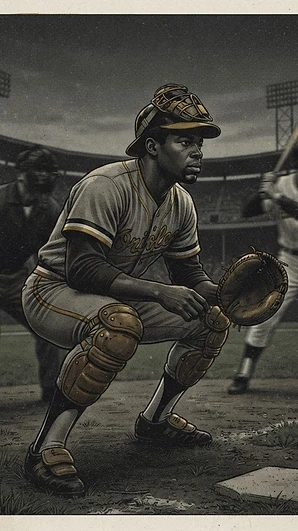


Elrod Hendricks was a standout catcher and a beloved fixture of the Baltimore Orioles for nearly four decades.
Elrod Hendricks
d. 2005
60 Seconds: Elrod Hendricks's Life Story
A tribute to Elrod Hendricks, the U.S. Virgin Islander who became a legendary catcher and long-time coach for the Baltimore Orioles.
Transcript
Elrod Hendricks was a standout catcher and a beloved fixture of the Baltimore Orioles for nearly four decades. Born in the United States Virgin Islands, he made his mark in the Major Leagues starting in 1968. He was a vital piece of the Orioles' success, contributing to three consecutive American League pennants and the 1970 World Series championship. Throughout his career, he also played for the Chicago Cubs and New York Yankees, earning a second World Series ring in 1977. After his playing days, he served as the Orioles' bullpen coach for a record-breaking 28 years. Sadly, this dedicated baseball figure died of a heart attack on December 21, 2005, at the age of 64, leaving behind a profound legacy in Baltimore.
Play the illustrated life story above, or read the full biography on this page.
Visual credits: Generated illustration by The Deaths Archive (Generated illustration, not a photograph) · Library of Congress (Public domain) · Flickr: TRIUMPH TROPHY TR5. REAR IN HUB SUSPENSION. 500 CC TWIN CYLINDER. (CC BY-SA 2.0) · tommyvideo / Pixabay (Pixabay Content License) · Flickr: Baltimore Orioles relief pitcher Alfredo Simon (55) (CC BY-SA 2.0) · Generated illustration by The Deaths Archive (Generated illustration, not a photograph)
An illustrated presentation assembled inside the archive from the approved script and the credited images: narration, scene transitions and captions. Caption timing is estimated from the narration.
Narrated illustration. Images are sourced and credited; they are not presented as authenticated photographs.
Full Biography
|Elrod Gerome "Ellie" Hendricks (December 22, 1940 – December 21, 2005) was a U.S. Virgin Islander professional baseball player and coach. He played in Major League Baseball as a catcher from 1968 through 1979, primarily as a member of the Baltimore Orioles, where he contributed to three consecutive American League pennants from 1969 to 1971 and a World Series win in 1970. He also played for the Chicago Cubs (1972) and New York Yankees (1976–1977). In 2001, he was inducted into the Baltimore Orioles Hall of Fame.
Biography
A native of Charlotte Amalie, United States Virgin Islands, Hendricks was selected by the Baltimore Orioles from the California Angels in the Rule 5 draft on November 28, 1967. He was regarded as a strong defensive catcher and effectively worked with Orioles pitchers such as Mike Cuellar, Pat Dobson, Dave McNally, Jim Palmer and Tom Phoebus.
Hendricks spent most of his playing career with the Orioles, regularly with the winning teams of manager Earl Weaver. They went to three consecutive World Series from 1969–71, as Hendricks shared catching duties with Andy Etchebarren. Hendricks led all American League catchers in fielding percentage in 1969 and 1975.
He was at bat in a pivotal play during the 1969 World Series. With the New York Mets leading 3–0 and two Orioles on base with two outs in the fourth inning of Game 3, Hendricks hit a line drive into the left-center field gap that most[who?] thought would go for extra bases, scoring two runs and putting the Orioles back in the game. But center fielder Tommie Agee, who was playing the left-handed Hendricks to pull in right-center, chased down the ball on a dead sprint, extending his left arm for a backhanded over-the-shoulder catch in the webbing of his glove.
His most productive season came in 1970 with the World Champion Orioles, when he hit 12 home runs with 41 runs batted in. Hendricks went 4-for-11 (.364), hit a solo home run in Game 1, decided Game 2 with a two-run opposite-field double and had four runs batted in to help Baltimore defeat the Cincinnati Reds in the 1970 World Series. He also appeared in the 1976 World Series for the Yankees against Cincinnati, returned to the Orioles as a bullpen coach following the 1977 season, and served as a player-coach in 1978 and 1979.
He was involved in the most controversial play of the 1970 World Series when the Cincinnati Reds were batting against the Orioles with one out and the score tied at three in the sixth inning of Game 1. With runners Tommy Helms at first base and Bernie Carbo at third, pinch hitter Ty Cline hit a Baltimore chop off Jim Palmer who, while running towards home plate, immediately signaled to Hendricks that Carbo was trying to score from third. Hendricks fielded the ball barehanded, spun around to his left and lunged at an oncoming Carbo in an attempt to tag him out, but collided with umpire Ken Burkhart who, while positioning himself to judge whether the batted ball was fair, accidentally blocked the runner's path to the plate. Carbo slid around Burkhart on the outside but missed touching home plate. With his back to the play and after being knocked down, Burkhart ruled Carbo out even though Hendricks made the tag with his mitt while holding the ball in his bare hand. Having not been properly tagged out, Carbo unknowingly stepped on the plate as he was arguing, but the play was dead once Burkhart made his call. Hendricks also had tied the game at 3–3 with a solo home run one inning earlier in the fifth.
Hendricks also played briefly for the Chicago Cubs and New York Yankees, earning a World Series ring with the latter club in 1977. Playing for the Cubs on September 16, 1972, against the Mets at Wrigley Field, Hendricks received five bases on balls, equaling the league mark at that moment. He had been traded along with Ken Holtzman, Doyle Alexander, Grant Jackson and Jimmy Freeman from the Orioles to the Yankees for Rick Dempsey, Scott McGregor, Tippy Martinez, Rudy May and Dave Pagan at the trade deadline on June 15, 1976.
Hendricks made the only pitching appearance in his MLB career in a 24–10 loss to the Toronto Blue Jays at Exhibition Stadium on June 26, 1978. He was the second consecutive position player used as a relief pitcher after Larry Harlow when he entered the game with two outs and the Orioles losing 24–6 in the fifth inning. He allowed only a hit and a walk over 21⁄3 scoreless innings.
In 711 games played, including 658 with Baltimore, Hendricks was a .220 hitter with 62 home runs (still the all-time record for a United States Virgin Islands native) and 230 runs batted in. In nine postseason games, he had .273, 2 home runs, and 10 runs batted in. In 602 games as a catcher, Hendricks collected 2783 outs, 228 assists, 31 double plays, and committed 29 errors for a .990 fielding percentage.
Hendricks played 17 seasons with the Cangrejeros de Santurce in Puerto Rico. He occupies third place on the all-time list in homers with 105.[citation needed]
Coaching career
Hendricks became a fixture in Baltimore by holding the position of bullpen coach for 28 years, the longest coaching tenure in Orioles history. Hendricks was noted for consistently wearing shin guards in the Orioles bullpen, even when he wasn’t actually catching a potential relief pitcher.
His contract was not renewed for that position as of October 2005, in part because he had a mild stroke in April. The 2005 season marked the 37th that Hendricks served in a Baltimore uniform as a player or coach, another club record. He also had the longest active coaching streak with one club among all major league coaches.
Following the 2005 season, Hendricks was set to be reassigned to another position within the organization based on his popularity within the Baltimore community. He frequently signed autographs prior to the games along with his loyalty to the "Oriole Way".
He was slated to be the host for the 2006 Baltimore Baseball Cruise aboard The Golden Princess.[citation needed]
Death
Hendricks died of a heart attack on December 21, 2005, in Glen Burnie, Maryland, one day shy of his 65th birthday.
The Orioles wore the number 44 on the sleeves of their jerseys in 2006, to honor Hendricks. Although the number has not been officially retired, no Oriole player has worn it since Hendricks died.
In 2007, St. Frances Academy in Baltimore started an annual baseball tournament in his name.
Content from Wikipedia — licensed under CC BY-SA 3.0
Interactive
Test Your Knowledge – Trivia Challenge
How well do you know this person's life and legacy?
No account needed to play. Sign in to keep your score on the leaderboard.
Articles & News
Reported coverage of Elrod Hendricks; each link opens the original article on the publisher's own site.
Books & Media
Find books, audiobooks and films about Elrod Hendricks on Amazon.



As an Amazon Associate I earn from qualifying purchases.
Amazon and the Amazon logo are trademarks of Amazon.com, Inc. or its affiliates.
Sources
- Wikipedia
- https://en.wikipedia.org/wiki/Elrod_Hendricks
- CC BY-SA 4.0
- Sep 26, 2026
- View article
- Sep 26, 2026
People who died on December 21
Spotted an error?
Help us keep the archive accurate. Report a correction with a source.
Report an error for Elrod Hendricks →Advertisement