
Photo: TONE Publications, Inc. — Public domainSource
Fela Sowande
composer
- May 29, 1905
- March 13, 1987
- 81 years


About Fela Sowande
Fela Sowande, 81, Nigerian musician and composer.
Explore other notable deaths in 1987 or deaths in March 1987.
The Deaths Archive presents
How well do you know Fela Sowande?
Explore their life. Test your knowledge. Beat the challenge.
10 questions · One legacy · How much do you really know?
Challenge your friends
Play together in real-time.
Advertisement

Full Biography
|Chief Olufela Obafunmilayo "Fela" Sowande ListenⓘMBE (29 May 1905 – 13 March 1987) was a Nigerian musician and composer. Considered the father of modern Nigerian art music, Sowande is perhaps the most internationally known African composer of works in the European "classical" idiom.
Early life
Sowande was born 29 May 1905 in Abeokuta, near Lagos, the son of Emmanuel Sowande, a priest and pioneer of Nigerian church music. As a child he sang in the choir of the Cathedral Church of Christ. He studied at the C.M.S. Grammar School and at King's College, Lagos. The influence of his father and Dr. T. K. Ekundayo Phillips (composer, organist and choirmaster) was an important factor in his early years. Through Phillips, Sowande was first exposed to European church music like Bach and Rheinberger. At that time, Sowande was a chorister and was introduced to new Yoruba works being introduced into the churches. Under Phillips' tutelage, Sowande earned the Fellowship Diploma (FRCO) from the Royal College of Organists. At that time, he was also a bandleader, playing jazz and popular highlife music.
Career
In 1934, Sowande went to London to study European classical and popular music. In 1936, he was solo pianist in a performance of George Gershwin's Rhapsody in Blue. He also played as part of a pianist duo with Fats Waller, was theatre organist for the BBC, Choirmaster at Kingsway Hall and pianist in the 1936 production of Blackbirds. In 1939, he played the organ on recordings by popular singers Adelaide Hall and Vera Lynn. Later, he studied organ privately under Edmund Rubbra, George Oldroyd, and George Cunningham and became a Fellow of the Royal College of Organists in 1943, winning the Limpus, Harding and Read Prizes.
He obtained a Bachelor of Music degree at the University of London and became a Fellow of Trinity College of Music. During the Second World War, he worked as musical advisor for the Colonial Film Unit of the Ministry of Information mainly providing background music for educational films, and lectured on music for the BBC Africa Service.
From 1945 until 1952, he was organist and choirmaster at the West London Mission of the Methodist Church. During this time, he also became known as a dance pianist, bandleader, and Hammond organist, playing popular tunes of the day.
He went back to Nigeria to conduct scholarly work with the Nigerian Broadcasting Corporation and later the University of Ibadan.
In 1952 Sowande became musical director of the Nigerian Broadcasting Service; in the 1955 Queen's Birthday Honours he was appointed MBE for this work.
Sowande was one of the six judges who selected the Nigerian National Anthem in 1960.
In 1962 he travelled to the United States on a Rockefeller Foundation fellowship. In 1968, he moved to Howard University in Washington, D.C., then to the University of Pittsburgh.
Music
Western and African ideas prevail in his music, which included organ works such as Yorùbá Lament, Obangiji, Kyrie, Gloria, Jesu Olugbala, and Oba Aba Ke Pe. Most of these show a strong influence from Anglican Church music, combined with Yoruba pentatonic melodies, and would have appealed to members of the West London Mission of African descent.
His orchestral works include Six Sketches for Full Orchestra, A Folk Symphony, and the African Suite for string orchestra, and show African rhythmic and harmonic characteristics. The final movement became known to Canadian audiences as the theme of the popular CBC music programme Gilmour's Albums, and is now a Canadian orchestral standard. He also wrote a significant amount of secular and sacred choral music, mainly a cappella. Some of these works were composed during his period with the BBC Africa Service.
Nigerian art music
Ronnie Graham identifies the "art" music - "or the acculturated music of Nigeria's educated and westernised elite" - as a neglected area of study, which he presumes is due to its close approximation of western classical music. Graham identifies other composers of Nigerian art music as Samuel Akpabot (1932–2000), Ayo Bankole (1935–1976), Lazarus Ekwueme (born 1935), Akin Euba (1935–2020), Adam Fiberesima (1926–c1975), Oakchukwu Ndubuisi (born 1939), Josiah Ransome-Kuti (1855–1930) and Ikole Harcourt Whyte (1905–1977). "Many of their compositions involve adapting folk songs and traditions to western classical arrangements and instruments", he says.
Later life
In the last years of his life Sowande taught in the Department of Pan-African Studies at Kent State University, and lived in nearby Ravenna, Ohio, with his wife, Eleanor McKinney, who was one of the founders of Pacifica Radio. He died in Ravenna and is buried in Randolph Township, Ohio.
In addition to his position as a professor, Sowande also held the chieftaincy title of the Bariyo of Lagos.[citation needed] There is currently[when?] a move to set up a centre to research and promote his works, as many remain unpublished or are out of print.
Selected compositions
Organ
- 1945 – Ka Mura, Chappell, London
- 1952 – Pastourelle (for organ), Chappell, London
- 1955 – Jesu Olugbala, Chappell, London
- 1955 – Joshua Fit de Battle of Jericho, Chappell, London
- 1955 – Kyrie, Chappell, London
- 1955 – Obangiji, Chappell, London
- 1955 – Yorùbá Lament, Chappell, London
- 1958 – Oyigiyigi, Ricordi, New York
- 1958 – Gloria, Ricordi, New York
- 1958 – Prayer, Ricordi, New York
- KÕa Mo Rokoso
- Oba Aba Ke Pe
- Go Down Moses
- The Negro in Sacred Idiom, various organ pieces
Choral
- "The Wedding Day" for S.S.A. with piano, 1957, RDH
- "Sometimes I Feel Like a Motherless Child" for S.A.T.B. a cappella, 1955, Chappell, London
- "My Way's Cloudy" for S.A.T.B. with piano, 1955, Chappell, London
- "De Ol' Ark's a-Moverin" for S.A.T.B.B. a cappella with tenor solo, 1955, Chappell, London
- "Same Train" for S.A.T.B.B. a cappella, 1955, Chappell, London
- "Roll de Ol' Chariot" for S.A.T.B.B. with piano and rhythm combo, 1955, Chappell, London
- Steal Away for S.A.T.B.B. a cappella, 1955, Chappell, London
- "Responses in 'A'" for S.A.T.B. a cappella with cantor, 1959, manuscript
- "All I d"o for S.A.T.B.B. with piano and rhythm combo, 1961, Ricordi, New York
- "Goin' to Set Down" for S.A.T.B. a cappella with soprano solo, 1961, Ricordi, New York
- "Couldn't Hear Nobody Pray" for S.A.T.B. a cappella with soprano solo, 1958, Ricordi, New York
- "De Angels Are Watchin'" for S.A.T.B. a cappella with soprano and tenor solo, 1958, Ricordi, New York
- "Nobody Knows de Trouble I See" for S.A.TB. a cappella, 1958, Ricordi, New York
- "Wheel, Oh Wheel" for S.A.T.B. a cappella, 1961, Ricordi, New York
- "Wid a Sword in Ma Hand" for S.A.T.B.B. a cappella, 1958, Ricordi, New York
- "Sit Down Servant" for T.T.B.B. a cappella and tenor solo, 1961, Ricordi, New York
- "Out of Zion" for S.A.T.B. with organ, 1955
- "St. Jude's Response" for S.A.T.B. with organ
- "Oh Render Thanks" (hymn-anthem) for S.A.T.B. with organ, 1960
- Nigerian National Anthem (an arrangement) for S.A.T.B. with organ, 1960
- Chants for Alan Paton and Krishna Shah's play Sponono, 1964
Solo songs
- Three Songs of Contemplation for tenor and piano, 1950, Chappell, London
- Because of You for voice and piano, 1950, Chappell, London
- Three Yoruba Songs for voice and piano, 1954, Ibadan
Orchestral
- Four Sketches for full orchestra, 1953
- African Suite for string orchestra, 1945, Chappell, London
- Folk Symphony for full orchestra, 1960. Commissioned by the Nigerian government in celebration of its 1 Oct 1960 independence.
Books
- (1964). Ifa: Guide, Counsellor, and Friend of Our Forefathers. Ibadan.
- (1966). The Mind of a Nation: The Yoruba Child. Ibadan: Ibadan University.
- (1968). Come Now Nigeria, Part 1: Nationalism and essays on relevant subjects. Ibadan: Sketch Pub. Co.; sole distributors: Nigerian Book Suppliers. (All the material presented in this book first appeared in the form of articles in the pages of the Daily Sketch, Ibadan.)
- (1975). The Africanization of Black Studies. Kent, Ohio: Kent State University Institute for African American Affairs. African American Affairs Monograph Series, v. 2, no. 1.
- (1985) The Learning Process: Standard Rules for the Student
Articles
- (1971). "Black Folklore", Black Lines: A Journal of Black Studies (special issue: Black Folklore), vol. 2, no. 1 (Fall 1971), pp. 5–21.
Recordings
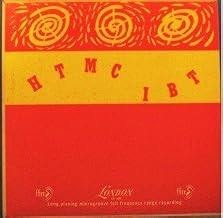
A recording of the African Suite by the New Symphony Orchestra conducted by Trevor Harvey, was issued on London Records (LPS 426) in 1951. Sowande recorded five movements from his collection of organ works, The Negro in Sacred Idiom, the following year (London LL-533). Both recordings have been reissued by Naxos Records.
Content from Wikipedia — licensed under CC BY-SA 3.0
Interactive
Test Your Knowledge – Trivia Challenge
How well do you know this person's life and legacy?
No account needed to play. Sign in to keep your score on the leaderboard.
Books & Media
Find books, audiobooks and films about Fela Sowande on Amazon.




As an Amazon Associate I earn from qualifying purchases.
Amazon and the Amazon logo are trademarks of Amazon.com, Inc. or its affiliates.
Sources
- Wikipedia
- https://en.wikipedia.org/wiki/Fela_Sowande
- CC BY-SA 4.0
- Sep 26, 2026
- View article
- View record
- October 28, 2026
- Sep 26, 2026
Trivia & Knowledge· 16 questions
Questions drawn from Fela Sowande's archived record and the sources above.
1.During which years was Fela Sowande the organist and choirmaster at the West London Mission?
- A.1962–1968
- B.1945–1952correct
- C.1955–1960
- D.1934–1940
From 1945 until 1952, Fela Sowande served as the organist and choirmaster at the West London Mission of the Methodist Church.
Source: Career
2.Which of these organ works was published by Ricordi in New York in 1958?
- A.Obangiji
- B.Ka Mura
- C.Pastourelle
- D.Gloriacorrect
Gloria was published by Ricordi in New York in 1958.
Source: Selected compositions
3.Where was Fela Sowande buried after his death?
- A.London, England
- B.Lagos, Nigeria
- C.Randolph Township, Ohiocorrect
- D.Abeokuta, Nigeria
Fela Sowande died in Ravenna and is buried in Randolph Township, Ohio.
Source: Later life
4.Which of these is a book authored by Fela Sowande?
- A.The History of Jazz
- B.European Classical Idioms
- C.The Life of Bach
- D.The Mind of a Nation: The Yoruba Childcorrect
Fela Sowande authored the book The Mind of a Nation: The Yoruba Child in 1966.
Source: Books
5.Which piece of orchestral music was commissioned by the Nigerian government to celebrate its independence?
- A.Yorùbá Lament
- B.Folk Symphonycorrect
- C.Six Sketches
- D.African Suite
The Folk Symphony was commissioned by the Nigerian government in celebration of its 1 October 1960 independence.
Source: Selected compositions
6.What chieftaincy title did Fela Sowande hold?
- A.The Oba of Lagos
- B.The Musical Regent of Nigeria
- C.The Bariyo of Lagoscorrect
- D.The Chief Priest of Abeokuta
In addition to his academic position, Fela Sowande held the chieftaincy title of the Bariyo of Lagos.
Source: Later life
7.Fela Sowande served as a judge for which significant event in 1960?
- A.The BBC Talent Search
- B.The West London Mission Choir contest
- C.The Nigerian National Anthem selectioncorrect
- D.The London Music Competition
Fela Sowande was one of the six judges who selected the Nigerian National Anthem in 1960.
Source: Career
8.Which composer was an early influence on Fela Sowande through church music?
- A.George Gershwin
- B.Fats Waller
- C.Edmund Rubbra
- D.T. K. Ekundayo Phillipscorrect
The influence of his father and Dr. T. K. Ekundayo Phillips was an important factor in Fela Sowande's early musical development.
Source: Early life
9.What role did Fela Sowande play during the Second World War for the Colonial Film Unit?
- A.Script Writer
- B.Musical Advisorcorrect
- C.Camera Operator
- D.Film Director
During the Second World War, Fela Sowande worked as a musical advisor for the Colonial Film Unit, providing background music for educational films.
Source: Career
10.What is the title of the orchestral work by Fela Sowande that became a Canadian orchestral standard?
- A.African Suitecorrect
- B.A Folk Symphony
- C.Six Sketches
- D.Yorùbá Lament
The final movement of the African Suite became a Canadian orchestral standard after being featured on the CBC program Gilmour's Albums.
Source: Music
11.Who was Fela Sowande's wife, who also co-founded Pacifica Radio?
- A.Vera Lynn
- B.Adelaide Hall
- C.Eleanor McKinneycorrect
- D.Rita Cann
Fela Sowande lived in Ravenna, Ohio, with his wife, Eleanor McKinney, a founder of Pacifica Radio.
Source: Later life
12.In which city did Fela Sowande pass away?
- A.Ravenna, Ohiocorrect
- B.London
- C.Lagos
- D.Washington, D.C.
Fela Sowande died in Ravenna, Ohio, where he lived during his final years.
Source: Later life
13.Which prize did Fela Sowande win as a Fellow of the Royal College of Organists?
- A.The Nobel Prize
- B.The Pulitzer Prize
- C.The Limpus Prizecorrect
- D.The Grammy Award
Fela Sowande became a Fellow of the Royal College of Organists in 1943, winning the Limpus, Harding and Read Prizes.
Source: Career
14.What professional title did Fela Sowande hold at the Nigerian Broadcasting Service starting in 1952?
- A.Radio Producer
- B.Musical Directorcorrect
- C.Station Manager
- D.Chief Engineer
In 1952, Fela Sowande became the musical director of the Nigerian Broadcasting Service.
Source: Career
15.Which educational institution did Fela Sowande attend in his early life?
- A.Oxford University
- B.King's College, Lagoscorrect
- C.University of Ghana
- D.Cambridge University
Fela Sowande studied at the C.M.S. Grammar School and at King's College, Lagos.
Source: Early life
16.What is the date of birth of Fela Sowande?
- A.1 October 1960
- B.29 May 1905correct
- C.13 March 1987
- D.29 May 1910
Fela Sowande was born on 29 May 1905 in Abeokuta, near Lagos.
Source: Early life
Explore the archive
People who died on March 13
Related People


Spotted an error?
Help us keep the archive accurate. Report a correction with a source.
Report an error for Fela Sowande →Advertisement
