Frank Bencriscutto
- August 28, 1997
- 68 years



About Frank Bencriscutto
Frank Bencriscutto, 68, American concert band conductor and composer.
Explore other notable deaths in 1997 or deaths in August 1997.
The Deaths Archive presents
How well do you know Frank Bencriscutto?
Explore their life. Test your knowledge. Beat the challenge.
10 questions · One legacy · How much do you really know?
Challenge your friends
Play together in real-time.
Advertisement

Full Biography
|Frank Bencriscutto (September 21, 1928 – August 28, 1997), nicknamed "Dr. Ben," was an American conductor and composer of concert band music. Bencriscutto was Director of Bands and Professor of Music at the University of Minnesota for thirty-two years.
Family
Born to Italian immigrant parents in Racine, Wisconsin, Bencriscutto was the ninth of ten children. In 1951, he married Jean Wisner Fischer. The couple had three children.
Education
Bencriscutto earned Bachelor of Music and Master of Music degrees from the University of Wisconsin and a Doctor of Musical Arts degree from the Eastman School of Music. At Eastman, he studied composition with Howard Hanson and Bernard Rogers and played principal alto saxophone in the Eastman Wind Ensemble under Frederick Fennell.
University of Minnesota
Bencriscutto's work as a conductor at the University of Minnesota (1960-1993) led to many honors for his ensembles. As director of the University of Minnesota Marching Band, Bencriscutto instituted the Indoor Marching Band Concert at Northrop Auditorium, an annual tradition that has since been copied by university marching bands nationwide. Many marching band traditions instituted by Bencriscutto continue to this day, including the band's football pre-game "swinging gates" formation performed during Dr. Ben's arrangement of "Battle Hymn of the Republic." This tradition has been ongoing since it debuted in 1961.
In 1969, the conductor led the University of Minnesota Wind Orchestra on a landmark 7-week, 10-city, 27-concert cultural exchange tour in the Soviet Union while Bolshoi Ballet toured the United States. The tour culminated with a presidential command performance in the Rose Garden of the White House and resulted in Dr. Bencriscutto being invited by Dmitri Shostakovich and the Ministry of Culture to be an honored guest of the Soviet Union the following year at the 1970 International Tschaikovsky Competition.
Benscriscutto and The University of Minnesota Concert Band made a tour of mainland China in 1980 as the first American band to perform in the People's Republic of China.
After retiring from the University of Minnesota in 1993, Bencriscutto joined the faculty at the Musashino Academia Musicae in Tokyo, Japan as a visiting professor and conductor of the Wind Ensemble until 1996.
Professional honors
Bencriscutto was elected to the American Bandmasters Association in 1966. His work "Sing a New Song" (1973) won the Neil A. Kjos Memorial Award for the most significant contribution to band literature. He received the Edwin Franko Goldman Award from the American School Band Directors Association in 1993, and in 1997, he was posthumously awarded the Medal of Honor at the Midwest Clinic.
Composer
Active as a composer and arranger, Bencriscutto wrote the majority of his original works for concert bands. Several of his compositions have become standards in the repertoire, including Let the Light Shine, Latina, Serenade for Solo Alto Saxophone and Band, Granite Rock, and Summer in Central Park. As an arranger, Bencriscutto transcribed several orchestral works for band, most notably Profanation from Jeremiah (Symphony No. 1) by Leonard Bernstein. He also arranged many works for the University of Minnesota Marching Band that are still used by the ensemble today. Examples include The Minnesota Rouser, The Royals Rouser, The Minnesota March by John Philip Sousa, Hail! Minnesota, and Battle Hymn of the Republic.
Compositions
A list of original compositions is included below.
Concert band
- Metamorphosis: Three Episodes for Concert Band (1957)
- Concertino for Tuba and Wind Band (1963)
- Latina, Latin American Dance (1964)
- Lyric Dance (1967)
- Festina (1971)
- Granite Rock (1971)
- The Spirit of Our Land (1972)
- Jazz March: A Brazilian Percussion Feature (1972)
- Sing A New Song - Psalm 96, for Mixed Choir and Band (1973)
- The President's Trio, for Three Trumpets and Band (1973)
- Symphonic Jazz Suite for jazz soloists, jazz-rock combo, and band (1975)
- Lamp Of Liberty (Symbol Of The American Spirit - The Statue Of Liberty) (1976)
- Serenade for Alto Saxophone and Band (1976)
- Dialogue for Clarinet and Band (1978)
- Six Concert Fanfares (1977)
- Let The Light Shine (1978)
- Concerto for Trumpet and Band (1979)
- Escapade For Trombones (1979)
- Concerto Grosso for Saxophone Quartet and Band (1980)
- Jubile (1981)
- Kaleidoscope (1986)
- Visions of Childhood (from Metamorphosis) (1987)
- Pacific Scene (1987)
- Lindbergh Jubilee (1988)
- TM Blues (1991)
- Concertino for Clarinet and Band (1995)
- Centennial Festival Overture (1995)
- Summer In Central Park (1996)
Chorus
- Sing A New Song - Psalm 96, for Mixed Choir and Band (1973)
Chamber
- Rondeau for percussion and piano (1959)
- Valse Rondo for solo clarinet and piano (1978)
- Dialogue for solo clarinet and piano (1978)
- Elegy for solo clarinet and piano (1978)
- Concerto grosso for saxophone quartet and piano (1980)
- Suite for flute and piano, bass, drum set (1986)
Pedagogical work
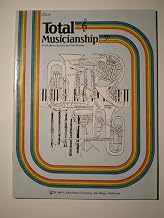
- Total Musicianship, method books for all musical instruments of a band (1983)
Content from Wikipedia — licensed under CC BY-SA 3.0
Interactive
Test Your Knowledge – Trivia Challenge
How well do you know this person's life and legacy?
No account needed to play. Sign in to keep your score on the leaderboard.
Books & Media
Find books, audiobooks and films about Frank Bencriscutto on Amazon.





As an Amazon Associate I earn from qualifying purchases.
Amazon and the Amazon logo are trademarks of Amazon.com, Inc. or its affiliates.
Sources
- Wikipedia
- https://en.wikipedia.org/wiki/Frank_Bencriscutto
- CC BY-SA 4.0
- Sep 26, 2026
- View article
- Sep 26, 2026
Trivia & Knowledge· 16 questions
Questions drawn from Frank Bencriscutto's archived record and the sources above.
1.What was the destination of the 1969 cultural exchange tour led by Frank Bencriscutto?
- A.Mainland China
- B.The Soviet Unioncorrect
- C.The United States
- D.Japan
In 1969, Frank Bencriscutto led the University of Minnesota Wind Orchestra on a tour in the Soviet Union.
Source: University of Minnesota section
2.What instrument did Frank Bencriscutto play in the Eastman Wind Ensemble?
- A.Trumpet
- B.Alto saxophonecorrect
- C.Clarinet
- D.Tuba
Frank Bencriscutto played principal alto saxophone in the Eastman Wind Ensemble.
Source: Education section
3.When did Frank Bencriscutto pass away?
- A.August 28, 1997correct
- B.September 21, 1996
- C.September 21, 1997
- D.August 28, 1993
Frank Bencriscutto passed away on August 28, 1997.
Source: Introduction
4.Who did Frank Bencriscutto study composition with at the Eastman School of Music?
- A.Howard Hanson and Bernard Rogerscorrect
- B.Jean Wisner Fischer and Edwin Franko Goldman
- C.Dmitri Shostakovich and John Philip Sousa
- D.Frederick Fennell and Leonard Bernstein
At the Eastman School of Music, Frank Bencriscutto studied composition with Howard Hanson and Bernard Rogers.
Source: Education section
5.What major award did Frank Bencriscutto receive posthumously in 1997?
- A.Neil A. Kjos Memorial Award
- B.Medal of Honor at the Midwest Cliniccorrect
- C.International Tschaikovsky Competition prize
- D.Edwin Franko Goldman Award
In 1997, Frank Bencriscutto was posthumously awarded the Medal of Honor at the Midwest Clinic.
Source: Professional honors section
6.What is the title of the pedagogical work Frank Bencriscutto published in 1983?
- A.Concerto Grosso
- B.Six Concert Fanfares
- C.The President's Trio
- D.Total Musicianshipcorrect
Frank Bencriscutto wrote Total Musicianship, which consisted of method books for all musical instruments of a band.
Source: Compositions section
7.In the context of his family life, Frank Bencriscutto was the child of what number out of ten?
- A.Third
- B.Tenth
- C.Ninthcorrect
- D.First
Frank Bencriscutto was the ninth of ten children born to Italian immigrant parents.
Source: Family section
8.Which orchestral work did Frank Bencriscutto arrange for band?
- A.Profanation from Jeremiahcorrect
- B.Metamorphosis
- C.The Minnesota Rouser
- D.The Spirit of Our Land
Frank Bencriscutto transcribed several orchestral works for band, most notably Profanation from Jeremiah by Leonard Bernstein.
Source: Composer section
9.Following his retirement from the University of Minnesota, where did Frank Bencriscutto teach?
- A.University of Wisconsin
- B.Musashino Academia Musicaecorrect
- C.Eastman School of Music
- D.University of Maryland
After retiring from the University of Minnesota in 1993, Frank Bencriscutto joined the faculty at the Musashino Academia Musicae in Tokyo.
Source: University of Minnesota section
10.Which of these works by Frank Bencriscutto won the Neil A. Kjos Memorial Award?
- A.Granite Rock
- B.Sing a New Songcorrect
- C.Summer in Central Park
- D.Latina
Frank Bencriscutto's work Sing a New Song, composed in 1973, won the Neil A. Kjos Memorial Award.
Source: Professional honors section
11.In what year did Frank Bencriscutto tour mainland China with the University of Minnesota Concert Band?
- A.1993
- B.1969
- C.1973
- D.1980correct
Frank Bencriscutto and The University of Minnesota Concert Band toured mainland China in 1980.
Source: University of Minnesota section
12.What tradition did Frank Bencriscutto institute for the University of Minnesota Marching Band in 1961?
- A.The Rose Garden performance
- B.The Swinging Gates formationcorrect
- C.The Indoor Marching Band Concert
- D.The Summer in Central Park parade
The swinging gates formation debuted in 1961 as part of Frank Bencriscutto's arrangement of Battle Hymn of the Republic.
Source: University of Minnesota section
13.What is the nickname by which Frank Bencriscutto was known?
- A.The Conductor
- B.Dr. Bencorrect
- C.Professor Music
- D.The Maestro
Frank Bencriscutto was nicknamed Dr. Ben.
Source: Introduction
14.At which institution did Frank Bencriscutto earn his Doctor of Musical Arts degree?
- A.Musashino Academia Musicae
- B.University of Wisconsin
- C.Eastman School of Musiccorrect
- D.University of Minnesota
Frank Bencriscutto earned his Doctor of Musical Arts degree from the Eastman School of Music.
Source: Education section
15.Which university employed Frank Bencriscutto as Director of Bands for thirty-two years?
- A.Eastman School of Music
- B.University of Wisconsin
- C.Musashino Academia Musicae
- D.University of Minnesotacorrect
Frank Bencriscutto served as Director of Bands and Professor of Music at the University of Minnesota for thirty-two years.
Source: Introduction
16.In what city was Frank Bencriscutto born?
- A.Chicago, Illinois
- B.Minneapolis, Minnesota
- C.Rochester, New York
- D.Racine, Wisconsincorrect
Frank Bencriscutto was born to Italian immigrant parents in Racine, Wisconsin.
Source: Family section
Explore the archive
People who died on August 28
Spotted an error?
Help us keep the archive accurate. Report a correction with a source.
Report an error for Frank Bencriscutto →Advertisement
