Graham Lovett
association football player
- August 5, 1947 · Sheldon
- May 10, 2018
- 70 years


About Graham Lovett
Graham Lovett, 70, English footballer (West Bromwich Albion).
Explore other notable deaths in 2018 or deaths in May 2018.
The Deaths Archive presents
How well do you know Graham Lovett?
Explore their life. Test your knowledge. Beat the challenge.
10 questions · One legacy · How much do you really know?
Challenge your friends
Play together in real-time.
Advertisement

60 Seconds Life Story
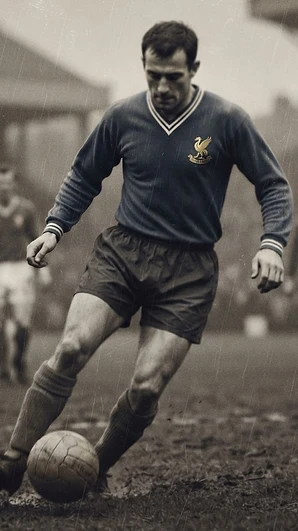


Graham Lovett was a formidable English midfielder who became a key figure for West Bromwich Albion in the
Graham Lovett
1947 – 2018
60 Seconds: Graham Lovett's Life Story
A brief overview of the career of English footballer Graham Lovett, spanning his time at West Bromwich Albion to his retirement.
Transcript
Graham Lovett was a formidable English midfielder who became a key figure for West Bromwich Albion in the 1960s. Born in 1947, he traded accountancy plans for a professional football apprenticeship in 1964. Lovett quickly excelled, helping his club secure victory in the 1966 Football League Cup Final. He overcame a broken neck from a car crash in 1966 to help Albion win the 1968 FA Cup Final at Wembley. Unfortunately, a second severe collision in 1969 caused injuries that ultimately forced his retirement from the game at just twenty-six. After leaving professional football, Lovett worked in advertising before eventually moving abroad. He passed away in 2018 at the age of seventy, remembered for his strength and dedication to his club.
Play the illustrated life story above, or read the full biography on this page.
Visual credits: Generated illustration by The Deaths Archive (Generated illustration, not a photograph) · Own work (CC BY-SA 3.0) · Own work (CC BY-SA 3.0) · Wembley Stadium (CC0) · Crane picks ore car out of wreckage of AARR carferry #4, swings it over to salvage barge, Manistique MI, 1909. (Public domain) · Own work (CC BY-SA 4.0) · NickyPe / Pixabay (Pixabay Content License)
An illustrated presentation assembled inside the archive from the approved script and the credited images: narration, scene transitions and captions. Caption timing is estimated from the narration.
Narrated illustration. Images are sourced and credited; they are not presented as authenticated photographs.
Full Biography
|Graham John Lovett (5 August 1947 – 10 May 2018) was an English footballer who played most of his career as a midfielder for West Bromwich Albion, where he was on the winning sides for the 1966 Football League Cup Final and the 1968 FA Cup Final. He was forced to retire from the game at age 26, following two serious car crashes.
Early life
Lovett was born in Sheldon, Warwickshire, and attended Cockshut Hill and Sheldon Heath schools, whom he represented at football, as well as playing for the Birmingham & County Schools team. At school, he initially intended to follow a career in accountancy, but following the death of his father while Graham was studying for his A levels, his plans changed and he took up the offer of an apprenticeship from West Bromwich Albion in February 1964.
Football career
Lovett signed as a professional in November 1964 and made his first team debut within three weeks as Albion lost 2–0 at home to Chelsea. As a youngster he was compared by his manager, Jimmy Hagan, to Duncan Edwards, the Manchester United and England player who had died in the Munich air disaster in 1958. Lovett was profiled in a matchday programme in which the writer explained how Lovett had acquired his nickname of "Shuv":
Graham drives an eight-year-old car which cost him £150 – and gets his leg pulled by the first teamers about the number of times it needs "a shove".
Lovett himself played down the praise he was receiving:
It's great to be in the first team and playing with the big names against the big names, but there is a nagging feeling which make me wonder whether you deserve the praise, and whether it's going to last. And I am really lost when they start talking about Duncan Edwards or Ray Barlow, neither of whom I ever saw play. But once the game starts, it's all different. The stars often seem quite ordinary when it's under way. And I never have time to worry about the reputations of the opposition.
Lovett soon established himself in the first team and in March 1966 played in the first leg of the League Cup Final against West Ham United. Although Albion lost the first leg 2–1, they won the second (when Lovett was replaced by Bobby Hope) 4–1 to take the cup on aggregate.
Lovett, with his great strength and ability to pass the ball long or short, was becoming an important part of Albion's plans, but his career was interrupted when, on Christmas Eve 1966, he was involved in a car accident on the M1 motorway when his car ran off the road into a ditch. Lovett suffered a broken neck but an operation involving bone grafts enabled him to start to rebuild his football career.
By the end of 1967, he was back in training and playing for the reserves and returned to the first team in January 1968. On 27 January, he became the first Albion player to come on as a substitute in an FA Cup match when he replaced Dick Krzywicki at Colchester United. Lovett's return to the side added "a new precision" to the team who went on to defeat Colchester 4–0 in the replay, in which Lovett made his first start in just over a year.
In the fourth round of the cup, Albion met Southampton who held them to a 1–1 draw at The Hawthorns; in the replay at The Dell, goalkeeper John Osborne had to go to hospital at half-time with concussion. Captain Graham Williams went in goal, with Lovett coming on as substitute. Hugh Fisher then scored for the "Saints" to bring the scores level at 2–2 before, with two minutes remaining, Lovett ran through the midfield unchecked. His shot hit the post and rebounded to Clive Clark who passed to the unmarked Jeff Astle to score and put Albion through to the next round. After defeating Portsmouth in Round Five, Albion had a long drawn-out tie against Liverpool which went to a second replay, before defeating local rivals Birmingham City in the semi-final to set up a final at Wembley against Everton.
In the final, played on 18 May 1968, Lovett was selected at outside right and had an early opportunity to score but was too slow to make the most of his chance. There was no score until Astle scored the only goal of the match in the first half of extra time, enabling Albion to win the cup for the fifth time.
Following their victory in the FA Cup, Albion entered the Cup Winners' Cup where they were drawn against Dinamo Bucharest in the second round. After a 1–1 draw in the first leg, Albion defeated their Romanian opponents 4–0 at The Hawthorns, with Lovett opening the scoring in the 35th minute. In the next round, they were defeated 1–0 by Scottish side, Dunfermline Athletic.
By the end of the 1968–69 season, Lovett had become an established fixture in the Albion side. On 31 May 1969, following an international tournament in Palo Alto, California, Lovett was driving home from the airport when a bus, which had rounded a corner on the wrong side of the road in Quinton, collided with his car. In the accident, Lovett broke his thighbone, suffered a collapsed lung and broken ribs. As a result of the accident, Lovett was out of action for nearly two years and was never to successfully return to first-team football. In 1973, in Birmingham Crown Court, he was awarded £14,000 damages against the West Midlands Transport Executive.
In an attempt to rebuild his career, he was loaned to Southampton for a month in November 1971 with a view to a possible permanent transfer. Lovett made three appearances for Southampton, replacing Bobby Stokes; the first was in a 2–1 victory over Leeds United, followed by an 8–0 defeat at Everton (equalling Southampton's largest loss) and a 5–2 defeat by Manchester United. Lovett's trial was not considered a success by the Southampton management and he returned to West Bromwich Albion.
Lovett was released from his contract in 1972 and played non-league football—for Worcester City and Solihull Borough—before retiring completely.
Later life
On retiring from football, he worked in advertising for the Express & Star newspaper in the West Midlands before emigrating to southern Spain. He later settled in Thailand. In March 2008, he flew to England to join in the celebrations of the 40th anniversary of the FA Cup victory.
In 2017 he settled back in England with his wife Kate and after a short illness died on 10 May 2018, aged 70. At West Bromwich Albion's home match against Queens Park Rangers in August 2018, Lovett's family were presented with a special cap commemorating his service to the club.
Honours
West Bromwich Albion
Content from Wikipedia — licensed under CC BY-SA 3.0
Interactive
Test Your Knowledge – Trivia Challenge
How well do you know this person's life and legacy?
No account needed to play. Sign in to keep your score on the leaderboard.
Books & Media
Find books, audiobooks and films about Graham Lovett on Amazon.



As an Amazon Associate I earn from qualifying purchases.
Amazon and the Amazon logo are trademarks of Amazon.com, Inc. or its affiliates.
Sources
- Wikipedia
- https://en.wikipedia.org/wiki/Graham_Lovett
- CC BY-SA 4.0
- Sep 26, 2026
- View article
- View record
- October 20, 2026
- Sep 26, 2026
Trivia & Knowledge· 15 questions
Questions drawn from Graham Lovett's archived record and the sources above.
1.In which city was Graham Lovett born?
- A.West Bromwich
- B.Southampton
- C.Sheldoncorrect
- D.Birmingham
The biography states that Graham Lovett was born in Sheldon, Warwickshire.
Source: Early life section
2.What career path did Graham Lovett initially plan to follow before joining West Bromwich Albion?
- A.Medicine
- B.Professional football
- C.Accountancycorrect
- D.Journalism
Graham Lovett initially intended to follow a career in accountancy while he was studying for his A levels.
Source: Early life section
3.Which player was Graham Lovett compared to by his manager Jimmy Hagan?
- A.Bobby Hope
- B.Ray Barlow
- C.Duncan Edwardscorrect
- D.Jeff Astle
As a youngster, Graham Lovett was compared by his manager Jimmy Hagan to Duncan Edwards.
Source: Football career section
4.What serious injury did Graham Lovett suffer during his 1966 motorway car accident?
- A.A broken leg
- B.A shattered hip
- C.A fractured skull
- D.A broken neckcorrect
In the 1966 car accident on the M1 motorway, Graham Lovett suffered a broken neck.
Source: Football career section
5.Graham Lovett became the first West Bromwich Albion player to achieve what milestone in the FA Cup?
- A.Playing in five consecutive finals
- B.Entering the match as a substitutecorrect
- C.Captaining the team at Wembley
- D.Scoring a hat-trick as a substitute
On 27 January 1968, Graham Lovett became the first Albion player to come on as a substitute in an FA Cup match.
Source: Football career section
6.Against which team did West Bromwich Albion win the FA Cup in 1968?
- A.Liverpool
- B.Southampton
- C.Evertoncorrect
- D.West Ham United
West Bromwich Albion defeated Everton in the 1968 FA Cup final.
Source: Football career section
7.In which competition did Graham Lovett score his first goal for West Bromwich Albion after their FA Cup victory?
- A.The Cup Winners' Cupcorrect
- B.The European Cup
- C.The Football League Cup
- D.The FA Cup
Graham Lovett opened the scoring for West Bromwich Albion in a 4-0 win against Dinamo Bucharest in the Cup Winners' Cup.
Source: Football career section
8.What major injuries did Graham Lovett sustain in his second car accident in 1969?
- A.A broken collarbone, internal bleeding, and a fractured spine
- B.A broken neck, a concussion, and facial lacerations
- C.A broken pelvis, a punctured liver, and multiple fractures
- D.A broken thighbone, a collapsed lung, and broken ribscorrect
The 1969 accident resulted in Graham Lovett breaking his thighbone, suffering a collapsed lung and broken ribs.
Source: Football career section
9.How much in damages was Graham Lovett awarded by the Birmingham Crown Court in 1973?
- A.£14,000correct
- B.£10,000
- C.£20,000
- D.£5,000
In 1973, Graham Lovett was awarded £14,000 in damages against the West Midlands Transport Executive.
Source: Football career section
10.Graham Lovett spent a month on loan at which football club in 1971?
- A.Chelsea
- B.Southamptoncorrect
- C.Leeds United
- D.Manchester United
Graham Lovett was loaned to Southampton for a month in November 1971.
Source: Football career section
11.After leaving West Bromwich Albion, which non-league clubs did Graham Lovett play for?
- A.Sheldon Heath and Birmingham City
- B.Dunfermline Athletic and Dinamo Bucharest
- C.Worcester City and Solihull Boroughcorrect
- D.Colchester United and Everton
After being released by West Bromwich Albion, Graham Lovett played for Worcester City and Solihull Borough.
Source: Football career section
12.What job did Graham Lovett hold after retiring from professional football?
- A.Accountancy
- B.Advertisingcorrect
- C.Teaching
- D.Sports management
Upon retiring from football, Graham Lovett worked in advertising for the Express & Star newspaper.
Source: Later life section
13.In which country did Graham Lovett settle after leaving the West Midlands?
- A.Greece
- B.France
- C.Italy
- D.Thailandcorrect
After working in the West Midlands, Graham Lovett emigrated to southern Spain and later settled in Thailand.
Source: Later life section
14.At what age did Graham Lovett die?
- A.68
- B.65
- C.72
- D.70correct
Graham Lovett died on 10 May 2018 at the age of 70.
Source: Later life section
15.What was presented to the family of Graham Lovett in August 2018?
- A.A lifetime achievement trophy
- B.A special cap for his club servicecorrect
- C.A commemorative club jersey
- D.A gold medal from the 1968 FA Cup
At a home match in August 2018, the family of Graham Lovett received a special cap commemorating his service to the club.
Source: Later life section
Explore the archive
People who died on May 10
Related People


Spotted an error?
Help us keep the archive accurate. Report a correction with a source.
Report an error for Graham Lovett →Advertisement
