About Harry M. Rosenfeld
Harry M. Rosenfeld, 91, American newspaper editor (The Washington Post), complications from COVID-19.
Explore other notable deaths in 2021 or deaths in July 2021.
The Deaths Archive presents
How well do you know Harry M. Rosenfeld?
Explore their life. Test your knowledge. Beat the challenge.
10 questions · One legacy · How much do you really know?
Challenge your friends
Play together in real-time.
Advertisement

60 Seconds Life Story



Harry M.
Harry M. Rosenfeld
d. 2021
60 Seconds: Harry M. Rosenfeld's Life Story
A brief look at the life and career of Washington Post editor Harry M. Rosenfeld.
Transcript
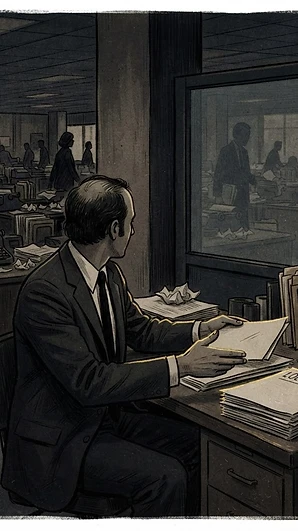
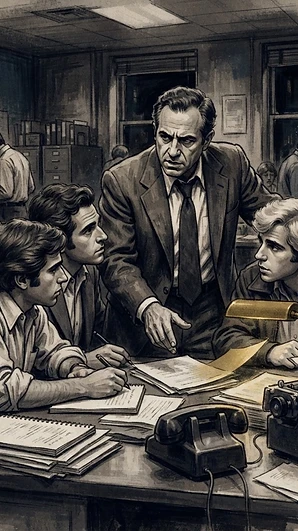
Harry M. Rosenfeld was an influential American newspaper editor who became a key figure behind the Washington Post's historic Watergate coverage. Born in Berlin in 1929, he and his family fled Nazi rule to settle in New York City by 1939. After serving as a military historian in the U.S. Army, he eventually joined the Washington Post. As the editor in charge of local news, Rosenfeld famously resisted efforts to move the Watergate story to the national desk. He coached reporters Bob Woodward and Carl Bernstein with a persistence described as being like a football coach. After leaving the Post in 1978, he spent decades editing papers in Albany. Rosenfeld passed away in 2021 at the age of 91 following complications from COVID-19.
Play the illustrated life story above, or read the full biography on this page.
Visual credits: web.archive.org (Public domain) · National Archives of Norway (Riksarkivet) (CC BY 4.0) · D-GM / Pixabay (Pixabay Content License) · Generated illustration by The Deaths Archive (Generated illustration, not a photograph) · Generated illustration by The Deaths Archive (Generated illustration, not a photograph) · The Loyal West in the Times of the Rebellion; Also, Before and Since: Being an Encyclopedia and Panorama of the Western States, Pacific States and Territories of the Union, Historical, Geographical, and Pictorial, Illustrated by more than Two Hundred Engravings, presenting views of all the Cities and Principal Towns, Public Buildings and Monuments, Battlefields — Historic Localities Natural Curiosities, and Scenes Illustrating the Times of the Rebellion, Etc., Principally from Drawings taken on the spot by the Authors; John W. Barber and Henry Howe; F. A. Howe Publishing; Cincinnati, Ohio; 1865. (Public domain) · Generated illustration by The Deaths Archive (Generated illustration, not a photograph)
An illustrated presentation assembled inside the archive from the approved script and the credited images: narration, scene transitions and captions. Caption timing is estimated from the narration.
Narrated illustration. Images are sourced and credited; they are not presented as authenticated photographs.
Full Biography
|Hirsch Moritz "Harry" Rosenfeld (August 12, 1929 – July 16, 2021) was an American newspaper editor who was the editor in charge of local news at The Washington Post during the Richard Mattingly murder case and the Watergate scandal. He oversaw the newspaper's coverage of Watergate and resisted efforts by the paper's national reporters to take over the story. Though Post executive editor Ben Bradlee gets most of the credit, managing editor Howard Simons and Rosenfeld worked most closely with reporters Bob Woodward and Carl Bernstein on developing the story. Rosenfeld published a memoir including an account of his work at the Post in 2013.
Early life
Rosenfeld was born Hirsch Moritz Rosenfeld to a Jewish family in Berlin on August 12, 1929. His father worked as a furrier. His store was unscathed during Kristallnacht, when his family took refuge in the Polish Embassy in Berlin. They first applied to immigrate to the United States in 1934. After being held up due to the quota system, the application was approved five years later in March 1939, when he was ten. The family settled in The Bronx, New York City just before the Holocaust and Rosenfeld learned to speak English devoid of a German accent. After graduating from Syracuse University in 1952, he served in the U.S. Army as a military historian for two years during the Korean War, attaining the rank of corporal. He was hired as an editor at New York Herald-Tribune. When a strike halted all New York papers for several months in 1963 he was offered a job in television, although chose to return until it ceased publication circa 1966. He was then hired by the Post, initially serving night shifts as deputy foreign editor. He also did graduate work in history and poetry at Columbia University and New York University.
Career
When Rosenfeld moved to the Metro desk at the Post, Bob Woodward, recently discharged from the United States Navy and with no journalism experience, applied for a job and accepted a two-week trial without pay in August 1970. When the trial was up, Woodward had written seventeen stories, not one of which was deemed publishable. Rosenfeld told Woodward to get some experience elsewhere and come back in a year. Woodward frequently scooped the Post at his new paper, the Montgomery County Sentinel, in the Washington suburbs, and kept phoning Rosenfeld for a job. Rosenfeld hired him, right after Labor Day 1971.
Rosenfeld fought to keep Woodward and Bernstein on the Watergate story at the Metro desk instead of giving it to reporters at the National Desk. As noted by Roger Ebert in the 1976 Chicago Sun-Times: "The Watergate story started as a local story, not a national one, and it was a continuing thorn in the side of the Post's prestigious national staff as Woodward and Bernstein kept it as their own."
Washington Post publisher Katharine Graham in her memoirs describes him as "an old-style, tough, picturesque editor, and another real hero of Watergate for us. From the outset, he thought of the story as a very big local one, seeing it as something on which the Post's local staff could distinguish itself. He controlled the story before it regularly made page one of the paper, keeping it going on the front page of the metro section." The Post's attention to detail and strict rules produced, in Rosenfeld's words, "the longest-running newspaper stories with the least amount of errors that I have ever experienced or will ever experience."
In their 1974 account of the Watergate investigation titled All the President's Men, Woodward and Bernstein likened Rosenfeld to a football coach. They described how "he prods his players … pleading, yelling, cajoling." In the 1976 film All the President's Men, he was played by Jack Warden.
Rosenfeld insisted on publishing a story about John F. Kennedy's extramarital affair with Ben Bradlee’s sister-in-law, Mary Pinchot Meyer, then learned he was demoted in the Washington Star.
Later career
Rosenfeld left the Washington Post in 1978 and moved to Albany, New York. He became editor of the Times Union and the Knickerbocker News, which went defunct in 1988. He retired in 1996, becoming the Times Union's editor-at-large. He continued to write weekly columns for that paper throughout his later years.
Rosenfeld wrote From Kristallnacht to Watergate: Memoirs of a Newspaper Man in 2013. The memoir detailed his childhood in 1930s Berlin under Nazi rule and his career path from the New York Herald-Tribune to The Washington Post. Six years later, he authored Battling Editor: The Albany Years, a sequel that described his newspaper editorship and community participation until into his retirement.
Personal life and death
Rosenfeld married Anne Hahn in 1953. They remained married for 68 years until his death. Together, they had three children: Susan, Amy, and Stefanie.
Rosenfeld died at his home in Slingerlands, New York, on July 16, 2021. He was 91, and suffered from COVID-19 related medical issues prior to his death.
Content from Wikipedia — licensed under CC BY-SA 3.0
Interactive
Test Your Knowledge – Trivia Challenge
How well do you know this person's life and legacy?
No account needed to play. Sign in to keep your score on the leaderboard.
Articles & News
- washingtonpost.com"Harry M. Rosenfeld, a key figure in The Post's Watergate coverage, dies at 91"
- washingtonpost.com" 'From Kristallnacht to Watergate: Memoirs of a Newspaperman' by Harry Rosenfeld"
Reported coverage of Harry M. Rosenfeld; each link opens the original article on the publisher's own site.
Books & Media
Find books, audiobooks and films about Harry M. Rosenfeld on Amazon.

As an Amazon Associate I earn from qualifying purchases.
Amazon and the Amazon logo are trademarks of Amazon.com, Inc. or its affiliates.
Sources
- Wikipedia
- https://en.wikipedia.org/wiki/Harry_M._Rosenfeld
- CC BY-SA 4.0
- Sep 26, 2026
- View article
- Sep 26, 2026
Trivia & Knowledge· 7 questions
Questions drawn from Harry M. Rosenfeld's archived record and the sources above.
1.What nationality was Harry M. Rosenfeld?
- A.Australian
- B.Argentine
- C.Americancorrect
- D.Austrian
Harry M. Rosenfeld is recorded as American.
Source: Profile: nationality: "UNY Press. ISBN 9781438473772 – via Google Books. ISBN 9781438473758 == References == == External links == www.harryrosenfeldmemoir.com www.timesunion.com/harry_rosenf
2.In which field was Harry M. Rosenfeld known?
- A.novelist
- B.newspaper editorcorrect
- C.architect
- D.chemist
The biography describes Harry M. Rosenfeld as a newspaper editor.
Source: Profile: occupation: "2018). Battling Editor: The Albany Years. SUNY Press. ISBN 9781438473772 – via Google Books. ISBN 9781438473758 == References == == External links == www.harryrosenfeld
3.On which day of the month did Harry M. Rosenfeld die?
- A.16correct
- B.17
- C.18
- D.15
Harry M. Rosenfeld died on day 16 of the month.
Source: Archive record: date of death: "ogle Books. ISBN 9781438473758 == References == == External links == www.harryrosenfeldmemoir.com www.timesunion.com/harry_rosenfeld/ Archive record: year of
4.In which month did Harry M. Rosenfeld die?
- A.September
- B.August
- C.Julycorrect
- D.October
Harry M. Rosenfeld died in July.
Source: Archive record: date of death: "e Books. ISBN 9781438473758 == References == == External links == www.harryrosenfeldmemoir.com www.timesunion.com/harry_rosenfeld/ Archive record: year of dea
5.In which year was Harry M. Rosenfeld born?
- A.1917
- B.1929correct
- C.1923
- D.1920
Harry M. Rosenfeld was born in 1929.
Source: Profile: year of birth: "Press, 2013. ISBN 9781438449173 Rosenfeld, Harry (December 28, 2018). Battling Editor: The Albany Years. SUNY Press. ISBN 9781438473772 – via Google Books. ISBN 9781
6.How old was Harry M. Rosenfeld when they died?
- A.80
- B.83
- C.86
- D.91correct
Harry M. Rosenfeld was 91 years old at the time of death.
Source: Profile: age at death: "osenfeld, Harry (December 28, 2018). Battling Editor: The Albany Years. SUNY Press. ISBN 9781438473772 – via Google Books. ISBN 9781438473758 == References == == Exte
7.In which year did Harry M. Rosenfeld die?
- A.2008
- B.2012
- C.2014
- D.2021correct
Harry M. Rosenfeld died in 2021.
Source: Profile: year of death: "ks. ISBN 9781438473758 == References == == External links == www.harryrosenfeldmemoir.com www.timesunion.com/harry_rosenfeld/ Archive record: year of death 2021. Arc
Explore the archive
People who died on July 16
Spotted an error?
Help us keep the archive accurate. Report a correction with a source.
Report an error for Harry M. Rosenfeld →Advertisement
