Haru Urara
- September 9, 2025
- 29 years


About Haru Urara
Haru Urara, 29, Japanese Thoroughbred racehorse, colic.
Explore other notable deaths in 2025 or deaths in September 2025.
The Deaths Archive presents
How well do you know Haru Urara?
Explore their life. Test your knowledge. Beat the challenge.
10 questions · One legacy · How much do you really know?
Challenge your friends
Play together in real-time.
Advertisement

Full Biography
|Haru Urara (Japanese: ハルウララ, Hepburn: Haru Urara; February 27, 1996 – September 9, 2025) was a Japanese Thoroughbred racehorse who achieved a record of zero wins and 113 losses in a career spanning from 1998 to 2004. Her unbroken losing streak was covered by Japanese media in 2003, causing her to achieve national popularity as a symbol of perseverance and tenacity.
Background
Haru Urara, a bay mare, was foaled on February 27, 1996, on Nobuta Bokujo, Utafue, Mitsuishi, Hokkaido. She was sired by Nippo Teio [ja], a top-class racehorse whose wins included the Autumn Tenno Sho and the Yasuda Kinen. Unable to find a buyer, the farm began training her as a racehorse.
Racing career
At her debut on November 17, 1998, at the Kōchi Racetrack, Haru Urara lost, placing fifth –and last. Over the next four-and-a-half years, she would compete once or twice every month without winning.
In June 2003, after garnering her 80th consecutive loss, the story was picked up by the national Japanese media, making "Haru Urara" a household name. She quickly became very popular in Japan, and was called "the shining star of losers everywhere" (負け組の星, makegumi no hoshi), for continuing to run, despite her losing streak. This surge in popularity was dubbed "The Haru Urara Boom", and news about Haru Urara reached the international community.
During the boom, Haru Urara betting tickets began to be used as o-mamori, particularly for protection against traffic accidents: the word ataranai (当たらない) in Japanese can mean both "to lose a bet" and "to avoid being struck", so it was said that a Haru Urara betting ticket could protect the owner's car from being hit. In September 2003, the Kōchi Prefecture Horse Racing Association introduced a service wherein they would stamp the word on any betting ticket related to Haru Urara. O-mamori were also created from mane and tail hairs that were said to have fallen out during brushing, but production was soon halted, due to concerns expressed by animal welfare groups. They were instead replaced with wooden plaques.
At a race held on March 22, 2004, during the peak of her popularity, more than 13,000 spectators packed the Kochi Racetrack, 3,000 of whom had gathered outside before the gates opened, forcing the track to open 30 minutes earlier than scheduled. Some people waited in line for up to five hours to buy tickets at the "Haru Urara Commemorative Ticket Booth", which was established especially for the event. Fans bet a grand total of ¥121,751,200 on a Haru Urara victory, an impressive sum, particularly for a horse that had not won once in more than 100 attempts. Despite being ridden by Japan's premier jockey, Yutaka Take, Haru Urara earned her 106th consecutive loss, placing 10th among 11 horses running.
Her name means "Glorious Spring" or "Gentle Spring". Numerous products using Haru Urara's name or image have been produced, including stuffed toys, key rings, mobile phone straps, stickers, stamps, train tickets, rice, shochu, hats, T-shirts, and bras. A number of books and songs, as well as a film, were also written about Haru Urara during the boom period. The Japanese Prime Minister Junichiro Koizumi said "I'd like to see Haru Urara win, even just once. The horse is a good example of not giving up in the face of defeat."
Haru Urara ran her last race in August 2004 and retired with a record of 0 wins and 113 losses.
Retirement and death
Originally, it was announced that Haru Urara would be returned from Tochigi where she was recuperating for a retirement race scheduled in March 2005. However, her return was soon postponed before officially being classified as retired by the NAR in October 2006, never returning to Kochi. Post retirement, there were plans to have her breed with Deep Impact as well as Stay Gold but those never materialized. Once those plans fell through, she was transported by her owner at the time in 2013 to the Matha Farm in Onjuku, Chiba Prefecture, where she lived until her death. At Matha Farm, Haru Urara became a minor PR character in 2018 when she was featured in a traffic safety poster of the Kisarazu Police Station.
On May 18, 2019, Haru Urara ran in the first "Soft Girls' Gathering", a time trial race for older horses with a GIII distance of 16.00 seconds. During her run, she achieved a time of 16.54 seconds and was put into first place, achieving victory and marking this as her very first win.
On September 8, 2025, Haru Urara became unwell and a veterinarian was called in. Haru Urara's condition only worsened overnight, and she died at Matha Farm, shortly after dawn on September 9 while surrounded by staff members. The cause was reported to be colic.
In popular culture
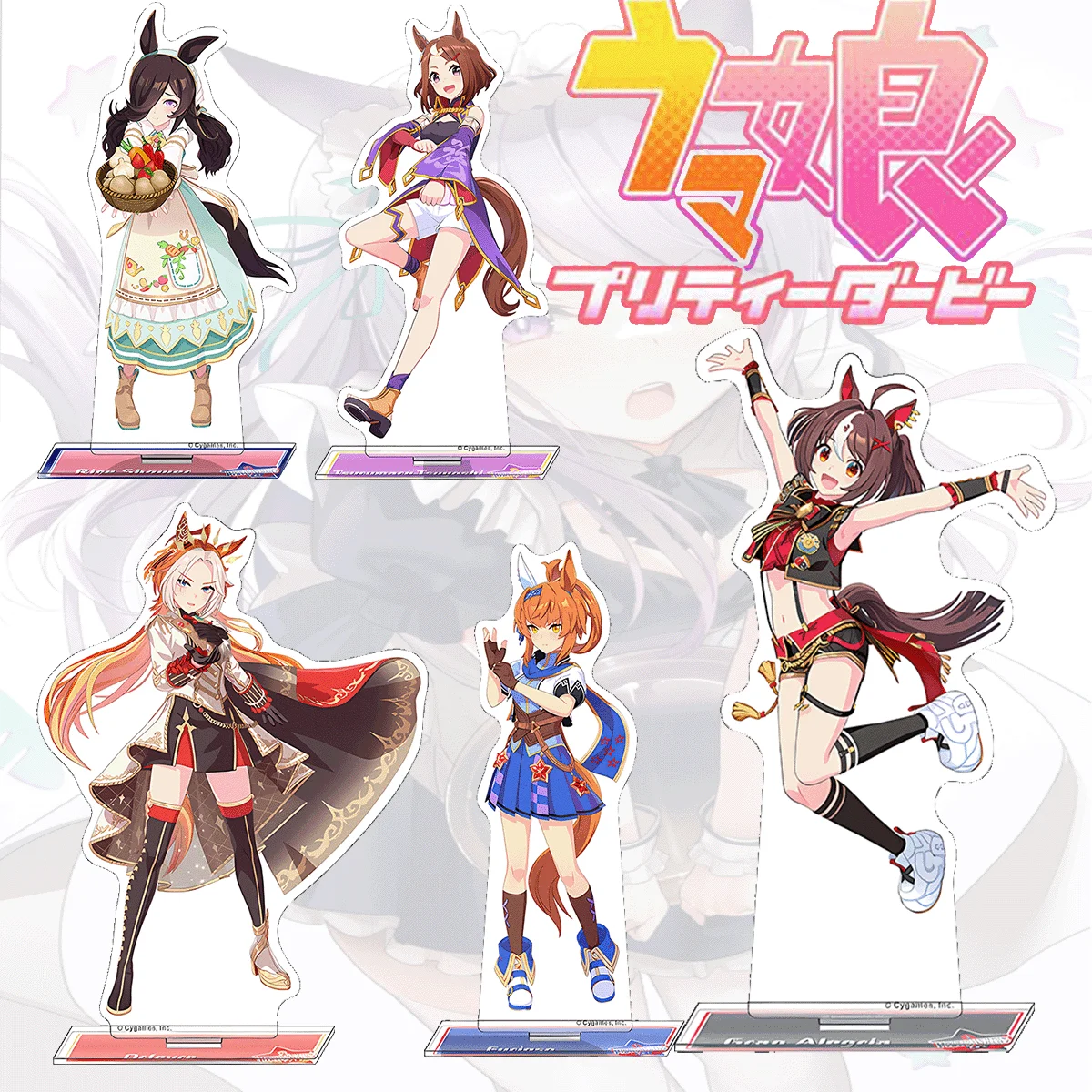
An anthropomorphized version of Haru Urara appears as a character in the Japanese multimedia franchise Umamusume: Pretty Derby, voiced by Yukina Shuto. She is depicted as a petite, cheerful rose pink-haired girl who loves the simple thrill of racing, and never gives up despite of how often she ends up losing her races. Fans subsequently came to visit the real-life Haru Urara at Matha Farm.
In July 2025, a tweet telling readers about a website where they could donate ryegrass to her went viral, and resulted in the website receiving so many contributions that it temporarily went offline.
Biffy Clyro's 2021 album The Myth of the Happily Ever After features a track inspired by Haru Urara, sharing her name, written about optimism and joy in the face of failure.
After recording losing records in 39 consecutive tournaments, sumo wrestler Morikawa was given the ring name Moriurara [ja] by his coach, then ironically achieved his first winning record in his next tournament.
In 2016, The Shining Star of Losers Everywhere an American documentary short film focusing on Haru Urara, was released. It was directed by Mickey Duzyj and has a runtime of 19 minutes. In Japan, it was screened in October 2016 at Kōchi University and Kochi Racecourse. The Japanese title given for the screening was "The Star of Losers, Haru Urara" (負け組の星、ハルウララ).
In 2026, a 15-minute musical based on the story of Haru Urara won the inaugural Making it Happen festival at The Theater Center in New York. The show was written by Ethan Riordan and Jeff Kasanoff.
Racing record
The following racing form is based on information available on JBIS search and netkeiba.com.
Pedigree
Through Northern Dancer, Haru Urara was a descendant of extremely influential sires Native Dancer and Nearco.
Content from Wikipedia — licensed under CC BY-SA 3.0
Interactive
Test Your Knowledge – Trivia Challenge
How well do you know this person's life and legacy?
No account needed to play. Sign in to keep your score on the leaderboard.
Articles & News
- latimes.com"Haru Urara, losing racehorse who was a phenomenon in Japan and an 'Uma Musume' game favorite, dies at 29"
- straitstimes.com"Retired Japanese racehorse Haru Urara, famed for losing all her races, dies aged 29"
- theverge.com"Watch a horse in a pink Hello Kitty mask save Japan"
Reported coverage of Haru Urara; each link opens the original article on the publisher's own site.
Books & Media
Find books, audiobooks and films about Haru Urara on Amazon.








As an Amazon Associate I earn from qualifying purchases.
Amazon and the Amazon logo are trademarks of Amazon.com, Inc. or its affiliates.
Selected Finds Inspired by Haru Urara
Browse related finds from AliExpress, shown beside this record for interest only.
Affiliate links: we may earn a commission from qualifying purchases.
Shown for interest only; not linked to the person beside them.
Sources
- Wikipedia
- https://en.wikipedia.org/wiki/Haru_Urara
- CC BY-SA 4.0
- Sep 26, 2026
- View article
- Sep 26, 2026
Trivia & Knowledge· 5 questions
Questions drawn from Haru Urara's archived record and the sources above.
1.In which year did Haru Urara die?
- A.2025correct
- B.2016
- C.2018
- D.2012
Haru Urara died in 2025.
Source: Profile: year of death: "e record: age at death 29. Archive record: nationality Japanese. Archive record: date of death 9 September 2025."
2.How old was Haru Urara when they died?
- A.21
- B.29correct
- C.24
- D.18
Haru Urara was 29 years old at the time of death.
Source: Profile: age at death: "anese Thoroughbred racehorse, colic. Archive record: year of death 2025. Archive record: age at death 29. Archive record: nationality Japanese. Archive record: date o
3.In which month did Haru Urara die?
- A.October
- B.Septembercorrect
- C.December
- D.November
Haru Urara died in September.
Source: Archive record: date of death: "25. Archive record: age at death 29. Archive record: nationality Japanese. Archive record: date of death 9 September 2025."
4.On which day of the month did Haru Urara die?
- A.11
- B.9correct
- C.10
- D.8
Haru Urara died on day 9 of the month.
Source: Archive record: date of death: "2025. Archive record: age at death 29. Archive record: nationality Japanese. Archive record: date of death 9 September 2025."
5.What nationality was Haru Urara?
- A.American
- B.Japanesecorrect
- C.Australian
- D.Argentine
Haru Urara is recorded as Japanese.
Source: Profile: nationality: "colic. Archive record: year of death 2025. Archive record: age at death 29. Archive record: nationality Japanese. Archive record: date of death 9 September 2025."
Explore the archive
People who died on September 9


Spotted an error?
Help us keep the archive accurate. Report a correction with a source.
Report an error for Haru Urara →Advertisement
