Horst Herold
- October 21, 1923
- December 14, 2018
- 95 years
About Horst Herold
Horst Herold, 95, German police officer, President of the Federal Criminal Police Office (1971–1981).
Explore other notable deaths in 2018 or deaths in December 2018.
The Deaths Archive presents
How well do you know Horst Herold?
Explore their life. Test your knowledge. Beat the challenge.
10 questions · One legacy · How much do you really know?
Challenge your friends
Play together in real-time.
Advertisement
60 Seconds Life Story
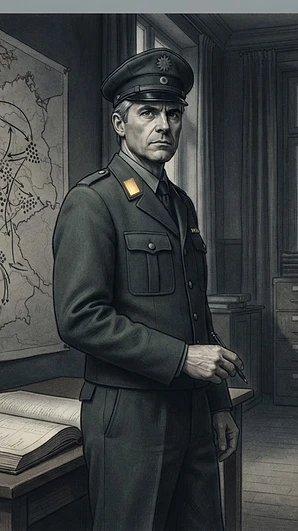


Horst Herold was a transformative German police officer who reshaped the landscape of modern law enforcement.
Horst Herold
1923 – 2018
60 Seconds: Horst Herold's Life Story
A profile of Horst Herold, the German police officer who modernized the Federal Criminal Police Office and pioneered the systematic dragnet manhunt.
Transcript
Horst Herold was a transformative German police officer who reshaped the landscape of modern law enforcement. Born in 1923, he eventually rose to lead the Federal Criminal Police Office from 1971 to 1981. During this decade, Herold modernized the force by emphasizing technical resources and criminological research. He is most noted for introducing the Rasterfahndung, a systematic dragnet method, to track Red Army Faction terrorists. Following his retirement, he lived in seclusion, famously describing himself as the last prisoner of the terrorist group. He authored several essays on policing throughout his life and career. Horst Herold died on December 14, 2018, at the age of 95.
Play the illustrated life story above, or read the full biography on this page.
Visual credits: Generated illustration by The Deaths Archive (Generated illustration, not a photograph) · Flickr (No restrictions) · Day 253 - West Midlands Police - Forensic Science Lab Uploaded by tm (CC BY-SA 2.0) · Own work (CC0) · From geograph.org.uk (CC BY-SA 2.0) · 23_0068649 Convair Negative Image (Public domain) · Generated illustration by The Deaths Archive (Generated illustration, not a photograph)
An illustrated presentation assembled inside the archive from the approved script and the credited images: narration, scene transitions and captions. Caption timing is estimated from the narration.
Narrated illustration. Images are sourced and credited; they are not presented as authenticated photographs.
Full Biography
|Horst Herold (21 October 1923 – 14 December 2018) was a German police officer. He was the President of the Federal Criminal Police of West Germany from 1971 to 1981. Under his leadership, the method for the systematic manhunt of Red Army Faction terrorists, called Rasterfahndung (dragnet), was introduced. He authored several essays on policing. He died on 14 December 2018.
Early life
Herold was born and grew up in Sonneberg, Thuringia, until his family relocated to Nuremberg in 1930.
In World War II, Herold served as a lieutenant in the combat unit Großdeutschland, where he was severely wounded in 1943. Herold was taken prisoner by the Soviets in northern Bohemia on 9 May 1945, from which he managed to escape.
After studying law at University of Erlangen–Nuremberg from 1945 to 1951, Herold received his doctorate in international law with his 1951 dissertation The defective legal transactional act of state in international law.
Herold was originally left-leaning, believing dialectical materialism to be the true part of Marxism. As a child, he participated in the communist youth movement. During his tertiary studies, he was a member of the Socialist German Student Union (SDS) and active in the extra-parliamentary movement against West German rearmament. Herold was a member of the Social Democratic Party of Germany.
Career
In 1952, Horst Herold became a judicial assessor (Gerichtsassessor) at the public prosecutor's office (Staatsanwaltchaft). In 1953, he was appointed public prosecutor, with Hans Sachs as his superior. In 1964, Herold became head of the Nuremberg Criminal Investigation Department. Three years later, he assumed the position of Nuremberg Police Chief. From 1969 to 1971, Herold was a member of a reform commission for the Federal Criminal Police Office (BKA), or Bundeskriminalamt.
On September 1, 1971, he was appointed President of the Federal Criminal Police Office (BKA). During his tenure until 1981, he subjected the BKA to a reform process that was intended to make it the global flagship of the German police. In particular, he successfully advanced the expansion of technical and personnel resources.[how?] At the same time, this resulted in the centralization of the criminal police in the elements of forensic science, its own criminological research, and the development of new criminological approaches, contrary to the historical legislator's intentions.[further explanation needed]
In 1977, Herold was awarded the Icelandic Order of the Falcon and German Kommandeur mit Stern ("commander with star", the second-highest order of merit), after introducing the Icelandic police to a retired BKA officer to help solve the Guðmundur and Geirfinnur case. In this case, five men were convicted of murder after being forced to confess under torture-like conditions. In September 2018, 44 years after the alleged crime, all defendants were acquitted by the Icelandic Supreme Court.
Under the leadership of Horst Herold, dragnet searches were introduced as part of the domestic fight against Red Army Faction terror.
Retirement and later life
After heated disagreements with Gerhart Baum (FDP), president of the Federal Ministry of the Interior who had been in office since 8 June 1978, Herold applied for early retirement following a heart attack in September 1980. Horst Herold was granted early retirement on 31 March 1981, at the age of 57.
His plan to write a book about the manhunt for the RAF failed, as Baum denied him access to the files. Because the police authorities felt unable to adequately protect Herold, he was forced to move from his home in Nuremberg to the grounds of a former BGS barracks in Rosenheim, where a prefabricated house was built for him. He lived there as a pensioner and had to cover the costs himself. In this context, the quote "I am the last prisoner of the RAF" is attributed to him. After the death of his wife, he returned to Nuremberg in 2017. Herold died in December 2018 after a short, serious illness at the age of 95.
In media
- In the TV documentary drama Todesspiel (1997, directed by Heinrich Breloer) about the German Autumn, Herold was portrayed by the actor Dieter Mann.
- In the film Baader (2002), Herold (here fictionalized as Kurt Krone) was portrayed by the actor Vadim Glowna.
- In the film In the Shadow of Power (2003), Herold was portrayed by actor Martin Lüttge.
- In the film The Baader Meinhof Complex (2008, directed by Uli Edel based on a book by Stefan Aust), Herold was portrayed by actor Bruno Ganz.
Content from Wikipedia — licensed under CC BY-SA 3.0
Interactive
Test Your Knowledge – Trivia Challenge
How well do you know this person's life and legacy?
No account needed to play. Sign in to keep your score on the leaderboard.
Articles & News
- "Bundeskriminalamt - Früherer BKA-Chef Horst Herold ist tot - Politik"sueddeutsche.de
- "Die Position der RAF hat sich verbessert: Der ehemalige BKA-Chef Horst Herold über Terroristen und Computer-Fahndung"spiegel.de
- Zum Tod von Horst Herold Staatsdiener und Staatsdenkersueddeutsche.de
- "Früherer BKA-Chef Horst Herold ist tot"sueddeutsche.de
Reported coverage of Horst Herold; each link opens the original article on the publisher's own site.
Books & Media
Find books, audiobooks and films about Horst Herold on Amazon.

As an Amazon Associate I earn from qualifying purchases.
Amazon and the Amazon logo are trademarks of Amazon.com, Inc. or its affiliates.
Sources
- Wikipedia
- https://en.wikipedia.org/wiki/Horst_Herold
- CC BY-SA 4.0
- Sep 26, 2026
- View article
- View record
- October 6, 2026
- Sep 26, 2026
People who died on December 14
Spotted an error?
Help us keep the archive accurate. Report a correction with a source.
Report an error for Horst Herold →Advertisement