Kuai Dafu
- September 13, 1945 · Jiangsu
- November 28, 2025
- 81 years
About Kuai Dafu
Kuai Dafu, 81, Chinese revolutionary leader.
Explore other notable deaths in 2025 or deaths in November 2025.
The Deaths Archive presents
How well do you know Kuai Dafu?
Explore their life. Test your knowledge. Beat the challenge.
10 questions · One legacy · How much do you really know?
Challenge your friends
Play together in real-time.
Advertisement

60 Seconds Life Story
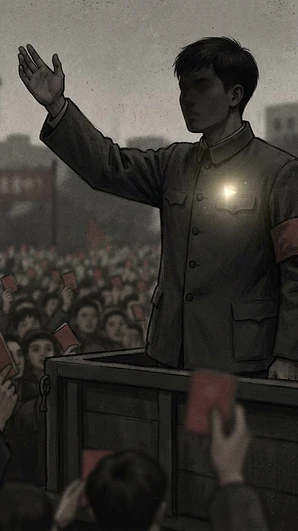


Kuai Dafu was a central figure of the Beijing Red Guard rebellion during the Cultural Revolution.
Kuai Dafu
1945 – 2025
60 Seconds: Kuai Dafu's Life Story
Kuai Dafu was a prominent Beijing Red Guard leader during the Cultural Revolution who recently passed away at eighty-one.
Transcript
Kuai Dafu was a central figure of the Beijing Red Guard rebellion during the Cultural Revolution. Born in Jiangsu in 1945, he entered Tsinghua University in 1963 to study engineering chemistry. By 1966, he had emerged as a radical student leader who organized the Jinggangshan Rebel Corps. He gained national prominence for leading mass demonstrations and public struggle sessions against senior officials, including Wang Guangmei. As a vanguard of the movement, he directed forces during the Hundred-Day Armed Struggle at Tsinghua University. After Mao Zedong criticized the student leaders in 1968, Kuai’s period of intense political influence reached its end. Kuai Dafu died in 2025 at the age of eighty-one.
Play the illustrated life story above, or read the full biography on this page.
Visual credits: Generated illustration by The Deaths Archive (Generated illustration, not a photograph) · xs.tsinghua.edu.cn (Public domain) · Own work (CC BY-SA 4.0) · voachinese.com (Public domain) · Image taken by me using Casio QV-R41 (CC BY-SA 2.5) · Own work (CC BY-SA 4.0) · Generated illustration by The Deaths Archive (Generated illustration, not a photograph)
An illustrated presentation assembled inside the archive from the approved script and the credited images: narration, scene transitions and captions. Caption timing is estimated from the narration.
Narrated illustration. Images are sourced and credited; they are not presented as authenticated photographs.
Full Biography
|Kuai Dafu (Chinese: 蒯大富, 14 September 1945 – 2025 or 2026) was a Chinese revolutionary leader. He was born in Binhai, Jiangsu. A 1967 graduate of the Department of Engineering Chemistry at Tsinghua University, Kuai was one of the five leaders of the Beijing Red Guard rebels during the Cultural Revolution.
Life and career
Early life
Kuai Dafu was born in Binhai County, Jiangsu on 14 September 1945. His grandfather was a veteran of the New Fourth Army, and both his parents joined the Chinese Communist Party in the 1940s. Kuai attended Binhai Batan Town Middle School. In 1963, he was admitted to the Department of Engineering Chemistry at Tsinghua University.
Cultural Revolution
In September 1963, Kuai was admitted to the Department of Engineering Chemistry at Tsinghua University. In 1966, after the start of the Cultural Revolution, he began secretly contacting people at Tsinghua University, organizing student gatherings, and discussing current affairs. He posted big-character posters against the department head and university leaders. In June 1966, a work group headed by Ye Lin, then Vice Chairman of the State Planning Commission, entered Tsinghua University and took over the university's Party Committee. The work group criticized students like Kuai for their radical behavior, which sparked student discontent. That same month, the *People's Daily* published an editorial, "Sweep Away All Monsters and Demons," approved by Chen Boda, which listed so-called bourgeois experts, scholars, authorities, and founders as targets for overthrow. On 4 August, Kuai attended and spoke at the Beijing Municipal "Cultural Revolution Activists" conference, becoming a representative of the Tsinghua University Red Guards and a vanguard of the rebellion. He initiated the establishment of the "Jinggangshan Rebel Corps" and served as the deputy commander of the Red Guard Revolutionary Rebel Headquarters of the Capital Universities and Colleges. On December 18, Zhang Chunqiao, then deputy head of the "Central Cultural Revolution" group, met with Kuai alone at the West Gate of Zhongnanhai, listened to his report, and assigned the task of overthrowing Liu Shaoqi and Deng Xiaoping.
"Down with Liu Shaoqi"
On 25 December, Kuai led more than 5,000 people from Tsinghua University to Tiananmen Square for a march and held a "rally to thoroughly overthrow the bourgeois reactionary line represented by Liu and Deng." After Kuai took the lead in shouting the slogan "Down with Liu Shaoqi," some universities in Beijing followed suit. However, Liu Shaoqi was not overthrown and remained in Zhongnanhai. Kuai devised a plan: he organized Red Guards to surround Zhongnanhai day and night, demanding Liu Shaoqi's removal. After intervention from the Central Committee, the Red Guards surrounding the west gate of Zhongnanhai withdrew.
On 6 January 1967, Kuai lied, claiming that Liu Shaoqi's daughter, Liu Pingping, had lost her leg in a car accident and needed amputation, thus luring Liu Shaoqi and Wang Guangmei to the hospital. Afterwards, the Central Committee sent people to rescue Liu Shaoqi and bring him back to Zhongnanhai, but Wang Guangmei was detained by Kuai and others. Kuai ordered Wang Guangmei to be kidnapped and taken to Tsinghua University, where she was subjected to a public denunciation. She was only able to return home the next day thanks to Zhou Enlai's intervention.
On 29 July 1967, Kuai led a group of people to raid Xu Xiangqian's home for the third time.
Organizing Violent Struggle
Active from 1966 onwards, Kuai led the Jinggangshan ("Headquarters") faction of the Red Guards at Tsinghua University, where he pursued a degree in chemical engineering. This group wanted to maintain the independence of the Red Guards from the central government. Kuai, alongside Han Aijing [zh] and other student leaders, virulently resisted the "work teams" which Liu Shaoqi and Deng Xiaoping had sent to the campuses to restore order and suppress or co-opt the student movement. Liu's wife Wang Guangmei participated in the work teams and personally clashed with Kuai in July 1966. However, Mao subsequently voiced support to Kuai and "made him a vanguard of the Cultural Revolution famous throughout the country."
On 10 April 1967, the Jinggangshan – now supported by the central authorities and the People's Liberation Army – organised an on-campus struggle session where more than 300 alleged "revisionists" (including Wang Guangmei) were publicly humiliated.
Beginning in April 1968, another faction of Red Guards at Tsinghua University rapidly grew in strength, frequently clashing with the "Jinggangshan Rebel Corps" led by Kuai Dafu. From 23 April to 27 July 1968, the "Hundred-Day Armed Struggle" between the two factions of Red Guards at Tsinghua University in Beijing became the largest and longest-lasting armed conflict in the Beijing area. This conflict resulted in 18 deaths, over a thousand injuries, and direct economic losses exceeding 10 million yuan.
On 27 July, Mao Zedong met with the five leaders of the Red Guards and severely warned and criticized them, demanding their withdrawal from the political arena. On the same day, a work team arriving at Tsinghua University was fought off with shots and stones on orders of Kuai, killing five members and injuring many more. The next day, Kuai and other student leaders including Nie Yuanzi were harshly reprimanded for their behaviour by Mao Zedong in the Great Hall of the People. When Kuai complained that a "black hand" was trying to suppress the student movement, Mao mockingly replied that he himself was this "black hand".
According to Roderick MacFarquhar and Michael Schoenhals, the clash between Kuai and Wang Guangmei "was eventually to become part of Red Guard lore and to be immortalized in novels and on the stage, even in the West".
Imprisonment and later life
In December 1968, Kuai Dafu received a notice that he was assigned to work as an electrolysis worker at the Qingtongxia Aluminium Plant in Ningxia.
In 1970, after falling out of grace with Jiang Qing, Kuai was imprisoned alongside Han Aijing. He was tried and convicted to a seventeen-year prison sentence in 1983. Kuai and Han went on to share a prison cell with activist Wei Jingsheng.
On 19 April 1978, Kuai Dafu was arrested by the Beijing Municipal Public Security Bureau at a university-wide assembly of faculty and students.
On 16 March 1983, the Beijing Intermediate People's Court sentenced Nie Yuanzi, Kuai Dafu, and Han Aijing for their counter-revolutionary activities in following the Lin Biao and Jiang Qing anti-Party clique. He was sentenced to 17 years imprisonment for counter-revolutionary propaganda and incitement, murder, and false accusation, and deprived of their political rights for 4 years. He was subsequently imprisoned in Qincheng Prison in Beijing and Tanggemu Farm in Gonghe County, Qinghai Province. In September 1987, Kuai Dafu was released.[citation needed]
Kuai subsequently pursued a business career. In 1994, he moved to Shenzhen and partnered with a Tsinghua University classmate to run an audio equipment engineering company. However, due to unequal profit sharing, Kuai decided to start his own business.
Similarly to other student leaders from the Cultural Revolution, Kuai was pressured by the post-Mao governments of Jiang Zemin and Hu Jintao to remain discrete about their past as Red Guards and "not to say anything that is 'sensitive'".
Death
Chinese platforms stated that Kuai Dafu had died on 24 November 2025, at the age of 81, although this was not officially confirmed. His death was later announced on 1 October 2026, without any indication of when he had died.
Content from Wikipedia — licensed under CC BY-SA 3.0
Interactive
Test Your Knowledge – Trivia Challenge
How well do you know this person's life and legacy?
No account needed to play. Sign in to keep your score on the leaderboard.
Books & Media
Find books, audiobooks and films about Kuai Dafu on Amazon.

As an Amazon Associate I earn from qualifying purchases.
Amazon and the Amazon logo are trademarks of Amazon.com, Inc. or its affiliates.
Sources
- Wikipedia
- https://en.wikipedia.org/wiki/Kuai_Dafu
- CC BY-SA 4.0
- Oct 3, 2026
- View article
- View record
- October 3, 2026
- Oct 3, 2026
Trivia & Knowledge· 16 questions
Questions drawn from Kuai Dafu's archived record and the sources above.
1.On what date was Kuai Dafu born?
- A.18 December 1966
- B.14 September 1963
- C.14 September 1945correct
- D.24 November 1945
Kuai Dafu was born in Binhai County, Jiangsu on 14 September 1945.
Source: Early life section
2.Which university did Kuai Dafu graduate from in 1967?
- A.Tsinghua Universitycorrect
- B.Fudan University
- C.Peking University
- D.Nanjing University
Kuai Dafu was a 1967 graduate of the Department of Engineering Chemistry at Tsinghua University.
Source: Early life section
3.Which political organization did Kuai Dafu help lead during the Cultural Revolution?
- A.The New Fourth Army
- B.The State Planning Commission
- C.The Beijing Red Guard rebelscorrect
- D.The People's Liberation Army
Kuai Dafu was one of the five leaders of the Beijing Red Guard rebels during the Cultural Revolution.
Source: Early life section
4.What occupation did Kuai Dafu's grandfather hold?
- A.Member of the State Planning Commission
- B.Manager at the Qingtongxia Aluminium Plant
- C.Veteran of the New Fourth Armycorrect
- D.University professor
Kuai Dafu's grandfather was a veteran of the New Fourth Army.
Source: Early life section
5.Who did Kuai Dafu meet at the West Gate of Zhongnanhai on 18 December 1966?
- A.Zhou Enlai
- B.Zhang Chunqiaocorrect
- C.Ye Lin
- D.Mao Zedong
Zhang Chunqiao met with Kuai Dafu alone at the West Gate of Zhongnanhai to assign him the task of overthrowing Liu Shaoqi and Deng Xiaoping.
Source: Cultural Revolution section
6.What lie did Kuai Dafu tell to lure Liu Shaoqi and Wang Guangmei to the hospital in 1967?
- A.That Liu Pingping had lost her leg in a car accidentcorrect
- B.That Wang Guangmei had been arrested by the authorities
- C.That Liu Shaoqi had been summoned for a secret meeting
- D.That the Tsinghua campus was under attack
Kuai Dafu claimed that Liu Shaoqi's daughter, Liu Pingping, needed amputation after a car accident to lure the couple to the hospital.
Source: "Down with Liu Shaoqi" section
7.Which faction did Kuai Dafu lead at Tsinghua University?
- A.New Fourth Army faction
- B.Red Guard Revolutionary Rebel Headquarters
- C.Jinggangshan Rebel Corpscorrect
- D.Anti-Revisionist Vanguard
Kuai Dafu initiated the establishment of the Jinggangshan Rebel Corps and served as its leader.
Source: Organizing Violent Struggle section
8.What was the result of the 'Hundred-Day Armed Struggle' at Tsinghua University?
- A.5 deaths and zero injuries
- B.The permanent exile of all rival student leaders
- C.18 deaths and over 1,000 injuriescorrect
- D.The successful overthrow of the University Party Committee
The armed conflict between two factions of Red Guards resulted in 18 deaths and over a thousand injuries.
Source: Organizing Violent Struggle section
9.In what year was Kuai Dafu convicted and sentenced to 17 years in prison?
- A.1968
- B.1978
- C.1983correct
- D.1970
On 16 March 1983, the Beijing Intermediate People's Court sentenced Kuai Dafu to 17 years imprisonment.
Source: Imprisonment and later life section
10.With which activist did Kuai Dafu share a prison cell?
- A.Wei Jingshengcorrect
- B.Nie Yuanzi
- C.Ye Lin
- D.Han Aijing
During his imprisonment, Kuai Dafu shared a prison cell with activist Wei Jingsheng.
Source: Imprisonment and later life section
11.Where did Kuai Dafu move in 1994 to pursue a business career?
- A.Qinghai
- B.Binhai
- C.Beijing
- D.Shenzhencorrect
In 1994, Kuai Dafu moved to Shenzhen to partner with a classmate to run an audio equipment engineering company.
Source: Imprisonment and later life section
12.What specific business did Kuai Dafu start after leaving his first company?
- A.An audio equipment engineering companycorrect
- B.He did not start his own business
- C.A construction company
- D.A chemical engineering firm
Kuai Dafu moved to Shenzhen to run an audio equipment engineering company before eventually starting his own business.
Source: Imprisonment and later life section
13.Which government leaders pressured Kuai Dafu to be discrete about his past?
- A.Liu Shaoqi and Deng Xiaoping
- B.Chen Boda and Zhang Chunqiao
- C.Mao Zedong and Zhou Enlai
- D.Jiang Zemin and Hu Jintaocorrect
Kuai Dafu was pressured by the post-Mao governments of Jiang Zemin and Hu Jintao to remain discrete about his past as a Red Guard.
Source: Imprisonment and later life section
14.How did Mao Zedong respond when Kuai Dafu complained about a 'black hand' suppressing the student movement?
- A.He blamed the university leaders
- B.He blamed the local police
- C.He replied that he himself was the black handcorrect
- D.He ignored the complaint completely
Mao mockingly replied that he himself was this black hand when Kuai Dafu complained about being suppressed.
Source: Organizing Violent Struggle section
15.What is the reported death date of Kuai Dafu according to Chinese platforms?
- A.1 October 2026
- B.24 November 2025correct
- C.16 March 1983
- D.19 April 1978
Chinese platforms stated that Kuai Dafu died on 24 November 2025 at the age of 81.
Source: Death section
16.Where was Kuai Dafu specifically imprisoned during his sentence?
- A.Binhai Detention Center
- B.The Beijing Municipal Public Security Bureau
- C.Qincheng Prison and Tanggemu Farmcorrect
- D.A re-education camp in Shenzhen
He was imprisoned in Qincheng Prison in Beijing and Tanggemu Farm in Gonghe County, Qinghai Province.
Source: Imprisonment and later life section
Explore the archive
People who died on November 28
Spotted an error?
Help us keep the archive accurate. Report a correction with a source.
Report an error for Kuai Dafu →Advertisement
