Margalith Galun
- April 16, 2012
- 85 years
- lengthy illness




About Margalith Galun
Margalith Galun, 85, Israeli lichenologist, after a lengthy illness.
Explore other notable deaths in 2012 or deaths in April 2012.
The Deaths Archive presents
How well do you know Margalith Galun?
Explore their life. Test your knowledge. Beat the challenge.
10 questions · One legacy · How much do you really know?
Challenge your friends
Play together in real-time.
Advertisement
60 Seconds Life Story


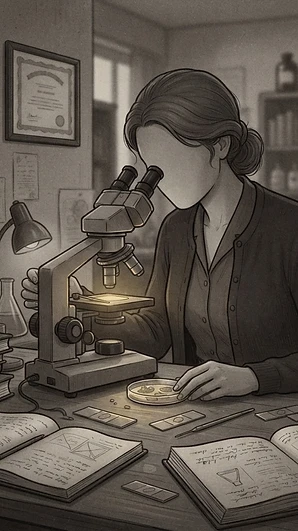


Margalith Galun was a renowned Israeli lichenologist who became a leading figure in the scientific study of
Margalith Galun
3199 – 2012
60 Seconds: Margalith Galun's Life Story
Margalith Galun was an influential Israeli scientist known for her work on lichen symbiosis and her academic leadership.
Transcript
Margalith Galun was a renowned Israeli lichenologist who became a leading figure in the scientific study of symbiosis. Born in Vienna in 1927, she escaped to Switzerland and later immigrated to Palestine. During the 1947–1949 Palestine war, she paused her education to serve in the Israel Defense Forces. She returned to academics, eventually earning her PhD and focusing her research on the interactions between algae and fungi. Galun established the lichen collection at Tel Aviv University and founded the influential academic journal Symbiosis. Over her distinguished career, she received the Acharius Medal and the Meitner-Humboldt Prize for her pioneering contributions. She passed away on April 16, 2012, after a lengthy illness, leaving behind an enduring legacy in lichenology through an annual award in her name.
Play the illustrated life story above, or read the full biography on this page.
Visual credits: Own work (CC BY-SA 4.0) · Own work (CC BY 4.0) · Generated illustration by The Deaths Archive (Generated illustration, not a photograph) · journals.lub.lu.se (CC BY 4.0) · NASA (Public domain) · From geograph.org.uk (CC BY-SA 2.0)
An illustrated presentation assembled inside the archive from the approved script and the credited images: narration, scene transitions and captions. Caption timing is estimated from the narration.
Narrated illustration. Images are sourced and credited; they are not presented as authenticated photographs.
Full Biography
|Margalith Galun (Hebrew: מרגלית גלון; 21 February 1927 – 16 April 2012) was an Israeli lichenologist. She was a member of the Israel Academy of Sciences and Humanities and established the Israeli collection of lichens at Tel Aviv University. Founder of the academic journal Symbiosis, she served as its editor-in-chief between 1985 and 2006. In 1994, she was awarded the Acharius Medal and in 1996 won the Meitner-Humboldt Prize, for her contributions to the field. The International Association for Lichenology grants an award which bears her name to honor scholarship at their quadrennial symposium.
Early life
Melitta Katz was born on 21 February 1927 in Vienna, Austria to Amalia (née Teitelbaum) and Arie Katz. Originally from Lviv, her father was a merchant and was involved in the Zionist and socialist movements. After completing her elementary school in Vienna and beginning her gymnasium studies, her family decided to immigrate in 1938. They were unsuccessful in leaving Austria and to get their daughter out of the country Melitta was adopted by a Jewish-Swiss family, changing her name to Margalith, in 1939. Her parents were eventually able to join their daughter in Switzerland and in October of that year, the family immigrated to Palestine. In Tel Aviv, Katz completed her secondary studies at Herzliya Hebrew Gymnasium in 1946, and went to live and work at the kibbutz of Kfar Giladi for several months. When her mother died, she returned to Tel Aviv to be with her father and enrolled in courses at the Hebrew University of Jerusalem in 1947.
Within a month, the 1947–1949 Palestine war began and Katz interrupted her studies to join the Israel Defense Forces. When the conflict ended in 1949, she returned to her classes and completed her undergraduate degree in 1952, going on to earn a master's degree in botany in 1954. She worked as a teaching assistant during her master's studies and in 1953 married Esra Galun. Her son Eithan was born in 1954 and that year she began working on her PhD at Hebrew University, simultaneously working as a research assistant at the Volcani Agriculture Institute in Rehovot. In 1959, her second son Ehud was born and the following year, she completed her dissertation Die Flechten im Negev, Israel (The lichens in the Negev, Israel) under the direction of Israel Reichart, earning her PhD.
Career
Joining her husband in Pasadena, California, Galun conducted research at the California Institute of Technology from 1961 to 1962. Returning to Rehovot, she was employed at the Israel Institute for Biological Research in Ness Ziona from 1962 to 1965, receiving a research grant from the Israel Academy of Sciences and Humanities. In 1965, she was hired as a lecturer in the botany department at Tel Aviv University. She worked her way up the ladder, being promoted to senior lecturer in 1969, associate professor in 1971, and to professor in 1977. In addition to serving as department chair and on various departmental committees, she served as Dean of Students from 1977 to 1980, as a member of the Admissions Committee from 1978 to 1985; on the Board of Directors from 1989–1992, as well as other administrative positions. She also served on the Scientific Council at the Institute of Nature Conservation between 1988 and 1991.
Simultaneously with her teaching, Galun conducted research on lichens. Establishing a research group, Galun led her students to collect samples and create the collection of lichens from throughout Israel for the university. Eventually their collection became international, including samples from many other countries. Initially her own research focused on identifying the varieties of lichen in Israel, but soon turned her attention to vegetative tissue, or thallus, to evaluate the interaction between algae and fungus during its formation. Studying the signalling molecules with electron microscopy, she wrote over 90 papers about lichen symbiosis and the absorption of metals by lichens, becoming "recognized as one of the world's foremost lichenologists".
In 1985, Galun founded the academic journal Symbiosis and served as its editor-in-chief from 1985 to 2006. Between 1987 and 1993, she was the vice president of the International Association for Lichenology and during her term organized the first International Symbiosis Congress held in Jerusalem in 1991. She served as editor for the three volume work Handbook of Lichenology (CRC Press, 1988), which gave an encyclopedic overview of the research and discoveries in the field from Simon Schwendener's pioneering work to the present date. In 1994, Galun was the recipient of the Acharius Medal presented by the International Association for Lichenology and in 1996, she was awarded the Meitner-Humboldt Prize from the Alexander von Humboldt Foundation.
Death and legacy
Galun died on 16 April 2012 after a lengthy illness. An annual award bearing her name was initiated in 2012 by the International Association for Lichenology to be given to the outstanding student presenter at the organization's quadrennial symposium.
Content from Wikipedia — licensed under CC BY-SA 3.0
Interactive
Test Your Knowledge – Trivia Challenge
How well do you know this person's life and legacy?
No account needed to play. Sign in to keep your score on the leaderboard.
Books & Media
Find books, audiobooks and films about Margalith Galun on Amazon.

As an Amazon Associate I earn from qualifying purchases.
Amazon and the Amazon logo are trademarks of Amazon.com, Inc. or its affiliates.
Sources
- Wikipedia
- https://en.wikipedia.org/wiki/Margalith_Galun
- CC BY-SA 4.0
- Sep 26, 2026
- View article
- Sep 26, 2026
People who died on April 16
Spotted an error?
Help us keep the archive accurate. Report a correction with a source.
Report an error for Margalith Galun →Advertisement