Masahisa Fukase
- June 9, 2012
- 78 years
- cerebral hemorrhage
Remembering Masahisa Fukase: related finds and keepsakes
About Masahisa Fukase
Masahisa Fukase, 78, Japanese photographer, cerebral hemorrhage.
Explore other notable deaths in 2012 or deaths in June 2012.
The Deaths Archive presents
How well do you know Masahisa Fukase?
Explore their life. Test your knowledge. Beat the challenge.
10 questions · One legacy · How much do you really know?
Challenge your friends
Play together in real-time.
Advertisement

Full Biography
|Masahisa Fukase (25 February 1934 – 9 June 2012) was a Japanese photographer, celebrated for his work depicting his domestic life with his wife Yōko Wanibe and his regular visits to his parents' small-town photo studio in Hokkaido. He is best known for his 1986 photo book Ravens (also printed as Karasu and The Solitude of Ravens), which in 2010 was selected by the British Journal of Photography as the best photo book published between 1986 and 2009.
Since his death in 2012 there has been a revival of interest in Fukase's photography, with new books and exhibitions appearing that emphasize the breadth and originality of his art.
Life and career
Background and family
Masahisa Fukase was born on 25 February 1934 in Bifuka, Hokkaido. His family ran a successful photo studio in the small northern town. Despite permanently moving to Tokyo in the 1950s to pursue his education and then career, Fukase retained strong emotional ties to his birthplace and family. Throughout the 1970s and 1980s he returned regularly to Bifuka to make large-format family portraits, a project that was eventually published in the book Kazoku (Family) in 1991.
Early career and self-representation
Among Fukase's earliest bodies of artistic work is Kill the Pigs of 1961, consisting of dark and often gruesome photographs made over the course of repeated visits to the Shibaura slaughterhouse in Tokyo mixed with photographs of two intertwined naked bodies (the photographer and his wife) Subsequently, he experimented with various journalistic and artistic styles, contributing dozens of photo essays to such magazines as Camera Mainichi, Asahi Camera, and Asahi Journal. His first photobook, Yūgi, was published in 1971 and includes numerous photographs of his first wife, Yukiyo Kawakami, and his second wife, Yōko Wanibe. Although the book was described at the time as a work of "self-representation", it contains no discernible photographs of Fukase himself. Accordingly, it can be considered the photographer's first attempt to describe his own passionate, self-indulgent, and sometimes violent life by indirect means. Fukase's next book, Yōko (1978), is a successor to the first in that it is another attempt to "show" his life through representations of a female 'other'.
Karasu (Ravens)
Fukase's Karasu (Ravens) was shot between 1976 and 1982 in the wake of his divorce from Yōko Wanibe, and during the early period of his marriage to the writer Rika Mikanagi. It extends his experimentation with oblique and metaphorical self-expression in the A Play photo essays of the early '70s – especially Natsu no nikki (Summer Journal) of December 1972 and Fuyu no nikki (Winter Journal) of June 1973. Indeed, Fukase's original title for the series was Tonpokuki or "Winter Journal". The photographs of ravens and other rather bleak subjects that constitute Karasu were taken in Hokkaido, Kanazawa, and Tokyo. The project originated as an eight-part series for the magazine Camera Mainichi (1976–82), and these photo essays reveal that Fukase experimented with colour film, multiple exposure printing, and narrative text as part of the development of the Karasu concept. Beginning in 1976, exhibitions based on this new body of work brought Fukase widespread recognition in Japan, and subsequently in Europe and the United States. The book was published in 1986 (by Sōkyūsha) and this original edition of Ravens soon became one of the most respected and sought-after Japanese photobooks of the post-war era. Subsequent editions were published in 1991 (Bedford Arts), 2008 (Rat Hole Gallery), and 2017 (Mack). The heavily autobiographical approach of Karasu has its origins in Fukase's foundational photo essay, Hyōten (Freezing Point) of 1961, but it pushes the central themes of isolation and tragedy to new levels of depth and abstraction. Technically, the photographs of ravens were very difficult to achieve, with Fukase having to focus his camera on the small, moving black subjects in almost total darkness. Setting correct exposures was equally challenging. According to Fukase's former assistant, photographer Masato Seto, printing some of the Karasu photographs required complicated burning and dodging. In 1976, at the outset of the project, Fukase stated in Camera Mainichi: "I'm wishing that I could stop this world. This act [of photography] may represent my own revenge play against life, and perhaps that is what I enjoy most." By the project's end in 1982, Fukase wrote enigmatically that he had "become a raven".
In 2010, a panel of five experts (Gerry Badger, Ute Eskilden, Chris Killip, Jeffrey Ladd, and Yōko Sawada) convened by the British Journal of Photography selected Karasu as the best photobook of 1986–2009.
1992 accident and Bukubuku
In 1992, Fukase suffered a traumatic brain injury from a fall down the steep steps of his favourite bar—Nami—in the Golden Gai area of Shinjuku, Tokyo. This injury left him in a coma, which he would remain in until his death in 2012. Earlier that year Miyako Ishiuchi had photographed Fukase nude for her book Chromosome XY (1995). Some of the images from that session were published in the magazine Brutus in January 1995. Ishiuchi has said that Fukase was almost alone among Japanese male photographers in agreeing to pose nude for her camera. In 2004 the Masahisa Fukase Trust edited and had published two photobooks Hysteric Twelve and Bukubuku, based on bodies of work Fukase had completed before his debilitating fall. The photographs contained in Bukubuku, made in a bathtub with an underwater camera, have come to be regarded as Fukase's last great work, a whimsical if somewhat morbid game of solitaire that charts new territory for the photographic self-portrait.
Death and legacy
Fukase died on 9 June 2012. In 2015, two exhibitions designed to highlight some of his lesser-known work were co-ordinated by the Masahisa Fukase Archives. These were From Window which formed part of the Another Language: 8 Japanese Photographers exhibition at Rencontres d’Arles, France, and The Incurable Egoist at Diesel Art Gallery, Tokyo. Fukase's complete set of 30 Bukubuku prints was exhibited for the first time since 1992 at the 2016 Tate Modern show Performing for the Camera.
In 2024 a biographical drama film about Fukase was released, titled Ravens. The film was directed by Mark Gill and starred Tadanobu Asano.
Selected exhibitions
- Black Sun: The Eyes of Four. Museum of Modern Art, Oxford, England, December 1985 – February 1986; Serpentine Gallery, London, April–May 1986; Philadelphia Museum of Art, Philadelphia, August–October 1986; University of Iowa Museum of Art, March–May 1987; San Diego Museum of Art, San Diego, September–October 1987; Baltimore Museum of Art, Baltimore, August–October 1988.
- The Unpublished Works. Stephen Wirtz Gallery, San Francisco, May–June 2001.
- Solitude of Ravens. Michael Hoppen Gallery, London, 2016.
Books
- Yūgi (遊戯) = Homo Ludence. Eizō no Gendai 4. Tokyo: Chūōkōronsha, 1971.
- Yōko (洋子) = Yohko. Sonorama Shashin Sensho 8. Tokyo: Asahi Sonorama, 1978.
- Biba! Sasuke (ビバ! サスケ, Viva Sasuke). Tokyo: Pet-Life-sha, 1979.
- Sasuke, Itoshiki Neko yo (サスケ、いとしき猫よ, Sasuke, My Dear Cat). Tokyo: Seinen-shokan, 1979.
- Neko no Mugi Wara Boshi (猫の麦わら帽子, The Straw-hat Cat). Tokyo: Bunka Shuppankyoku, 1979.
- Kūkai to Kōyasan (空海と高野山, Kūkai and Mount Kōya). Nihon no Seiiki 2. Tokyo: Kōsei Shuppansha, 1982. ISBN 4-333-01042-X.
- Karasu (鴉, Ravens). Yokohama: Sōkyūsha, 1986. In Japanese and English.
- Kazoku (家族, Family). Tokyo: IPC, 1991. ISBN 4-87198-832-5.
- The Solitude of Ravens: A Photographic Narrative. San Francisco: Bedford Arts, 1991. ISBN 0-938491-23-7. US reprint of the 1986 book, in English only.
- Chichi no Kioku (父の記憶) = Memories of Father. Tokyo: IPC, 1991. ISBN 4-87198-833-3.
- Fukase Masahisa (深瀬昌久). Nihon no Shashinka 34. Tokyo: Iwanami Shoten, 1998. ISBN 4-00-008374-0.
- Bukubuku (家族, Bubbling). Tokyo: Hysteric Glamour, 2004.
- Fukase Masahisa (深瀬昌久). Hysteric Twelve. Tokyo: Hysteric Glamour, 2004.
- Karasu (鴉) = The Solitude of Ravens. Tokyo: Rat Hole Gallery, 2008. Reprint of the 1986 book, with afterword in Japanese and English.
- To (屠) = Slaughter. Kamakura: Super Labo, 2015. ISBN 978-4-905052-81-4.
- Wonderful Days. Tokyo: Roshin Books, 2015. ISBN 978-4-9907230-3-3. Edition of 800 copies.
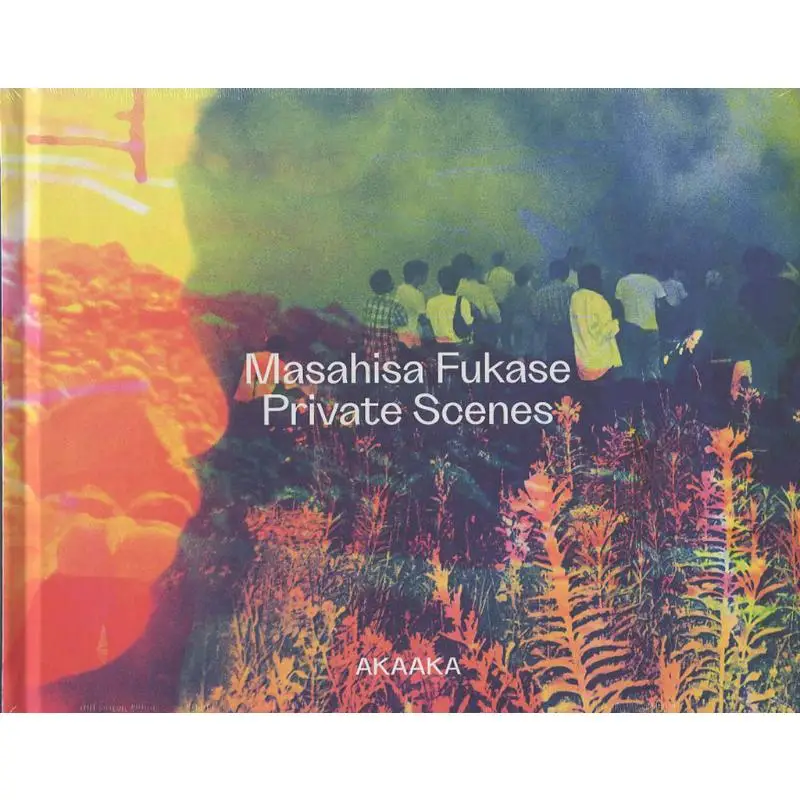
- Hibi. London: Mack, 2016. ISBN 9781910164457. Photographs of the surface of streets, printed and painted over for his Private Scenes '92 solo exhibition at a Nikon Salon in Tokyo in 1992.
- Afterword. Tokyo: Roshin, 2016. ISBN 978-4-9907230-5-7. Edition of 900 copies; also, a "second edition" (with the same ISBN) of 900 copies. Text in Japanese and English.
- Ravens. London: Mack, 2017. ISBN 978-1-910164-83-9. With the original (1986) afterword by Akira Hasegawa and a new text by Tomo Kosuga (both in English and Japanese).
- Masahisa Fukase. Paris: Editions Xavier Barral, 2018. ISBN 978-2365112024 Edited by Tomo Kosuga with introduction by Simon Baker
- Kill The Pig. the(M) / Ibasho, 2021. With an essay by Tomo Kosuga in Japanese and English. Edition of 1000 copies.
Selected photo essays
- "Danchi shunpū [Spring Wind in the Danchi]: A Play 4," Camera Mainichi, April 1971, pages 9–23.
- "Kyōri [Hometown]: A Play 5," Camera Mainichi, October 1971: pages 110–21.
- "Natsu no nikki [Summer Journal]: A Play 7," Camera Mainichi, December 1972: pages 76–82.
- "Fuyu no nikki [Winter Journal]: A Play 8," Camera Mainichi, June 1973: 119–27.
- "Karasu 1", Camera Mainichi, October 1976, pages 111–115.
- "Karasu 2", Camera Mainichi, November 1976, pages 85–99.
- "Karasu 3", Camera Mainichi, January 1978, pages 133–41.
- "Karasu 4", Camera Mainichi, June 1978, pages 95–100.
- "Karasu 5", Camera Mainichi, June 1979, pages 100–113.
- "Karasu 6", Camera Mainichi, March 1980, pages 7–17.
- "Karasu 7: Tokyo hen", Camera Mainichi, July 1981, pages 71–9.
- "Karasu--Shūshō", Camera Mainichi, November 1982, pages 120–139 and 202–203.
Content from Wikipedia — licensed under CC BY-SA 3.0
Interactive
Test Your Knowledge – Trivia Challenge
How well do you know this person's life and legacy?
No account needed to play. Sign in to keep your score on the leaderboard.
Articles & News
- theguardian.comMasahisa Fukase's Ravens: The Best Photobook of the Past 25 Years?
- theguardian.com"Masahisa Fukase: The man who photographed nothing but his wife"
Reported coverage of Masahisa Fukase; each link opens the original article on the publisher's own site.
Books & Media
Find books, audiobooks and films about Masahisa Fukase on Amazon.

As an Amazon Associate I earn from qualifying purchases.
Amazon and the Amazon logo are trademarks of Amazon.com, Inc. or its affiliates.
Selected Finds Inspired by Masahisa Fukase
Browse related finds from AliExpress, shown beside this record for interest only.
Affiliate links: we may earn a commission from qualifying purchases.
Shown for interest only; not linked to the person beside them.
Sources
- Wikipedia
- https://en.wikipedia.org/wiki/Masahisa_Fukase
- CC BY-SA 4.0
- Sep 26, 2026
- View article
- Sep 26, 2026
Trivia & Knowledge· 7 questions
Questions drawn from Masahisa Fukase's archived record and the sources above.
1.What did Masahisa Fukase die of?
- A.cancer
- B.cerebral hemorrhagecorrect
- C.a stroke
- D.pneumonia
The biography records that Masahisa Fukase died of cerebral hemorrhage.
Source: Biography: cause of death: "rchive record: occupation photographer. Archive record: nationality Japanese. Archive record: cause of death cerebral hemorrhage. Archive record: date of death 9
2.What nationality was Masahisa Fukase?
- A.Japanesecorrect
- B.Argentine
- C.Australian
- D.American
Masahisa Fukase is recorded as Japanese.
Source: Profile: nationality: "012. Archive record: age at death 78. Archive record: occupation photographer. Archive record: nationality Japanese. Archive record: cause of death cerebral hemorrhage
3.In which field was Masahisa Fukase known?
- A.chemist
- B.architect
- C.photographercorrect
- D.novelist
The biography describes Masahisa Fukase as a photographer.
Source: Profile: occupation: "rrhage. Archive record: year of death 2012. Archive record: age at death 78. Archive record: occupation photographer. Archive record: nationality Japanese. Archive reco
4.On which day of the month did Masahisa Fukase die?
- A.9correct
- B.10
- C.11
- D.8
Masahisa Fukase died on day 9 of the month.
Source: Archive record: date of death: "ecord: nationality Japanese. Archive record: cause of death cerebral hemorrhage. Archive record: date of death 9 June 2012."
5.In which month did Masahisa Fukase die?
- A.Junecorrect
- B.September
- C.July
- D.August
Masahisa Fukase died in June.
Source: Archive record: date of death: "ord: nationality Japanese. Archive record: cause of death cerebral hemorrhage. Archive record: date of death 9 June 2012."
6.How old was Masahisa Fukase when they died?
- A.67
- B.78correct
- C.73
- D.70
Masahisa Fukase was 78 years old at the time of death.
Source: Profile: age at death: "e photographer, cerebral hemorrhage. Archive record: year of death 2012. Archive record: age at death 78. Archive record: occupation photographer. Archive record: nat
7.In which year did Masahisa Fukase die?
- A.1999
- B.2005
- C.2012correct
- D.2003
Masahisa Fukase died in 2012.
Source: Profile: year of death: "nationality Japanese. Archive record: cause of death cerebral hemorrhage. Archive record: date of death 9 June 2012."
Explore the archive
People who died on June 9
Spotted an error?
Help us keep the archive accurate. Report a correction with a source.
Report an error for Masahisa Fukase →Advertisement
