About Paul Klebnikov
Paul Klebnikov, 41, American journalist, editor of Forbes magazine's Russian edition, murdered.
Explore other notable deaths in 2004 or deaths in July 2004.
The Deaths Archive presents
How well do you know Paul Klebnikov?
Explore their life. Test your knowledge. Beat the challenge.
10 questions · One legacy · How much do you really know?
Challenge your friends
Play together in real-time.
Advertisement

60 Seconds Life Story
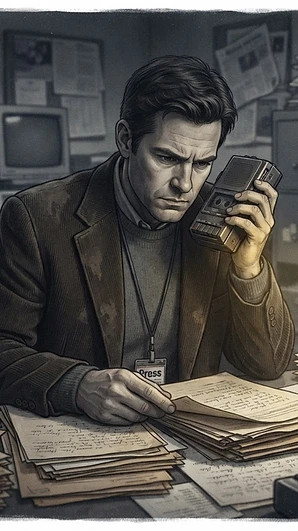


Paul Klebnikov was an American journalist whose investigative career defined his life and eventual death.
Paul Klebnikov
d. 2004
60 Seconds: Paul Klebnikov's Life Story
An overview of the life and career of American journalist Paul Klebnikov, who was murdered in Moscow in 2004.
Transcript
Paul Klebnikov was an American journalist whose investigative career defined his life and eventual death. Born in New York, he spent over a decade reporting for Forbes magazine. His work often focused on exposing corruption within post-Soviet business dealings. In 2004, he took on the role of chief editor for the Russian edition of Forbes. Leaving the office late one night in Moscow, he was struck by gunfire from a passing vehicle. He succumbed to his wounds shortly after at a local hospital. His assassination remains a profound blow to the integrity of investigative journalism in Russia. The identities of the primary organizers behind this contract killing remain unknown today.
Play the illustrated life story above, or read the full biography on this page.
Visual credits: Generated illustration by The Deaths Archive (Generated illustration, not a photograph) · Scanned cover of pulp magazine. (Public domain) · Own work (CC BY-SA 3.0) · No machine-readable source provided. Own work assumed (based on copyright claims). (CC BY-SA 2.5) · Own work (CC BY-SA 3.0) · Own work (CC BY-SA 4.0)
An illustrated presentation assembled inside the archive from the approved script and the credited images: narration, scene transitions and captions. Caption timing is estimated from the narration.
Narrated illustration. Images are sourced and credited; they are not presented as authenticated photographs.
Full Biography
|Paul Klebnikov (Russian: Павел Юрьевич Хлебников, romanized: Pavel Yurievich Khlebnikov; June 3, 1963 – July 9, 2004) was an American journalist and historian of Russia. He worked for Forbes magazine for more than 10 years and, at the time of his death, was chief editor of the Russian edition of Forbes. His murder in Moscow in 2004 was seen as a blow against investigative journalism in Russia. Three Chechens accused of taking part in the murder were acquitted. Though the murder appeared to be the work of assassins for hire, as of 2026, the alleged organizers of the murder had yet to be identified. According to another version, widely reported in Russian media, Klebnikov was killed by a close associate to the high-ranking member of Lazansky organized criminal gang [ru] linked both to the Russian FSS service and Boris Berezovsky, a Russian oligarch.
Early life
Paul Klebnikov was born in New York to an aristocratic family of Russian American White émigrés with a long military and political tradition: his great-great-great-grandfather Ivan Pushchin participated in the Decembrist revolt in 1825 and was exiled to Siberia, and his great-grandfather Arkady Nebolsin, an admiral in the White Russian fleet, was assassinated by Bolsheviks. As a child, he was known as a daredevil including swimming during hurricanes. He attended St. Bernard's School and Phillips Exeter Academy, and graduated from the University of California, Berkeley, with a BA in political science in 1984. He then enrolled in the Officer Candidates School of the US Marine Corps as a way to test himself but, upon completing the course, declined to take the offered commission.
Instead, he pursued a PhD at the London School of Economics, where he would go on to win the Leonard Schapiro Prize "for excellence in Russian studies". Klebnikov wrote his doctoral thesis on agrarian reform in Russia following the Stolypin Reforms that sought to build an independent, progressive, and prosperous peasantry. His thesis was titled "Agricultural Development in Russia, 1906-1917: Land Reform, Social Agronomy and Cooperation". From 1987 to 1988, he lectured at the Institute of European Studies in London.
On September 22, 1991, he married Helen "Musa" Train, the daughter of prominent Wall Street banker John Train. The couple would go on to have three children.
Reporting on Russia
Klebnikov joined Forbes in 1989 and gained a reputation for investigating murky post-Soviet business dealings and corruption. In 1996, he wrote a cover story for Forbes titled "Godfather of the Kremlin?" with the kicker 'Power. Politics. Murder. Boris Berezovsky could teach the guys in Sicily a thing or two.', comparing Russian tycoon Boris Berezovsky to the Sicilian mafia. The article was published without a byline, but was widely known to be Klebnikov's work. Klebnikov soon received death threats, and took a break from reporting in Russia to live with his family in Paris.
Berezovsky subsequently sued Forbes for libel in a British court. Because the story had been published in an American magazine about a Russian citizen, the choice of venue was described by several authorities as libel tourism. Berezovsky won a partial retraction of the story in 2003.
Meanwhile, Klebnikov expanded the article into the 2000 book Godfather of the Kremlin: Boris Berezovsky and the Looting of Russia. Believed to be based heavily on interviews with Alexander Korzhakov, the head of security for former president Boris Yeltsin, the book described the privatization process used by Yeltsin as "the robbery of the century" and detailed the alleged corruption of various Russian businesspeople, particularly focusing on Berezovsky. The book met with mixed reviews in journalistic circles. A review in The New York Times praised it as "richly detailed" and "effectively angry".
Klebnikov released a second book, Conversation with a Barbarian: Interviews with a Chechen Field Commander on Banditry and Islam, in 2003. The book is a transcript of a lengthy interview with Chechen rebel leader Khozh-Ahmed Noukhayev, conducted in Baku, Azerbaijan. In the course of the interview, Nukhayev gives his views on Islam and Chechen society.
In the same year, Klebnikov was chosen to be the first editor of the Russian edition of Forbes. Because his wife and children did not wish to move to Russia, Klebnikov agreed with them that he would take the post for only one year. The magazine only put out four issues before his death, including an article covering Russia's 100 wealthiest individuals, which some commentators speculate may have been the reason for his death.
Murder
On July 9, 2004, while leaving the Forbes office in the city, Klebnikov was attacked on a Moscow street late at night by unknown assailants who fired at him from a slowly moving car. Klebnikov was shot four times and initially survived, but he died at the hospital after being transported in an ambulance that had no oxygen bottle, and delays when a hospital elevator broke down.
Authorities described the attack as a contract killing. The publisher of the Russian edition of Forbes stated that the murder was "definitely linked" to Klebnikov's journalism. Various commentators have speculated that the magazine's recent story on Russia's 100 richest people may have triggered the attack; others suspect Berezovsky of being behind the murder.
Russian investigation
In 2006, prosecutors accused Chechen rebel leader Khozh-Ahmed Noukhayev, subject of Klebnikov's book A Conversation with a Barbarian, of masterminding the attack. Three Chechen men—Kazbek Dukuzov, Musa Vakhayev, and Fail Sadretdinov—were arrested and tried in a closed trial for the murder, but all three were acquitted. Sadretdinov was later convicted on unrelated charges and sentenced to nine years' imprisonment, while Vakhayev and Dukuzov had their acquittals overturned by the Supreme Court of Russia, allowing them to be re-prosecuted.
In July 2007, on the third anniversary of the murder, the U.S. Department of State protested the continuing failure of the Russian government to find the perpetrators, calling for further investigation. U.S. President George W. Bush also appealed directly to Russian President Vladimir Putin for action.
Vakhayev and Dukuzov were scheduled to be retried in 2007, again in a closed trial, but could not be located. On December 17, the trial was postponed again because of Dukuzov's continued absence. The process then "quietly stalled".
In July 2009, Russian authorities agreed to reopen the suspended investigation into the killings. They also stated that they no longer believed Nukhayev had masterminded the murder (though they continued to believe he played some role in the attack).
Legacy
In 2004, the Committee to Protect Journalists posthumously named Klebnikov one of four winners of the CPJ International Press Freedom Awards.
An organization named the Paul Klebnikov Fund was established in his memory to award an annual courage prize to journalists as well as granting internships to young Russian journalists to work in Western media.
Klebnikov's Exeter classmates endowed an annual Klebnikov Lecture to honor his memory. The first Klebnikov Lecture was held on May 12, 2006, at the 25th reunion of Klebnikov's Exeter class (1981), and featured remarks by The Wall Street Journal correspondent and Exeter alumnus Jon Karp.
Project Klebnikov
Project Klebnikov is a global alliance specifically devoted to developing new information on the Klebnikov murder and to furthering some of the investigative work Klebnikov began. The organization was founded in July 2005, and includes over 20 journalists and partner media companies. The organization has an international representation of investigative journalists, including individuals from Vanity Fair, 60 Minutes, New York University's department of journalism, The Economist, Bloomberg News, and Forbes. It was launched by eight journalists from Bloomberg, Vanity Fair and Forbes on July 9, 2005, the anniversary of Klebnikov's murder. Journalist Richard Behar serves as the organization's director.
Books
- Klebnikov, Paul (2000). Godfather of the Kremlin: Boris Berezovsky and the looting of Russia. Harcourt. ISBN 0-15-100621-0.
Content from Wikipedia — licensed under CC BY-SA 3.0
Interactive
Test Your Knowledge – Trivia Challenge
How well do you know this person's life and legacy?
No account needed to play. Sign in to keep your score on the leaderboard.
Articles & News
- "Who Killed Paul Klebnikov?"forbes.com
- "Paul Klebnikov"economist.com
- "Back to Russia, With Love"nytimes.com
- "Helen Train Wed to Paul Klebnikov"nytimes.com
- "Did Boris Berezovsky Kill Himself? More Compelling, Did He Kill Forbes Editor Paul Klebnikov"forbes.com
Reported coverage of Paul Klebnikov; each link opens the original article on the publisher's own site.
Videos about Paul Klebnikov
Paul Klebnikov speaks about Russian and American rich people
Embedded from YouTube; the archive does not host these recordings.
Books & Media
Find books, audiobooks and films about Paul Klebnikov on Amazon.

As an Amazon Associate I earn from qualifying purchases.
Amazon and the Amazon logo are trademarks of Amazon.com, Inc. or its affiliates.
Sources
- Wikipedia
- https://en.wikipedia.org/wiki/Paul_Klebnikov
- CC BY-SA 4.0
- Sep 26, 2026
- View article
- Sep 26, 2026
Trivia & Knowledge· 16 questions
Questions drawn from Paul Klebnikov's archived record and the sources above.
1.On what date was Project Klebnikov launched?
- A.July 9, 2007
- B.July 9, 2005correct
- C.June 3, 2004
- D.May 12, 2006
Project Klebnikov was launched on July 9, 2005, the anniversary of Paul Klebnikov's murder.
Source: project Klebnikov section
2.Which family member of Paul Klebnikov was an admiral in the White Russian fleet assassinated by Bolsheviks?
- A.Arkady Nebolsincorrect
- B.Pavel Yurievich
- C.Ivan Pushchin
- D.John Train
Paul Klebnikov's great-grandfather, Arkady Nebolsin, was an admiral in the White Russian fleet who was assassinated by Bolsheviks.
Source: early life section
3.What is the name of the prize awarded to journalists by the Paul Klebnikov Fund?
- A.The Russian Studies Grant
- B.The Courage Prizecorrect
- C.The Press Freedom Award
- D.The Investigative Excellence Award
The Paul Klebnikov Fund was established to award an annual courage prize to journalists.
Source: legacy section
4.Who serves as the director of Project Klebnikov?
- A.Richard Beharcorrect
- B.Boris Berezovsky
- C.John Train
- D.Jon Karp
Journalist Richard Behar serves as the director of the organization Project Klebnikov.
Source: project Klebnikov section
5.Which award did Paul Klebnikov receive posthumously in 2004?
- A.Nobel Peace Prize
- B.CPJ International Press Freedom Awardcorrect
- C.Pulitzer Prize for Investigative Reporting
- D.Leonard Schapiro Prize
In 2004, the Committee to Protect Journalists posthumously named Paul Klebnikov one of four winners of the CPJ International Press Freedom Awards.
Source: legacy section
6.What was the final verdict for the three Chechen men accused of murdering Paul Klebnikov in the initial trial?
- A.Death penalty
- B.Life imprisonment
- C.Acquittedcorrect
- D.Sentenced to ten years
The three Chechen men accused of taking part in the murder were acquitted in a closed trial.
Source: murder section
7.Who was the Russian oligarch suspected by some of being behind Paul Klebnikov's murder?
- A.Khozh-Ahmed Noukhayev
- B.Ivan Pushchin
- C.Boris Yeltsin
- D.Boris Berezovskycorrect
Commentators suspect Boris Berezovsky of being behind the murder of Paul Klebnikov.
Source: murder section
8.What specific equipment failure delayed Paul Klebnikov's medical care after he was shot?
- A.A broken hospital elevatorcorrect
- B.A missing blood supply
- C.A lack of surgeons on duty
- D.An ambulance with no fuel
Paul Klebnikov died after being transported in an ambulance that lacked oxygen and experiencing delays due to a broken hospital elevator.
Source: murder section
9.Paul Klebnikov agreed to serve as the editor of the Russian edition of Forbes for how long?
- A.Ten years
- B.Six months
- C.One yearcorrect
- D.Three years
Because his family did not want to move, Paul Klebnikov agreed to take the post for only one year.
Source: reporting on Russia section
10.In which city was Paul Klebnikov's interview with Khozh-Ahmed Noukhayev conducted?
- A.Moscow
- B.Paris
- C.Bakucorrect
- D.London
The interview with Chechen rebel leader Khozh-Ahmed Noukhayev was conducted in Baku, Azerbaijan.
Source: reporting on Russia section
11.What was the title of the 1996 Forbes article that compared Boris Berezovsky to the Sicilian mafia?
- A.Looting of Russia
- B.Godfather of the Kremlin?correct
- C.Conversation with a Barbarian
- D.The Robbery of the Century
In 1996, Paul Klebnikov wrote a cover story for Forbes titled 'Godfather of the Kremlin?'.
Source: reporting on Russia section
12.Who was Paul Klebnikov's wife?
- A.Kazbek Dukuzov
- B.Helen Traincorrect
- C.Alexander Korzhakov
- D.Khozh-Ahmed Noukhayev
Paul Klebnikov married Helen "Musa" Train on September 22, 1991.
Source: early life section
13.What subject was the focus of Paul Klebnikov's doctoral thesis at the London School of Economics?
- A.The life of Boris Berezovsky
- B.Chechen rebel leadership
- C.Agrarian reform in Russiacorrect
- D.Post-Soviet business corruption
Paul Klebnikov wrote his doctoral thesis on agrarian reform in Russia following the Stolypin Reforms.
Source: early life section
14.What military branch did Paul Klebnikov enroll in before deciding not to take a commission?
- A.US Navy
- B.British Army
- C.White Russian fleet
- D.US Marine Corpscorrect
Paul Klebnikov enrolled in the Officer Candidates School of the US Marine Corps but declined to take the commission upon completion.
Source: early life section
15.Which university did Paul Klebnikov graduate from with a bachelor's degree in 1984?
- A.London School of Economics
- B.Phillips Exeter Academy
- C.St. Bernard's School
- D.University of California, Berkeleycorrect
Paul Klebnikov graduated from the University of California, Berkeley, with a BA in political science in 1984.
Source: early life section
16.What was the date of Paul Klebnikov's birth?
- A.September 22, 1991
- B.June 3, 1963correct
- C.July 9, 2004
- D.May 12, 2006
Paul Klebnikov was born on June 3, 1963.
Source: biography header
Explore the archive
People who died on July 9
Spotted an error?
Help us keep the archive accurate. Report a correction with a source.
Report an error for Paul Klebnikov →Advertisement
