Peggy Brock
- May 30, 2023
- 75 years


About Peggy Brock
Peggy Brock, 75, Australian historian.
Explore other notable deaths in 2023 or deaths in May 2023.
The Deaths Archive presents
How well do you know Peggy Brock?
Explore their life. Test your knowledge. Beat the challenge.
10 questions · One legacy · How much do you really know?
Challenge your friends
Play together in real-time.
Advertisement

Full Biography
|Margaret Susan "Peggy" Brock AM FASSA (16 March 1948 – 30 May 2023) was an Australian historian and writer. Her major areas of interest were colonial and Indigenous history in Australia, the Pacific and parts of Canada and Africa, with particular interest in Australian Aboriginal women. Her work continues to be cited in national and international debates over Indigenous policy. Born in Adelaide, she took up academic positions and was at the end of her career emeritus professor at Edith Cowan University in Perth, Western Australia.
Early life and education
Margaret Susan Brock was born in Adelaide, South Australia on 16 March 1948. Her parents, Frank and Ilse, were Austrian and German Jews, who had moved to the UK in the 1930s after being persecuted for their socialist beliefs. After migrating to Australia, they were brought together during World War II by their shared experiences and German accents, being treated as aliens. Frank became a businessman and Ilse a physiotherapist.
Brock grew up in Netherby and Hazelwood Park, and went to school at what was then and was educated at Presbyterian Girls' College, now Seymour College.
She studied at the University of Adelaide, where she was awarded a B.A.(Hons) in 1969 (and later a PhD).
She travelled widely in her twenties, mainly in Europe.
Early career
Brock initially became a high school teacher, but was led to leave teaching after a student asked her why they were studying Henry VIII and she found that she could not answer that question.
After a stint working for the South Australian Government as a planner for the proposed but later abandoned city of Monarto, she became the first historian in the South Australian Aboriginal Heritage Unit in the Department of Environment and Planning during the 1980s. She started helping Aboriginal communities to write about what happened to their peoples after the colonisation of Australia, using techniques which she had developed herself. These brought her attention both nationally and globally. She focussed particularly on women, whose roles in their communities had been ignored by previous scholars.
Academic career
After her husband, Norman Etherington, was appointed to history chair at the University of Western Australia in 1989, Brock was working on her doctorate at the University of Adelaide, which was awarded in 1992. Moving to Perth, she approached the recently established Edith Cowan University, which at the time had few staff for their new Department of Aboriginal and Intercultural Studies.
After being appointed to Edith Cowan, she gained successive promotions, leading ultimately to a professorial position there in 2007. She was appointed as a visiting fellow at the University of Basel, Switzerland (2003) and the Institute of Commonwealth Studies, London University (2005).
The family returned to Adelaide in 2010, with Brock continuing her research as a visiting research fellow, funded by Australian Research Council grants, and continued to contribute to books and studies. She became emeritus professor in the School of Arts and Humanities at Edith Cowan University.
Publications
In 1985, while working for the Aboriginal Heritage Unit in SA, she published her first work, which was based on her work with the Adnyamathanha people of the Northern Flinders Ranges. Yura and Udnyu: A History of the Adnyamathanha of the North Flinders Ranges [Wakefield Press, 1985 and 2023]
This research led to another major publication, Women Rites & Sites. Aboriginal Women's Cultural Knowledge, an edited collection of referenced essays based on original reports to the Aboriginal Heritage Unit by herself and seven other non-Aboriginal women expert in this area (Catherine Berndt, Catherine J. Ellis, Linda Barwick, Helen Payne, Jen Gibson, Jane M. Jacobs, and Luise Hercus), with an additional concluding chapter on the southern region of South Australia written by Fay Gale, a long-established academic researcher of Aboriginal people, to complete an overview of the whole State. The aim of Women Rites & Sites was to demonstrate and correct the cultural bias and gender blindness of previous research on Aboriginal cultural life. It is an early example of new understandings of Australian Indigenous history and culture that began to emerge in the 1980s following Henry Reynolds’ The Other Side of the Frontier: Aboriginal Resistance to the European Invasion of Australia (1981), a controversial history of relations between Aboriginal Australians and European settlers, which has been marked as the beginning of the History Wars.
Soon after, Brock contributed to the Historical Background to the South Australian Report of the Royal Commission into Aboriginal Deaths in Custody (1990), and native title claims in South Australia have often cited her research.
Her next major work was a collaborative work with Doreen Kartinyeri, on the history of Poonindie Mission on Eyre Peninsula (Poonindie: The Rise and Destruction of an Aboriginal Agricultural Community (1989).
Her third book was Outback Ghettoes. A History of Aboriginal Institutionalisation and Survival (1993), which also focused on South Australia, while the next, Words and Silences. Aboriginal Women, Politics and Land (2001) continued her focus on Indigenous women but in the wider Australian context.
She spent 15 years researching, transcribing, and writing a major work published in 2011, The Many Voyages of Arthur Wellington Clah: A Tsimshian Man on the Pacific Northwest Coast. She found and assembled the memoirs of a First Nations Canadian (Tsimshian) man, Arthur Wellington Clah, written between the 1850s and 1900s.
Her other books, Indigenous Peoples and Religious Change and Indigenous Evangelist and Questions of Authority in the British Empire 1750-1940), also go beyond the Australian context.
Recognition and honours
Brock was elected a Fellow of the Academy of the Social Sciences in Australia in 2005, and has held visiting fellowships at the University of Basel, Switzerland (2003) and the Institute of Commonwealth Studies, London University (2005).
In the 2021 Queen's Birthday Honours Brock was appointed a Member of the Order of Australia for "significant service to tertiary education, and to Indigenous history".
Personal life
Brock married Norman Etherington, whom she met as a lecturer in history at Adelaide University, and they had two sons. Nathan and Ben.
Death and legacy
Brock died of cancer on 30 May 2023. She was survived by her husband, sons, and grandchildren. Scarlett and Harriet Etherington
In all she wrote or edited nine books, of which six were about Aboriginal South Australians. She contributed much to the body of knowledge of colonial and Indigenous history in Australia, the Pacific, and parts of Canada and Africa, particularly Aboriginal women. Her work continues to be cited in national and international debates over Indigenous policy.
Major works
- Yura and Udnyu: A History of the Adnyhamathanaha of the North Flinders Ranges Wakefield Press, 1985 and 2022].
- Women Rites & Sites. Aboriginal women's cultural knowledge (Allen & Unwin (Australia), 1989)
- With Kartinyeri, D., Poonindie: The Rise and Destruction of an Aboriginal Agricultural Community (1989)
- Outback Ghettos. A History of Aboriginal Institutionalisation and Survival (1993)
- Words and Silences. Aboriginal Women, politics and land (2001, 2003)
- Indigenous Peoples and Religious Change (2005)
- The Many Voyages of Arthur Wellington Clah: A Tsimshian Man on the Pacific Northwest Coast, Vancouver (2011)
- With Etherington, N., Griffiths, G., & Van Gent, J., Indigenous Evangelists and Questions of Authority in the British Empire 1750-1940 (2015)
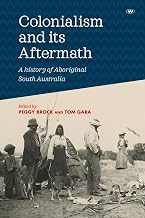
- With Tom Gara (eds.) Colonialism and its Aftermath, A history of Aboriginal South Australia (Wakefield Press, 2017)
Content from Wikipedia — licensed under CC BY-SA 3.0
Interactive
Test Your Knowledge – Trivia Challenge
How well do you know this person's life and legacy?
No account needed to play. Sign in to keep your score on the leaderboard.
Books & Media
Find books, audiobooks and films about Peggy Brock on Amazon.



As an Amazon Associate I earn from qualifying purchases.
Amazon and the Amazon logo are trademarks of Amazon.com, Inc. or its affiliates.
Sources
- Wikipedia
- https://en.wikipedia.org/wiki/Peggy_Brock
- CC BY-SA 4.0
- Sep 26, 2026
- View article
- Sep 26, 2026
Trivia & Knowledge· 9 questions
Questions drawn from Peggy Brock's archived record and the sources above.
1.In which year did Peggy Brock die?
- A.2016
- B.2019
- C.2023correct
- D.2014
Peggy Brock died in 2023.
Source: Profile: year of death: "50-1940 (2015) With Tom Gara (eds.) Colonialism and its Aftermath, A history of Aboriginal South Australia (Wakefield Press, 2017) == References == Archive record: y
2.How old was Peggy Brock when they died?
- A.75correct
- B.64
- C.70
- D.67
Peggy Brock was 75 years old at the time of death.
Source: Profile: age at death: "Coast, Vancouver (2011) With Etherington, N., Griffiths, G., & Van Gent, J., Indigenous Evangelists and Questions of Authority in the British Empire 1750-1940 (2015)
3.In which year was Peggy Brock born?
- A.1948correct
- B.1942
- C.1936
- D.1939
Peggy Brock was born in 1948.
Source: Profile: year of birth: "hian Man on the Pacific Northwest Coast, Vancouver (2011) With Etherington, N., Griffiths, G., & Van Gent, J., Indigenous Evangelists and Questions of Authority in t
4.In which month did Peggy Brock die?
- A.June
- B.July
- C.August
- D.Maycorrect
Peggy Brock died in May.
Source: Archive record: date of death: "e 1750-1940 (2015) With Tom Gara (eds.) Colonialism and its Aftermath, A history of Aboriginal South Australia (Wakefield Press, 2017) == References == Archiv
5.On which day of the month did Peggy Brock die?
- A.28
- B.29
- C.31
- D.30correct
Peggy Brock died on day 30 of the month.
Source: Archive record: date of death: "pire 1750-1940 (2015) With Tom Gara (eds.) Colonialism and its Aftermath, A history of Aboriginal South Australia (Wakefield Press, 2017) == References == Arc
6.Where was Peggy Brock born?
- A.Kraków
- B.Marseille
- C.Turin
- D.Adelaidecorrect
Peggy Brock was born in Adelaide.
Source: Biography: place of birth: "erington, N., Griffiths, G., & Van Gent, J., Indigenous Evangelists and Questions of Authority in the British Empire 1750-1940 (2015) With Tom Gara (eds.) Colonia
7.In which field was Peggy Brock known?
- A.novelist
- B.architect
- C.historiancorrect
- D.chemist
The biography describes Peggy Brock as a historian.
Source: Profile: occupation: "Gent, J., Indigenous Evangelists and Questions of Authority in the British Empire 1750-1940 (2015) With Tom Gara (eds.) Colonialism and its Aftermath, A history of Abor
8.What nationality was Peggy Brock?
- A.Australiancorrect
- B.American
- C.Argentine
- D.Belgian
Peggy Brock is recorded as Australian.
Source: Profile: nationality: "Questions of Authority in the British Empire 1750-1940 (2015) With Tom Gara (eds.) Colonialism and its Aftermath, A history of Aboriginal South Australia (Wakefield Pr
9.Where did Peggy Brock study?
- A.University of Cambridge
- B.Presbyterian Girls' Collegecorrect
- C.University of Oxford
- D.Harvard University
Peggy Brock is recorded as having studied at Presbyterian Girls' College.
Source: wikipedia-text article text: where they studied · https://en.wikipedia.org/wiki/Peggy_Brock · retrieved 2026-11-15
Explore the archive
People who died on May 30
Spotted an error?
Help us keep the archive accurate. Report a correction with a source.
Report an error for Peggy Brock →Advertisement
