
Photo: Unknown author Unknown author — Public domainSource
Stanley Kimmel
journalist
- June 12, 1894
- July 28, 1982
- 88 years


About Stanley Kimmel
Stanley Kimmel, 88, American writer, historian, playwright, poet, and journalist
Explore other notable deaths in 1982 or deaths in July 1982.
The Deaths Archive presents
How well do you know Stanley Kimmel?
Explore their life. Test your knowledge. Beat the challenge.
10 questions · One legacy · How much do you really know?
Challenge your friends
Play together in real-time.
Advertisement

Full Biography
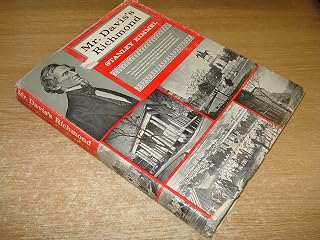
|Stanley Preston Kimmel (June 12, 1894 – July 28, 1982) was an American historian, journalist, poet, novelist, composer, pianist, and playwright. He is best remembered for his 1940 book The Mad Booths of Maryland which gives a detailed history of the Booth family. This was followed by further history books covering the era of the American Civil War, including Mr. Lincoln's Washington (1957) and Mr. Davis's Richmond (1958).
Born in Du Quoin, Illinois, Kimmel originally intended to become a musician and graduated from Ernest R. Kroeger's Kroeger School of Music in St. Louis in 1912. After this, he studied law at the University of Southern California (USC) during which time he published his first short volume of poetry. A member of the Lost Generation, he left USC in his third year to travel to France during World War I, where he worked for the French Red Cross as an ambulance driver. His experiences in the war were the basis of his 1919 serialized novel Crucifixion. He went to China in 1919, where he worked for English language publications for approximately a year. His experiences in Asia were the basis for his book Leaves on the Water – Sketches of the Far East (1922).
For part of the early 1920s, Kimmel lived in Paris, where he became acquainted with several prominent American writers, among them Ernest Hemingway. He came back to the United States, where he worked as a journalist and editor for a variety of publications. He wrote several plays, the best known of which was Black Diamond. It was staged on Broadway in 1933. This play, along with his poetry book The Kingdom of Smoke (1932), was centered around mining in the coal fields of Southern Illinois in the region where Kimmel spent his childhood. In his later life, he lived in Florida and died in Sarasota at the age of 88.
Early life and education
The son of Daniel L. Kimmel and Edith Preston Kimmel, Stanley Preston Kimmel was born in Du Quoin, Illinois on June 12, 1894. His father operated a lumber business and was also a small town lawyer. His mother was an amateur poet and artist. He received his early education at schools in his native city and in Cincinnati, Ohio. A gifted musician, he began composing music at the age of 13 and originally intended to pursue a career as an instrumentalist and composer.
Kimmel attended Walther College (a Lutheran high school) in Saint Louis, Missouri while simultaneously pursuing training as a professional musician at Ernest R. Kroeger's Kroeger School of Music (KSM). He studied piano with Charles Kunkel in addition to taking lessons with Kroeger. He graduated from the KSM in 1912. In addition to playing the piano, Kimmel was also a violinist. He performed his own composition for violin, Prelude for Violin, at a concert in St. Louis in June 1912.
He completed his pre-college education at the Tome School in Maryland. After graduating, he studied law at the University of Southern California. His book of verse, Poems and Fantasies, was published by the Grafton Publishing Company in 1916. He was known as a pianist in Los Angeles during his college years.
World War I and Kimmel's writing on war
A member of the Lost Generation, Kimmel left for France in late 1916 during his third year of law school in the midst of World War I with the intention of enlisting in the Lafayette Escadrille (LE). He traveled to France with William Gardner, the son of Missouri's 34th Governor, Frederick D. Gardner. He was unable to join the LE, but was engaged as an ambulance driver on the Western Front with a French Red Cross unit funded by J. P. Morgan. It worked in assistance to the French Army.
Kimmel served ten months on the front in the Verdun area with his responsibilities including transporting wounded soldiers from the battlefield and hauling ammunition to French positions. His work ended after he was wounded and temporarily disabled when a German shell struck near his ambulance. He also suffered lung damage from a gas attack during a battle on Côte 304 in Le Mort Homme. He was the recipient of three medals for his war service.
After being wounded, Kimmel returned to the United States but not without misadventure. In October 1917 he was a passenger aboard SS Antilles; a passenger ship heading from Saint Nazaire in France back to the United States. This ship was sunk by a German U-boat on October 17, 1917 Kimmel survived the event and was rescued. He returned to the United States in December 1917. While back in the United States he enlisted in the U.S. Navy Air Corps. He was in training at a base in Seattle, Washington at the time of the Armistice of 11 November 1918. After this he briefly settled in San Francisco, California in 1919 where he published poetry on his war experience. We wrote two short volumes of verses published in 1919 by the San Francisco press The Publishers of Little Books: Souvenirs and Improvisations.
The horrors Kimmel witnessed during WWI became the subject of his novel Crucifixion; a work originally published in 1919 as a serialized novel in the Overland Monthly. The work details his experiences recovering injured men from the battlefield, driving an ambulance in a war zone under enemy fire, and caring for the dying. It was subsequently published in book form in New York City by the Gothic Publishing Company in 1922.
Post-War
By August 1919, Kimmel had departed San Francisco for China. He spent time living in Asia where he worked for a variety of English language publications as a journalist and editor. His experiences there informed his book, Leaves on the Water – Sketches of the Far East (1922, published by Thomas Seltzer). He wrote a second book of short stories, The Kingdom of Smoke (1932, published by Nicholas L. Brown), and another volume of poetry, The Strange Voyage (1921, Publishers of Little Books).
He lived in Paris in the early 1920s. There he became an acquaintance of F. Scott Fitzgerald, Ernest Hemingway, Archibald MacLeish, and a close friend of Ezra Pound. Kimmel stated in an interview, that he didn't like Hemingway upon meeting him, and that Hemingway repeatedly tried to get Kimmel to engage in boxing matches with him; invitations he declined. Hemingway later married one of Kimmel's ex-girlfriends, the journalist Pauline Pfeiffer.
After leaving Paris, Kimmel worked as a journalist for the Chicago Daily News where he developed a close friendship with his colleague at the paper, the writer Carl Sandburg. He returned to Europe and spent time living in Germany in 1924.
He authored the play, Black Diamond, a folk drama based partly on his experiences growing up in the coal fields of Southern Illinois, and partly on the events of the Herrin massacre of 1922. It was staged on Broadway at the Provincetown Playhouse in 1933 with a cast that included Margaret Barker and Kate McComb. In 1936 he went to Washington D.C. to do research for a biography he was writing on John Wilkes Booth. The resulting book, The Mad Booths of Maryland, was published by the Bobbs-Merrill Company in 1940. It was republished by Dover Press in 1970. While working on the Booth biography, he was employed as a features writer for The Washington Star.
During World War II, he worked as a journalist connected to the United States Army, including writing in-depth coverage of the Dachau concentration camp. He was employed by the Office of the Coordinator of Inter-American Affairs during the 1940s after having moved to Washington D.C. in 1942. His book Mr. Lincoln's Washington was published in 1957. His book Mr. Davis's Richmond was published in 1958. In June 1959, he married child psychologist Dr. Elsie Marr.
Kimmel died in Sarasota, Florida on July 28, 1982.
Content from Wikipedia — licensed under CC BY-SA 3.0
Interactive
Test Your Knowledge – Trivia Challenge
How well do you know this person's life and legacy?
No account needed to play. Sign in to keep your score on the leaderboard.
Books & Media
Find books, audiobooks and films about Stanley Kimmel on Amazon.



As an Amazon Associate I earn from qualifying purchases.
Amazon and the Amazon logo are trademarks of Amazon.com, Inc. or its affiliates.
Sources
- Wikipedia
- https://en.wikipedia.org/wiki/Stanley_Kimmel
- CC BY-SA 4.0
- Sep 26, 2026
- View article
- View record
- October 21, 2026
- Sep 26, 2026
Trivia & Knowledge· 16 questions
Questions drawn from Stanley Kimmel's archived record and the sources above.
1.In what city was Stanley Preston Kimmel born?
- A.Sarasota, Florida
- B.St. Louis, Missouri
- C.Los Angeles, California
- D.Du Quoin, Illinoiscorrect
Stanley Preston Kimmel was born in Du Quoin, Illinois on June 12, 1894.
Source: biographical introduction
2.From which institution did Stanley Preston Kimmel graduate in 1912?
- A.Kroeger School of Musiccorrect
- B.Illinois State Conservatory
- C.Sarasota Academy of Music
- D.University of Southern California
Stanley Preston Kimmel graduated from Ernest R. Kroeger's Kroeger School of Music in St. Louis in 1912.
Source: education section
3.What subject did Stanley Preston Kimmel study at the University of Southern California?
- A.History
- B.Lawcorrect
- C.Music Theory
- D.Journalism
After graduating from music school, Stanley Preston Kimmel studied law at the University of Southern California.
Source: education section
4.What role did Stanley Preston Kimmel fill while in France during World War I?
- A.Ambulance drivercorrect
- B.War correspondent
- C.French language translator
- D.Infantry officer
Stanley Preston Kimmel worked for the French Red Cross as an ambulance driver during World War I.
Source: war experiences section
5.Which novel by Stanley Preston Kimmel was based on his experiences during World War I?
- A.The Kingdom of Smoke
- B.The Mad Booths of Maryland
- C.Crucifixioncorrect
- D.Leaves on the Water
Stanley Preston Kimmel wrote his 1919 serialized novel titled Crucifixion based on his experiences in World War I.
Source: war experiences section
6.How long did Stanley Preston Kimmel work in China?
- A.Five years
- B.Six months
- C.Approximately one yearcorrect
- D.Three years
Stanley Preston Kimmel went to China in 1919 and worked for English language publications for approximately a year.
Source: China experience section
7.Which book by Stanley Preston Kimmel was inspired by his time in Asia?
- A.Mr. Lincoln's Washington
- B.Black Diamond
- C.Leaves on the Water – Sketches of the Far Eastcorrect
- D.Mr. Davis's Richmond
Stanley Preston Kimmel wrote the book Leaves on the Water – Sketches of the Far East in 1922 based on his experiences in Asia.
Source: China experience section
8.With which famous author did Stanley Preston Kimmel become acquainted while living in Paris?
- A.Ernest Hemingwaycorrect
- B.John Steinbeck
- C.F. Scott Fitzgerald
- D.William Faulkner
During the early 1920s in Paris, Stanley Preston Kimmel became acquainted with several writers, including Ernest Hemingway.
Source: Paris period section
9.What was the subject matter of the Stanley Preston Kimmel play Black Diamond?
- A.Mining in the coal fields of Southern Illinoiscorrect
- B.Life in Paris during the 1920s
- C.The assassination of Abraham Lincoln
- D.The American Civil War
The play Black Diamond was centered around mining in the coal fields of Southern Illinois where Stanley Preston Kimmel spent his childhood.
Source: literary career section
10.In what year was Stanley Preston Kimmel's play Black Diamond staged on Broadway?
- A.1957
- B.1933correct
- C.1940
- D.1932
Stanley Preston Kimmel's best known play, Black Diamond, was staged on Broadway in 1933.
Source: literary career section
11.What is considered Stanley Preston Kimmel's most memorable book?
- A.Crucifixion
- B.The Kingdom of Smoke
- C.The Mad Booths of Marylandcorrect
- D.Mr. Lincoln's Washington
Stanley Preston Kimmel is best remembered for his 1940 book The Mad Booths of Maryland.
Source: biographical introduction
12.Which of these books by Stanley Preston Kimmel was published in 1957?
- A.Mr. Davis's Richmond
- B.The Mad Booths of Maryland
- C.The Kingdom of Smoke
- D.Mr. Lincoln's Washingtoncorrect
Stanley Preston Kimmel published Mr. Lincoln's Washington in 1957 as part of his history books covering the Civil War era.
Source: literary career section
13.What was the theme of Stanley Preston Kimmel's 1932 book The Kingdom of Smoke?
- A.The American Civil War
- B.French ambulance driving
- C.Mining in Southern Illinoiscorrect
- D.Life in China
The Kingdom of Smoke, a poetry book published in 1932, was centered around mining in the coal fields of Southern Illinois.
Source: literary career section
14.At what age did Stanley Preston Kimmel die?
- A.82
- B.85
- C.88correct
- D.90
Stanley Preston Kimmel lived in Florida in his later life and died in Sarasota at the age of 88.
Source: later life section
15.In which city did Stanley Preston Kimmel pass away?
- A.Sarasotacorrect
- B.St. Louis
- C.Du Quoin
- D.Los Angeles
Stanley Preston Kimmel died in Sarasota, Florida in his later life.
Source: later life section
16.Which of the following was a profession held by Stanley Preston Kimmel?
- A.Astronaut
- B.Physician
- C.Architect
- D.Composercorrect
Stanley Preston Kimmel was a multi-talented figure who worked as a historian, journalist, poet, novelist, composer, pianist, and playwright.
Source: biographical introduction
People who died on July 28
Related People


Spotted an error?
Help us keep the archive accurate. Report a correction with a source.
Report an error for Stanley Kimmel →Advertisement
