Stewart Turner
- July 3, 2022
- 92 years


About Stewart Turner
Stewart Turner, 92, Australian geophysicist.
Explore other notable deaths in 2022 or deaths in July 2022.
The Deaths Archive presents
How well do you know Stewart Turner?
Explore their life. Test your knowledge. Beat the challenge.
10 questions · One legacy · How much do you really know?
Challenge your friends
Play together in real-time.
Advertisement

60 Seconds Life Story
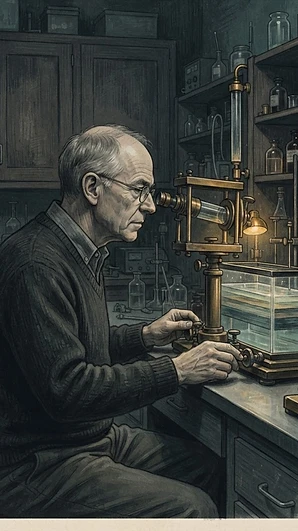


Stewart Turner was a brilliant Australian geophysicist whose work shaped our understanding of fluid dynamics.
Stewart Turner
d. 2022
60 Seconds: Stewart Turner's Life Story
A documentary short on the life and scientific contributions of Australian geophysicist Stewart Turner.
Transcript
Stewart Turner was a brilliant Australian geophysicist whose work shaped our understanding of fluid dynamics. After graduating from Sydney University, he moved to Cambridge to study the physics of cloud formation. His groundbreaking research on plumes even helped experts explain the height of nuclear explosion clouds. Later in Britain, he solved a dangerous mining problem by proving that ventilating mines downhill could prevent methane explosions. Turner’s career took him to the Woods Hole Oceanographic Institute to study ocean mixing and eventually back to Cambridge. In 1975, he returned to Australia as the Foundation Professor at the Australian National University in Canberra. Throughout his long life, he became a preeminent scientist in his field. Stewart Turner passed away on July 3, 2022, at the age of ninety-two.
Play the illustrated life story above, or read the full biography on this page.
Visual credits: Generated illustration by The Deaths Archive (Generated illustration, not a photograph) · Own work (CC BY-SA 4.0) · From geograph.org.uk (CC BY-SA 2.0) · Solar-Powered, Satellite-Linked, Acoustic-Wireless Deepwater Nootka Buoy, Docked At WHOI (Woods Hole, MA) (CC BY 2.0) · Own work (CC BY-SA 3.0) · nassimohmd / Pixabay (Pixabay Content License)
An illustrated presentation assembled inside the archive from the approved script and the credited images: narration, scene transitions and captions. Caption timing is estimated from the narration.
Narrated illustration. Images are sourced and credited; they are not presented as authenticated photographs.
Full Biography
|John Stewart Turner, FAA, FRS (11 January 1930 – 3 July 2022) was an Australian geophysicist.
Early life
Stewart Turner was educated at North Sydney Boys High School and Sydney University. He then joined the Cloud Physics Group, CSIRO Division of Radiophysics as a Research Officer. He was awarded the 1851 Exhibition Scholarship to University of Cambridge.
Cambridge
Turner completed his PhD thesis at Cambridge University in 1956 under the supervision of Sir G.I. Taylor. His thesis title was "Dynamical aspects of cloud physics". A section of this work on cloud formation contributed to the 2nd paper in the first issue of The Journal of Fluid Mechanics His contemporaries in the laboratory included Owen Philips, Harold Grant and Philip Saffman.
The work on cloud formation had application to clouds formed by nuclear explosion clouds. This work was contemporary with the Maralinga tests being carried out in Australia. Analysis by the Atomic Weapons Research Establishment on cloud formation had proved inadequate as their predictions of the height to which the clouds had extended in the South Australian explosions were too small by a factor of over two. Turner and colleagues experiments and theory provided an improved explanation.
Another piece of work from this time involved collaboration with Bruce Morton, a student of George Batchelor's, on convection forced by a buoyancy source. This became the much cited Morton, Taylor and Turner result.
University of Manchester
Turner was employed for a time (1958-1959) in the Department of the Mechanics of Fluids at the University of Manchester on a project seeking to understand the mixing of methane in coal mines. This well-known problem issue results in explosive disasters in mines around the world and was historically referred to as firedamp. The work developed laboratory experiments, using salt water and fresh water, on the mixing of wall layers into a surrounding flow. The results showed that, counter to the established practice which was to try and ventilate mines in accordance with gravity, the most effective way of getting rid of the layers was to ventilate downhill. This was because the resulting more vigorous mixing reduced methane concentrations beneath critical levels very rapidly. Within a year the recommendations were enacted through in the mining regulations in Britain.
CSIRO
Turner returned to Australia and joined the Cloud Physics group in Sydney. The work at this time involved development of results using SILLIAC an early computer operated by the University of Sydney from 1956-1968 and one of the few times Turner worked directly with numerical tools. While working at CSIRO he was given the opportunity for a short-term Rossby Fellowship to work at the Woods Hole Oceanographic Institute in the USA.
Woods Hole Oceanographic Institute
The 1962 shift to the Woods Hole Oceanographic Institute enabled him to work on problems primarily focusing on double diffusion. This was inspired by discussions with Henry Stommel who was interested in how differing rates of molecular diffusivity could drive turbulence convection and mixing. The period saw Turner branch out getting involved in rotating experiments on vortices and he even availed himself of an opportunity to descend into the ocean onboard the submersible DSV Alvin. After finishing his tenure at WHOI he would regularly return to work on problems and participate in their Geophysical Fluid Dynamics Summer School.
Return to DAMTP
Turner returned to Cambridge in 1966 when he was offered a position at the Department of Applied Mathematics and Theoretical Physics, University of Cambridge. It was unusual to have a laboratory in a mathematics department, despite this the laboratory maintained a significant profile internationally. Work at this time explored further facets of salt fingering including a study that appeared in Nature with the New Zealander, Tim Shirtcliffe.
1973 monograph
In 1969 Turner published a review article on buoyant plumes which appeared in the first volume of the Annual Reviews of Fluid Mechanics. Based on this he was invited to produce a monograph. This appeared as the 1973 text "Buoyancy Effects in Fluids" (with a 1979 paperback edition) that brought together the developments in the field including his own seminal work on plumes, gravity currents entrainment in density stratified shear flows, double diffusive convection mixed layer dynamics in the ocean and the dynamics of ventilated flows. Much of his work used laboratory experiment to understand the basic physics and associated scaling relationships.
Australian National University
In 1975 he returned to Australia to become the Foundation Professor of Geophysical Fluid Dynamics, Research School of Earth Sciences, Australian National University in Canberra. As Foundation Professor of Geophysical Fluid Dynamics Turner was able to set up a new geophysical fluid dynamics group. Research problems at this time included crystal formation and seafloor convection.
Emeritus work
Turner retired in 1996, although remained active as an emeritus professor and visiting fellow at the Australian National University for many years. It was only after his retirement that the laboratory was housed in a purpose-built space. Turner's fundamental research of stratified fluid dynamics has made a significant impact on the fields of physical oceanography, limnology and civil engineering. Some examples of his videos of double diffusive laboratory experiments are available on YouTube.
In 2010 he was made the Inaugural Fellow, Australian Fluid Mechanics Society recognising his role as one of the nation's preeminent geophysical scientists. His doctoral students include Paul Linden, Trevor McDougall, Peter Baines, Peter Manins, Ross Griffiths.
Death
Turner died on 3 July 2022, at the age of 92.
Awards
- 1958 - Fellow, Royal Meteorological Society
- 1969 - Fellow, Institute of Physics
- 1979 - Australian Academy of Science
- 1980 - Fellow, Australian Institute of Physics
- 1982 - Fellow, Royal Society, London
- 1990 - Matthew Flinders Medal and Lecture
- 2001 - Centenary Medal for service to Australian society and earth sciences
- 2010 - Inaugural Fellow, Australian Fluid Mechanics Society
Content from Wikipedia — licensed under CC BY-SA 3.0
Interactive
Test Your Knowledge – Trivia Challenge
How well do you know this person's life and legacy?
No account needed to play. Sign in to keep your score on the leaderboard.
Books & Media
Find books, audiobooks and films about Stewart Turner on Amazon.



As an Amazon Associate I earn from qualifying purchases.
Amazon and the Amazon logo are trademarks of Amazon.com, Inc. or its affiliates.
Sources
- Wikipedia
- https://en.wikipedia.org/wiki/Stewart_Turner
- CC BY-SA 4.0
- Sep 26, 2026
- View article
- Sep 26, 2026
Trivia & Knowledge· 16 questions
Questions drawn from Stewart Turner's archived record and the sources above.
1.What was the date of birth of John Stewart Turner?
- A.3 January 1928
- B.11 January 1930correct
- C.11 June 1935
- D.3 July 1930
John Stewart Turner was born on 11 January 1930.
Source: Biography introduction
2.Which educational institution did Stewart Turner attend before Sydney University?
- A.Melbourne University
- B.Cambridge High School
- C.London School of Economics
- D.North Sydney Boys High Schoolcorrect
Stewart Turner was educated at North Sydney Boys High School and Sydney University.
Source: Early life section
3.Who was the supervisor of the PhD thesis completed by Stewart Turner in 1956?
- A.Bruce Morton
- B.Sir G.I. Taylorcorrect
- C.Henry Stommel
- D.George Batchelor
Stewart Turner completed his PhD thesis at Cambridge University in 1956 under the supervision of Sir G.I. Taylor.
Source: Cambridge section
4.What was the primary focus of the work Stewart Turner performed at the University of Manchester?
- A.Cloud seeding technology
- B.Nuclear reactor thermal efficiency
- C.Ocean current speed measurements
- D.Mixing of methane in coal minescorrect
Stewart Turner was employed at the University of Manchester on a project seeking to understand the mixing of methane in coal mines.
Source: University of Manchester section
5.What significant recommendation did Stewart Turner make regarding coal mine ventilation?
- A.Reduce air circulation speed
- B.Ventilate uphill
- C.Ventilate downhillcorrect
- D.Increase humidity levels
Stewart Turner's results showed that the most effective way of getting rid of methane layers was to ventilate downhill.
Source: University of Manchester section
6.Which early computer did Stewart Turner use while working with the Cloud Physics group in Sydney?
- A.ENIAC
- B.MARK I
- C.UNIVAC
- D.SILLIACcorrect
The work at the CSIRO involved development of results using SILLIAC, an early computer operated by the University of Sydney.
Source: CSIRO section
7.Who inspired Stewart Turner to focus his research at the Woods Hole Oceanographic Institute on double diffusion?
- A.Tim Shirtcliffe
- B.Henry Stommelcorrect
- C.Philip Saffman
- D.Harold Grant
The research on double diffusion was inspired by discussions with Henry Stommel.
Source: Woods Hole Oceanographic Institute section
8.What is the title of the 1973 monograph published by Stewart Turner?
- A.Buoyancy Effects in Fluidscorrect
- B.Dynamics of Stratified Oceans
- C.The Science of Cloud Physics
- D.Principles of Fluid Mechanics
The monograph published in 1973 was titled Buoyancy Effects in Fluids.
Source: 1973 monograph section
9.In what year did Stewart Turner become the Foundation Professor of Geophysical Fluid Dynamics at the Australian National University?
- A.1975correct
- B.1966
- C.1980
- D.1996
In 1975, Stewart Turner returned to Australia to become the Foundation Professor of Geophysical Fluid Dynamics at the Australian National University.
Source: Australian National University section
10.In what year did Stewart Turner retire from the Australian National University?
- A.1996correct
- B.2010
- C.2001
- D.1990
Stewart Turner retired in 1996, although he remained active as an emeritus professor.
Source: Emeritus work section
11.Which award was granted to Stewart Turner in 1990?
- A.Inaugural Fellow of the Australian Fluid Mechanics Society
- B.Fellow of the Royal Society
- C.Matthew Flinders Medal and Lecturecorrect
- D.Centenary Medal
Stewart Turner received the Matthew Flinders Medal and Lecture in 1990.
Source: Awards section
12.At what age did Stewart Turner die?
- A.95
- B.92correct
- C.88
- D.90
Stewart Turner died on 3 July 2022, at the age of 92.
Source: Death section
13.Which of these individuals was one of Stewart Turner's doctoral students?
- A.Bruce Morton
- B.Henry Stommel
- C.Paul Lindencorrect
- D.Sir G.I. Taylor
Paul Linden is listed as one of Stewart Turner's doctoral students.
Source: Emeritus work section
14.What was the name of the submersible that Stewart Turner descended into the ocean in?
- A.Nautile
- B.DSV Alvincorrect
- C.Deepsea Challenger
- D.Trieste II
Stewart Turner availed himself of an opportunity to descend into the ocean onboard the submersible DSV Alvin.
Source: Woods Hole Oceanographic Institute section
15.When did Stewart Turner receive the Centenary Medal for service to Australian society and earth sciences?
- A.2001correct
- B.1990
- C.2010
- D.1982
Stewart Turner received the Centenary Medal for service to Australian society and earth sciences in 2001.
Source: Awards section
16.In which city was the Research School of Earth Sciences located where Stewart Turner worked as a professor?
- A.Adelaide
- B.Melbourne
- C.Canberracorrect
- D.Sydney
Stewart Turner was the Foundation Professor of Geophysical Fluid Dynamics at the Australian National University in Canberra.
Source: Australian National University section
Explore the archive
People who died on July 3
Spotted an error?
Help us keep the archive accurate. Report a correction with a source.
Report an error for Stewart Turner →Advertisement
