Suchitra Sen
- April 6, 1931
- January 17, 2014
- 82 years
- heart attack


About Suchitra Sen
Suchitra Sen was a notable figure. Born in 1931, Sen died in 2014 at the age of 82.
Explore other notable deaths in 2014 or deaths in January 2014.
Advertisement
60 Seconds Life Story
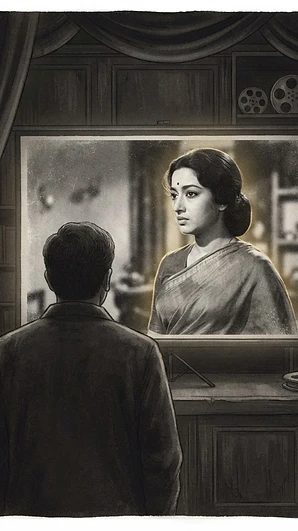


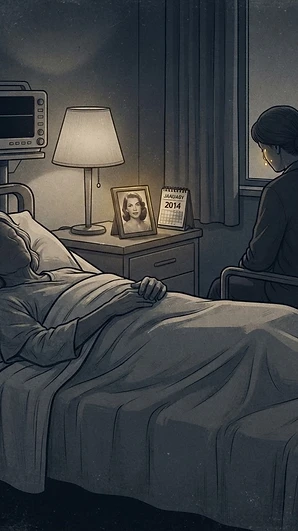
Suchitra Sen, famously known as the Mahanayika, was a legendary figure in Indian cinema.
Suchitra Sen
1931 – 2014
60 Seconds: Suchitra Sen's Life Story
A look at the life and career of Indian cinema legend Suchitra Sen, from her international awards to her reclusive life.
Transcript
Suchitra Sen, famously known as the Mahanayika, was a legendary figure in Indian cinema. Born in 1931, she defined an era of Bengali film, especially through her iconic partnerships with actor Uttam Kumar. In 1963, Sen achieved historic recognition as the first Indian actress to win a prize at an international film festival for her role in Saat Pake Bandha. She was honored with the Padma Shri in 1972 and later received the Banga Bibhushan. Known for her private nature, she famously declined the Dadasaheb Phalke Award in 2005 to remain out of the public eye. After years of shunning all public contact, this cinematic icon passed away from a heart attack in 2014 at the age of 82.
Play the illustrated life story above, or read the full biography on this page.
Visual credits: Generated illustration by The Deaths Archive (Generated illustration, not a photograph)source · Own work (CC BY-SA 3.0)source · soultrain / Pixabay (Pixabay Content License)source · Extracted from PDF version of Using the Great Seal as the Nation Expands poster, part of a U.S. Diplomacy Center (State Department) exhibition on the 225th anniversary of the Great Seal. Direct PDF URL [2] (21MB) Courtesy of the National Museum of the American Indian, Smithsonian Institution. (Public domain)source · Geograph Britain and Ireland (CC BY-SA 2.0)source · Generated illustration by The Deaths Archive (Generated illustration, not a photograph)source
An illustrated presentation assembled inside the archive from the approved script and the credited images: narration, scene transitions and captions. Caption timing is estimated from the narration.
Narrated illustration. Images are sourced and credited; they are not presented as authenticated photographs.
Full Biography
|Suchitra Sen (Bengali: [ˈʃut͡ʃit̪ɾa ˈʃen] ⓘ; born Roma Dasgupta; April 6, 1931 – January 17, 2014), widely known as the Mahanayika, was an Indian actress who worked in Bengali and Hindi cinema. The movies in which she was paired opposite actor Uttam Kumar became classics in the history of Bengali cinema. Sen won the Silver Prize for Best Actress for Saat Pake Bandha at the 3rd Moscow International Film Festival in 1963, thus became the first Indian actress to receive an award at an international film festival.
In 1972, she was awarded the Padma Shri, the fourth highest civilian award in India. From 1979 on, she retreated from public life and shunned all forms of public contact; for this she is often compared to Greta Garbo. In 2005, she refused the Dadasaheb Phalke Award, the highest cinematic award in India, to stay out of the public eye. In 2012, she was conferred the West Bengal Government's highest honour: Banga Bibhushan.
Personal life and education
Suchitra Sen was born on 6 April 1931, in a Bengali family in Bhanga Bari village, Belkuchi Upazila, located in the Bengal Province, British India—which was part of the greater Pabna District at that time, now in Sirajganj, Bangladesh. Her ancestral home was in Jashore. Her father, Korunamoy Dasgupta, was a Sanitary Inspector of Pabna Municipality and her mother, Indira Devi, was a homemaker. Sen was their fifth child and second daughter. She was a granddaughter of the poet Rajanikanta Sen. She received her formal education in Pabna Government Girls High School. The violence of Partition in 1947 brought her family to West Bengal. Here she married Dibanath Sen, son of wealthy industrialist Adinath Sen, in 1947, at the age of 16 years. She had one daughter, Moon Moon Sen, who is a former actress. Suchitra's father-in-law, Adinath Sen, was supportive of her acting career in films after her marriage. Her industrialist husband invested greatly in her career and supported her. He died in 1970.
Sen had made a successful entry into Bengali films in 1952, and then a less successful transition into the Hindi movie industry. According to persistent but unconfirmed reports in the Bengali press, her marriage was strained by her success in the film industry.
Career
Suchitra Sen made her debut in the film Shesh Kothaay in 1952, though it was never released. Her first official release was Sukumar Dasgupta's Saat Number Kayedi (1953). She was catapulted to stardom after she was cast as Vishnupriya by Devaki Kumar Bose in his Bhagaban Shree Krishna Chaitanya (1953). In 1953, she acted opposite Uttam Kumar in Sharey Chuattor, a film by Nirmal Dey. It was a box-office hit and is remembered for launching Uttam-Suchitra as a leading pair. They went on to become the icons for Bengali dramas for more than 20 years, becoming almost a genre unto themselves. She has acted in 30 of her 60 films with Uttam Kumar. Her first Hindi movie was Devdas (1955). Dilip Kumar won the Filmfare Award for Best Actor and Vyjayantimala won for Best Supporting Actress, but Sen was not nominated for the Best Actress award due to political reasons; she was later nominated for a Filmfare Award only for Mamta (1966) and Aandhi (1974). Her Bengali melodramas and romances, especially with Uttam Kumar, made her the most famous Bengali actress ever.
Her films ran through the 1960s and '70s. Suchitra went on to act in films such as in the Hindi film Aandhi (1974). Aandhi was inspired by India's Prime Minister Indira Gandhi. Due to politics in the film industry, even though she had a more powerful role than Sanjeev Kumar and her acting was highly praised, Sen only received a Filmfare Award nomination for Best Actress, while Sanjeev Kumar, who played the role of her husband, won the Filmfare for Best Actor. Rishi Kapoor once stated in an interview that his Filmfare award for the film Bobby had been bought for ₹30,000, and that if the award had not been bought, it would have been won by Amitabh Bachchan for the film Zanjeer (1973).
One of her best known performances was in Deep Jwele Jaai (1959). She portrayed a character named Radha Mitra, a hospital nurse employed by a progressive psychiatrist, Pahadi Sanyal, who is expected to develop a personal relationship with male patients as part of their therapy. Sanyal diagnoses the hero, Basanta Choudhury, as having an unresolved Oedipal dilemma. He orders Radha to play the role though she is hesitant as in a similar case she had fallen in love with the patient. She finally agrees and bears up to Choudhury's violence, impersonates his mother, sings his poetic compositions and in the process falls in love again. In the end, even as she brings about his cure, she suffers a nervous breakdown. The film is noted for its partly lit close-ups of Sen, which set the tone of the film. Asit Sen remade the film in Hindi as Khamoshi (1969), with Waheeda Rehman in the Suchitra Sen role.
Suchitra Sen's other landmark film with Asit Sen was Uttar Falguni (1963). She plays the dual role of a courtesan, Pannabai, and her daughter Suparna, a lawyer. Critics note that she brought a great deal of poise, grace and dignity to the role of a fallen woman determined to see her daughter grow up in a good, clean environment.
Suchitra Sen's international success came in 1963, when she won the best actress award at the Moscow International Film Festival for the movie Saat Paake Bandha, becoming the first Indian actress to receive an international film award.
In retirement
Suchitra Sen refused Satyajit Ray's offer due to a scheduling problem. As a result, Ray never made the film Debi Chowdhurani, based on the novel written by Rishi Bankim Chandra Chattopadhyay. She also refused Raj Kapoor's offer for a film under the RK banner.
Sen continued to act after her husband's death in 1970, but called it a day when Pronoy Pasha flopped, and retired from the screen in 1978 after a career of over 25 years to a life of quiet seclusion. She was to do a film project; Nati Binodini, also starring Rajesh Khanna, but the film was shelved mid-way after shooting when she decided to quit acting.
She assiduously avoided the public gaze after her retirement and devoted her time to the Ramakrishna Mission.
Death
Sen was admitted to the hospital on 24 December 2013 and was diagnosed with a lung infection. She was reported to have been recovering well in the first week of January. Her condition later worsened and she died at 8:25 am on 17 January 2014 due to a heart attack. She was 82 years old.
Sen's death was condoled by many leaders, including the president of India Pranab Mukherjee, the Prime Minister Dr. Manmohan Singh, the Prime Minister of Bangladesh, Sheikh Hasina, and BJP's Prime Ministerial candidate Narendra Modi. A gun salute was given before her cremation, upon the orders of Mamata Banerjee, the Chief Minister of West Bengal.
Respecting her desire for complete privacy, her last rites were performed at Kolkata's Kaioratola crematorium, barely five and half hours after she died; her coffin reached the crematorium in a flower-decked hearse with dark-tinted windows. Despite being one of Bengal's stars, referred to as "Mahanayika", she had chosen to step into oblivion and remained an enigma till her last, although thousands of fans had converged at the crematorium to catch one last glimpse of their idol. Her entire medical treatment had also been done in seclusion and secrecy.
Legacy
Sen is best known for her acting, beauty and grace. She was noted for her unique ability to convincingly portray both an Indian girl as well as the anglicised city sophisticate. Rediff wrote about Sen, "Suchitra Sen is not just a yesteryear heroine, who produced numerous box office hits. She is a cult figure, an integral part of Bengali fantasy. Her affair with Hindi films was a short one. But whatever the role, she performed it with an intensity that kept audiences glued to their seats. It is this magnetism that has made her a legend. Together with Uttam Kumar, she gave us Bengali movies that speak to our hearts even today." Film critic Saibal Chatterjee summed up Sen's career saying "one half of one of Indian cinema's most popular and abiding screen pairs, Suchitra Sen redefined stardom in a way that few actors have done, combining understated sensuality, feminine charm and emotive force and a no-nonsense gravitas to carve out a persona that has never been matched, let alone surpassed in Indian cinema".
Filmography
From 1953 to 1978, both in Bengali and Hindi, Suchitra Sen acted in 61 films.
Honours
Suchitra Sen received 10 awards during her lifetime. In 1963, she became the first Indian actress to receive an international award.
- 1962 – Won BFJA Award for Best Actress for Saptapadi
- 1964 – Won BFJA Award for Best Actress for Uttar Phalguni
- 1973 – Won BFJA Award for Best Actress for Alo Amaar Alo
- 1976 – Won BFJA Award for Best Actress (Hindi) for Aandhi
- 1963 – Won 3rd Moscow International Film Festival for Best Actress for Saat Paake Badha (First Indian actress to win an international film festival award)
- 1967 – Nominated Filmfare Award for Best Actress for Mamta
- 1972 – Won Padma Shri for notable contribution in arts
- 1975 – Won Filmfare Awards Bangla for Best Actress for cinema Priyo Bandhabi
- 1976 – Nominated Filmfare Award for Best Actress for Aandhi
- 2012 – Won Banga Bibhushan for lifetime achievement in film acting
- 2014 – Won Filmfare Awards East Lifetime Achievement Award (Posthumous)
Content from Wikipedia — licensed under CC BY-SA 3.0
Articles & News
- "Suchitra Sen: Reclusive legend"frontline.thehindu.com
- "Suchitra Sen: A superstar in Bengal, an accidental tourist in Mumbai"indianexpress.com
- "Thursday throwback: 'Let me die in peace!' Suchitra Sen's last words before she passed away left doctors & medical attendants in tears"timesofindia.indiatimes.com
- 28935237.cmstimesofindia.indiatimes.com
- "Uttam wanted to meet Suchitra Sen a week before his death"timesofindia.indiatimes.com
- "Veteran actor Suchitra Sen's health improves"thehindu.com
- "Suchitra Sen: Iconic Indian Bengali actress dies"bbc.co.uk
Reported coverage of Suchitra Sen; each link opens the original article on the publisher's own site.
Books & Media
Find books, audiobooks and films about Suchitra Sen on Amazon.



As an Amazon Associate I earn from qualifying purchases.
Amazon and the Amazon logo are trademarks of Amazon.com, Inc. or its affiliates.
Sources
- Wikipedia
- https://en.wikipedia.org/wiki/Suchitra_Sen
- CC BY-SA 4.0
- Sep 26, 2026
- View article
- View record
- October 4, 2026
- Sep 26, 2026
People who died on January 17
Spotted an error?
Help us keep the archive accurate. Report a correction with a source.
Report an error for Suchitra Sen →Advertisement