Walter Rudin
- May 2, 1921
- May 20, 2010
- 89 years
- Parkinson's disease




About Walter Rudin
Walter Rudin, 89, Austrian-born American mathematician, Parkinson's disease.
Explore other notable deaths in 2010 or deaths in May 2010.
The Deaths Archive presents
How well do you know Walter Rudin?
Explore their life. Test your knowledge. Beat the challenge.
10 questions · One legacy · How much do you really know?
Challenge your friends
Play together in real-time.
Advertisement

Full Biography
|Walter Rudin (May 2, 1921 – May 20, 2010) was an Austrian-American mathematician and professor of mathematics at the University of Wisconsin–Madison.
In addition to his contributions to complex and harmonic analysis, Rudin was known for his mathematical analysis textbooks: Principles of Mathematical Analysis, Real and Complex Analysis, and Functional Analysis. Rudin wrote Principles of Mathematical Analysis only two years after obtaining his Ph.D. from Duke University, while he was a C. L. E. Moore Instructor at MIT. Principles, acclaimed for its elegance and clarity, has since become a standard textbook for introductory real analysis courses in the United States.
Rudin's analysis textbooks have also been influential in mathematical education worldwide, having been translated into 13 languages, including Russian, Chinese, and Spanish.
Biography
Rudin was born into a Jewish family in Austria in 1921. He was enrolled for a period of time at a Swiss boarding school, the Institut auf dem Rosenberg, where he was part of a small program that prepared its students for entry to British universities. His family fled to France after the Anschluss in 1938.
When France surrendered to Germany in 1940, Rudin fled to England and served in the Royal Navy for the rest of World War II, after which he left for the United States. He obtained both his B.A. in 1947 and Ph.D. in 1949 from Duke University. After his Ph.D., he was a C. L. E. Moore instructor at MIT. He briefly taught at the University of Rochester before becoming a professor at the University of Wisconsin–Madison where he remained for 32 years. His research interests ranged from harmonic analysis to complex analysis.
In 1970 Rudin was an Invited Speaker at the International Congress of Mathematicians in Nice. He was awarded the Leroy P. Steele Prize for Mathematical Exposition in 1993 for authorship of the now classic analysis texts, Principles of Mathematical Analysis and Real and Complex Analysis. He received an honorary degree from the University of Vienna in 2006.
In 1953, he married fellow mathematician Mary Ellen Estill, known for her work in set-theoretic topology. The two resided in Madison, Wisconsin, in the eponymous Walter Rudin House, a home designed by architect Frank Lloyd Wright. They had four children.
Rudin died on May 20, 2010, after suffering from Parkinson's disease.
Selected publications
- Ph.D. thesis
- Rudin, Walter (1950). Uniqueness Theory for Laplace Series (Thesis). Duke University.
- Selected research articles
- Rudin, Walter (1950). "Uniqueness theory for Laplace series". Trans. Amer. Math. Soc. 68 (2): 287–303. doi:10.1090/s0002-9947-1950-0033368-1. MR 0033368.
- Rudin, W. (1957). "Factorization in the group algebra of the real line". Proc Natl Acad Sci U S A. 43 (4): 339–340. Bibcode:1957PNAS...43..339R. doi:10.1073/pnas.43.4.339. PMC 528447. PMID 16578475.
- Rudin, Walter (1967). "Zero-sets in polydiscs". Bull. Amer. Math. Soc. 73 (4): 580–583. doi:10.1090/s0002-9904-1967-11758-0. MR 0210934.
- Rudin, Walter (1981). "Holomorphic maps that extend to automorphisms of a ball" (PDF). Proc. Amer. Math. Soc. 81 (3): 429–432. doi:10.1090/s0002-9939-1981-0597656-8. MR 0597656.
- "Totally real Klein bottles in "(PDF)". Proc. Amer. Math. Soc. 82 (4): 653–654. 1981. doi:10.1090/s0002-9939-1981-0614897-1. MR 0614897.
- Books
Textbooks:
- Principles of Mathematical Analysis. (1953; 3rd ed., 1976, 342 pp.)
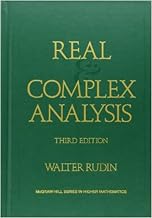
- Real and Complex Analysis. (1966; 3rd ed., 1987, 416 pp.)
- Rudin, Walter (1991). Functional Analysis. International Series in Pure and Applied Mathematics. Vol. 8 (Second ed.). New York, NY: McGraw-Hill Science/Engineering/Math. ISBN 978-0-07-054236-5. OCLC 21163277.
- Functional Analysis. (1973; 2nd ed., 1991, 424 pp.)
Monographs:
- Rudin, Walter; Bers, L.; Courant, R.; Stoker, J. J.; Henney, Dagmar Renate (1964). "Fourier Analysis on Groups". Physics Today. 17 (1): 82. Bibcode:1964PhT....17a..82R. doi:10.1063/1.3051392. (1962)
- Function Theory in Polydiscs. (1969)
- Function Theory in the Unit Ball of . (1980)
Autobiography:
- Rudin, Walter (1997). The Way I Remember It. Providence, RI: American Mathematical Society. ISBN 978-0-8218-0633-3.
Major awards
Content from Wikipedia — licensed under CC BY-SA 3.0
Interactive
Test Your Knowledge – Trivia Challenge
How well do you know this person's life and legacy?
No account needed to play. Sign in to keep your score on the leaderboard.
Videos about Walter Rudin
Walter B. Rudin, "Set Theory: An Offspring of Analysis" (1990 Morris Marden Lecture) – YouTube
Embedded from YouTube; the archive does not host these recordings.
Books & Media
Find books, audiobooks and films about Walter Rudin on Amazon.



As an Amazon Associate I earn from qualifying purchases.
Amazon and the Amazon logo are trademarks of Amazon.com, Inc. or its affiliates.
Sources
- Wikipedia
- https://en.wikipedia.org/wiki/Walter_Rudin
- CC BY-SA 4.0
- Sep 26, 2026
- View article
- View record
- September 29, 2026
- Sep 26, 2026
Trivia & Knowledge· 16 questions
Questions drawn from Walter Rudin's archived record and the sources above.
1.In what year was Walter Rudin born?
- A.1918
- B.1927
- C.1921correct
- D.1924
Walter Rudin was born in Austria in 1921.
Source: Biography section
2.What is the name of the Swiss boarding school that Walter Rudin attended as a youth?
- A.Ecole Internationale de Geneve
- B.Institut auf dem Rosenbergcorrect
- C.Lycee Francais de Vienne
- D.Le Rosey
Walter Rudin was enrolled for a period of time at a Swiss boarding school called the Institut auf dem Rosenberg.
Source: Biography section
3.From which university did Walter Rudin obtain his Ph.D. in 1949?
- A.University of Wisconsin–Madison
- B.MIT
- C.Duke Universitycorrect
- D.University of Vienna
Walter Rudin obtained his Ph.D. from Duke University in 1949.
Source: Biography section
4.During which conflict did Walter Rudin serve in the Royal Navy?
- A.Korean War
- B.World War IIcorrect
- C.Vietnam War
- D.World War I
After fleeing to England in 1940, Walter Rudin served in the Royal Navy for the remainder of World War II.
Source: Biography section
5.At which institution was Walter Rudin a C. L. E. Moore Instructor?
- A.University of Wisconsin–Madison
- B.University of Rochester
- C.MITcorrect
- D.Duke University
Following his Ph.D., Walter Rudin worked as a C. L. E. Moore instructor at MIT.
Source: Biography section
6.For how many years did Walter Rudin serve as a professor at the University of Wisconsin–Madison?
- A.32 yearscorrect
- B.35 years
- C.28 years
- D.30 years
Walter Rudin taught at the University of Wisconsin–Madison for 32 years.
Source: Biography section
7.Walter Rudin married a fellow mathematician named Mary Ellen Estill; what was her area of specialization?
- A.Harmonic analysis
- B.Set-theoretic topologycorrect
- C.Number theory
- D.Differential geometry
Walter Rudin's wife, Mary Ellen Estill, was known for her work in set-theoretic topology.
Source: Biography section
8.In what year did Walter Rudin receive the Leroy P. Steele Prize for Mathematical Exposition?
- A.1981
- B.1993correct
- C.2006
- D.1970
Walter Rudin was awarded the Leroy P. Steele Prize for Mathematical Exposition in 1993.
Source: Biography section
9.The analysis textbooks authored by Walter Rudin have been translated into how many languages?
- A.15
- B.17
- C.13correct
- D.10
Walter Rudin's analysis textbooks have been translated into 13 languages worldwide.
Source: Introduction section
10.Which architect designed the home where Walter Rudin and his family resided in Madison?
- A.Le Corbusier
- B.Frank Lloyd Wrightcorrect
- C.Ludwig Mies van der Rohe
- D.Walter Gropius
The Walter Rudin House in Madison was designed by architect Frank Lloyd Wright.
Source: Biography section
11.What is the title of the autobiography published by Walter Rudin in 1997?
- A.From Austria to America
- B.Analysis and Life
- C.My Life in Mathematics
- D.The Way I Remember Itcorrect
Walter Rudin published his autobiography titled The Way I Remember It in 1997.
Source: Selected publications section
12.Walter Rudin served as an Invited Speaker at which prestigious mathematical gathering in 1970?
- A.International Congress of Mathematicianscorrect
- B.American Mathematical Society Symposium
- C.Fields Medal Ceremony
- D.European Mathematical Congress
In 1970, Walter Rudin was an Invited Speaker at the International Congress of Mathematicians.
Source: Biography section
13.Walter Rudin passed away due to complications from which illness?
- A.Alzheimer's disease
- B.Cancer
- C.Parkinson's diseasecorrect
- D.Heart disease
Walter Rudin died on May 20, 2010, after suffering from Parkinson's disease.
Source: Biography section
14.Which of the following books is authored by Walter Rudin?
- A.Topology and Analysis
- B.Modern Harmonic Analysis
- C.Functional Analysiscorrect
- D.Elements of Set Theory
Functional Analysis is listed as one of the textbooks written by Walter Rudin.
Source: Selected publications section
15.Walter Rudin received an honorary degree from which institution in 2006?
- A.University of Wisconsin–Madison
- B.University of Oxford
- C.University of Viennacorrect
- D.Duke University
In 2006, Walter Rudin was awarded an honorary degree from the University of Vienna.
Source: Biography section
16.How many children did Walter Rudin and Mary Ellen Estill have?
- A.Five
- B.Fourcorrect
- C.Three
- D.Two
Walter Rudin and his wife, Mary Ellen Estill, had four children.
Source: Biography section
Explore the archive
People who died on May 20
Spotted an error?
Help us keep the archive accurate. Report a correction with a source.
Report an error for Walter Rudin →Advertisement
