Zaki Badawi
- January 24, 2006
- 84 years


About Zaki Badawi
Zaki Badawi, 84, Egyptian Islamic scholar, Islamic religious leader in Britain.
Explore other notable deaths in 2006 or deaths in January 2006.
The Deaths Archive presents
How well do you know Zaki Badawi?
Explore their life. Test your knowledge. Beat the challenge.
10 questions · One legacy · How much do you really know?
Challenge your friends
Play together in real-time.
Advertisement

60 Seconds Life Story
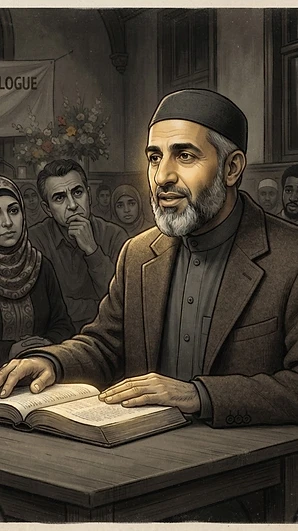


Sheikh Zaki Badawi was a prominent Egyptian scholar and a leading voice for religious moderation in Britain.
Zaki Badawi
d. 2006
60 Seconds: Zaki Badawi's Life Story
A profile of Zaki Badawi, the Egyptian Islamic scholar and educator who founded the Muslim College in London.
Transcript
Sheikh Zaki Badawi was a prominent Egyptian scholar and a leading voice for religious moderation in Britain. Born in 1922, he studied theology at al-Azhar University before moving to the United Kingdom to complete his education. Throughout his distinguished career, he taught Islamic studies across Africa and Asia. In 1978, he became the Chief Imam of the London Central Mosque and later founded the Muslim College in 1986 to train imams in the West. He was a tireless advocate for interfaith dialogue and ethics in business. For his significant contributions to community relations, he was appointed an honorary Knight Commander of the Order of the British Empire. Zaki Badawi passed away in London in 2006, leaving behind a legacy of tolerance and academic excellence.
Play the illustrated life story above, or read the full biography on this page.
Visual credits: Generated illustration by The Deaths Archive (Generated illustration, not a photograph) · Own work (CC BY-SA 4.0) · Own work (CC BY-SA 4.0) · Own work (CC BY 3.0) · Own work (CC0) · Own work (Public domain) · Own work (CC BY-SA 3.0)
An illustrated presentation assembled inside the archive from the approved script and the credited images: narration, scene transitions and captions. Caption timing is estimated from the narration.
Narrated illustration. Images are sourced and credited; they are not presented as authenticated photographs.
Full Biography
|Sheikh Mohammed Aboulkhair Zaki Badawi KBE, GCFO (Arabic: الشيخ محمد أبو الخير زكي بدوي; 14 January 1922 – 24 January 2006) was a prominent Egyptian Islamic scholar, community activist, and promoter of interfaith-dialogue. He was the principal of the Muslim College in London, which he founded in 1986. He also was a frequent writer and broadcaster on Islamic affairs.
Early life and education
Born in Egypt, Badawi trained at al-Azhar University in Cairo, gaining an undergraduate degree in Theology. He received the King Farouk First Prize for the best undergraduate student, and obtained subsequently a master's degree in Arabic Language and Literature in 1947 at the same university. He again received the King Farouk First Prize for the best postgraduate student. He moved to the United Kingdom in 1951 and studied Psychology at University College London, obtaining his B.Sc. degree in 1954 and a Ph.D. degree in Modern Muslim Thought from the University of London.
Career and further life
After his education, Badawi returned to al-Azhar University to teach Muslim Thought and Scientific Research Methods. He established a Muslim College in Malaysia, and taught Arabic and Islamic Studies at the University of Malaya in Singapore and in Kuala Lumpur. In 1964 he became Professor of Islamic Education at Ahmadu Bello University, Northern Nigeria and Professor of Islamic Education and Dean of Arts at Bayero College, Nigeria. In 1976, Badawi went to London as a research professor for the Hajj Research Centre of the King Abdul Aziz University in Saudi Arabia.
In 1978, Badawi was appointed director of the Islamic Cultural Centre (ICC) and Chief Imam of the London Central Mosque in Regent's Park. In this period, He participated in establishing the Shariah Council as a facility to reconcile conflicts between Islamic law and the British civil code. Badawi was elected chairman of the Imams and Mosques Council by the National Conference of Imams and Mosque Officials of the UK in 1984.
In 1982, Badawi joined the board of the Islamic Banking System in Luxembourg. He participated in negotiations with the Bank of England to establish the first Islamic financial institution licensed in the United Kingdom, the Islamic Finance House (IFH). Badawi managed the IFH for three years, and published and lectured on Muslim law in relation to banking, finance and business ethics. He was also a guest professor in business ethics at Cranfield University Business School, where he lectured to MBA students.
In 1986, Badawi established the Muslim College in London and became its director. The college became a postgraduate school for the training of imams and Muslim teachers in the West. The curriculum includes the study of both Islam and Western society and emphasizes interfaith dialogue. Badawi co-edited Encounter Magazine with news on interfaith meetings, and edited the Islamic Quarterly for four years. He often contributed to daily newspapers, and he published and lectured on a wide range of issues, including various conflicts, Islam in Britain, female genital cutting, democracy, the rights of the fetus, and human rights.
Badawi also chaired The Arabic Forum, the Islamic Religious Council and the National Council for the Welfare of Muslim Prisoners, established in 2001. He was a co-founder of the Three Faiths Forum, vice chairman of the World Congress of Faiths and director/trustee of the Forum Against Islamophobia and Racism (FAIR).
Badawi was a well-known voice for religious moderation and tolerance, and was the first prominent Muslim to criticize imams in the UK who did not teach in English.[citation needed ] According to Professor Shk. Ali Hamid, Badawi advocated that Salman Rushdie should simply be ignored, and not given any attention.[citation needed ]
In July 2005, soon after the London bombings, on 7 July, Badawi was refused entry into the US, upon arrival, having already been issued a visa. The US Customs and Border Protection office said Badawi had been refused entry to the country based on information indicating that he was "inadmissible". He accepted an apology from the United States government for his denial of entry into the country, at a time when he was scheduled to speak at a conference in the US.
Badawi died in London on 24 January 2006.
Honours
Badawi was made an honorary Knight Commander of the Order of the British Empire (KBE) in 2004. He also was appointed by The Duke of Castro as Knight Grand Cross of the Royal Order of Francis I (GCFO) in recognition of his interfaith work.
Content from Wikipedia — licensed under CC BY-SA 3.0
Interactive
Test Your Knowledge – Trivia Challenge
How well do you know this person's life and legacy?
No account needed to play. Sign in to keep your score on the leaderboard.
Articles & News
Reported coverage of Zaki Badawi; each link opens the original article on the publisher's own site.
Books & Media
Find books, audiobooks and films about Zaki Badawi on Amazon.

As an Amazon Associate I earn from qualifying purchases.
Amazon and the Amazon logo are trademarks of Amazon.com, Inc. or its affiliates.
Sources
- Wikipedia
- https://en.wikipedia.org/wiki/Zaki_Badawi
- CC BY-SA 4.0
- Sep 26, 2026
- View article
- Sep 26, 2026
Trivia & Knowledge· 15 questions
Questions drawn from Zaki Badawi's archived record and the sources above.
1.Who appointed Zaki Badawi as Knight Grand Cross of the Royal Order of Francis I (GCFO)?
- A.The King of Egypt
- B.The Duke of Castrocorrect
- C.The National Conference of Imams
- D.The British Government
Zaki Badawi was appointed by The Duke of Castro as Knight Grand Cross of the Royal Order of Francis I (GCFO).
Source: Honours
2.In what year was Zaki Badawi made an honorary Knight Commander of the Order of the British Empire (KBE)?
- A.2004correct
- B.2001
- C.2006
- D.2002
Zaki Badawi was made an honorary Knight Commander of the Order of the British Empire (KBE) in 2004.
Source: Honours
3.In what city did Zaki Badawi die?
- A.Luxembourg
- B.Kuala Lumpur
- C.Cairo
- D.Londoncorrect
Zaki Badawi died in London on 24 January 2006.
Source: Career and further life
4.According to Professor Ali Hamid, what was Zaki Badawi's advice regarding Salman Rushdie?
- A.He should be invited for an interfaith dialogue
- B.He should be ignoredcorrect
- C.He should be publicly debated
- D.He should be exiled
Zaki Badawi advocated that Salman Rushdie should simply be ignored and not given any attention.
Source: Career and further life
5.What was Zaki Badawi's stance regarding imams in the UK who did not teach in English?
- A.He remained neutral on the issue
- B.He supported them fully
- C.He was the first prominent Muslim to criticize themcorrect
- D.He suggested they should only speak Arabic
Zaki Badawi was the first prominent Muslim to criticize imams in the UK who did not teach in English.
Source: Career and further life
6.When was the National Council for the Welfare of Muslim Prisoners established, which Zaki Badawi chaired?
- A.1998
- B.2000
- C.2002
- D.2001correct
Zaki Badawi chaired the National Council for the Welfare of Muslim Prisoners, which was established in 2001.
Source: Career and further life
7.For how many years did Zaki Badawi edit the Islamic Quarterly?
- A.Two years
- B.Three years
- C.Four yearscorrect
- D.Five years
Zaki Badawi edited the Islamic Quarterly for a period of four years.
Source: Career and further life
8.Which financial institution did Zaki Badawi participate in negotiating to establish in the UK?
- A.Bank of England
- B.Islamic Banking System
- C.World Congress of Faiths
- D.Islamic Finance Housecorrect
Zaki Badawi participated in negotiations to establish the Islamic Finance House, the first Islamic financial institution licensed in the UK.
Source: Career and further life
9.Which institution did Zaki Badawi found in London in 1986?
- A.The Arabic Forum
- B.The Muslim Collegecorrect
- C.The Shariah Council
- D.The Islamic Finance House
Zaki Badawi established the Muslim College in London in 1986 and became its director.
Source: Career and further life
10.What role did Zaki Badawi hold at the Islamic Cultural Centre in London starting in 1978?
- A.Professor
- B.Chairman
- C.Dean
- D.Directorcorrect
Zaki Badawi was appointed director of the Islamic Cultural Centre and Chief Imam of the London Central Mosque in 1978.
Source: Career and further life
11.Where did Zaki Badawi teach starting in 1964 as a professor of Islamic Education?
- A.al-Azhar University
- B.Bayero College
- C.Ahmadu Bello Universitycorrect
- D.Muslim College
In 1964, Zaki Badawi became Professor of Islamic Education at Ahmadu Bello University in Northern Nigeria.
Source: Career and further life
12.In what subject did Zaki Badawi obtain his Ph.D. from the University of London?
- A.Arabic Literature
- B.Psychology
- C.Modern Muslim Thoughtcorrect
- D.Islamic Law
Zaki Badawi obtained his Ph.D. degree in Modern Muslim Thought from the University of London.
Source: Early life and education
13.Which university did Zaki Badawi attend in Cairo to earn his undergraduate degree in Theology?
- A.al-Azhar Universitycorrect
- B.King Abdul Aziz University
- C.Ahmadu Bello University
- D.Cairo University
Zaki Badawi trained at al-Azhar University in Cairo, where he gained his undergraduate degree in Theology.
Source: Early life and education
14.In what year was Zaki Badawi born?
- A.1924
- B.1920
- C.1926
- D.1922correct
Zaki Badawi was born on 14 January 1922.
Source: Biography introduction
15.What is the full birth name of Zaki Badawi?
- A.Sheikh Mohammed Aboulkhair Zaki Badawicorrect
- B.Mohammed Zaki Aboulkhair Badawi
- C.Zaki Aboulkhair Mohammed Badawi
- D.Aboulkhair Zaki Mohammed Badawi
Zaki Badawi's full name is recorded as Sheikh Mohammed Aboulkhair Zaki Badawi.
Source: Biography introduction
Explore the archive
People who died on January 24
Spotted an error?
Help us keep the archive accurate. Report a correction with a source.
Report an error for Zaki Badawi →Advertisement
